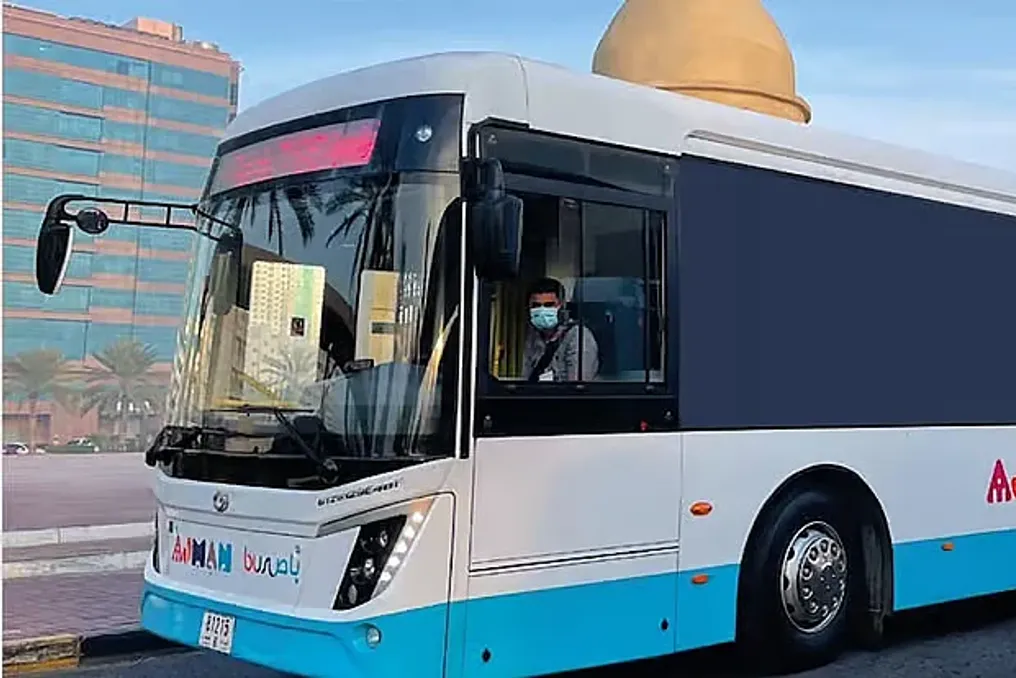
The Ajman Authority announced on Monday that starting from September 17, 2026, cash payments will no longer be accepted on certain routes in Ajman. For travel payment on buses connecting Sharjah, Dubai, and Umm Al Quwain, only payments via Masaar Money cards and bank cards will be available.
The Masaar Money card is the official means of payment for travel in Ajman. Passengers can obtain it at any branch of the Ajman Transport Department or at an approved point of sale in the city; the card is available free of charge but requires balance top-up.
Furthermore, the Ajman administration specified that the acceptance of cash payments at the Speed Vehicle Testing and Registration Centre will also cease on September 17, and only electronic payments will be accepted.
A recent report by Visa showed that the UAE's transition to a digital payment-oriented economy is gaining momentum. Transactions using mobile devices and cards now confidently dominate daily expenditures, while cash is gradually receding into narrow niche areas of use.
According to a Visa survey, only 16 percent of UAE consumers still use cash for daily purchases, down from 25 percent last year. The decrease is observed in traditionally cash-reliant segments, such as local markets, taxi rides, and bill payments, where usage has fallen by double-digit percentages year-on-year. This trend indicates a structural, rather than cyclical, shift, as digital options become faster, more reliable, and convenient.
Despite this broad move away from cash, the report emphasizes that cash has not disappeared entirely. Tipping remains the largest use of physical money, with 58 percent of consumers still paying tips in cash, reflecting social norms and situational convenience.
In June, Parkin in Dubai began phasing out the acceptance of cash payments at parking meters, aligning with the emirate's cashless payment strategy for 2026.