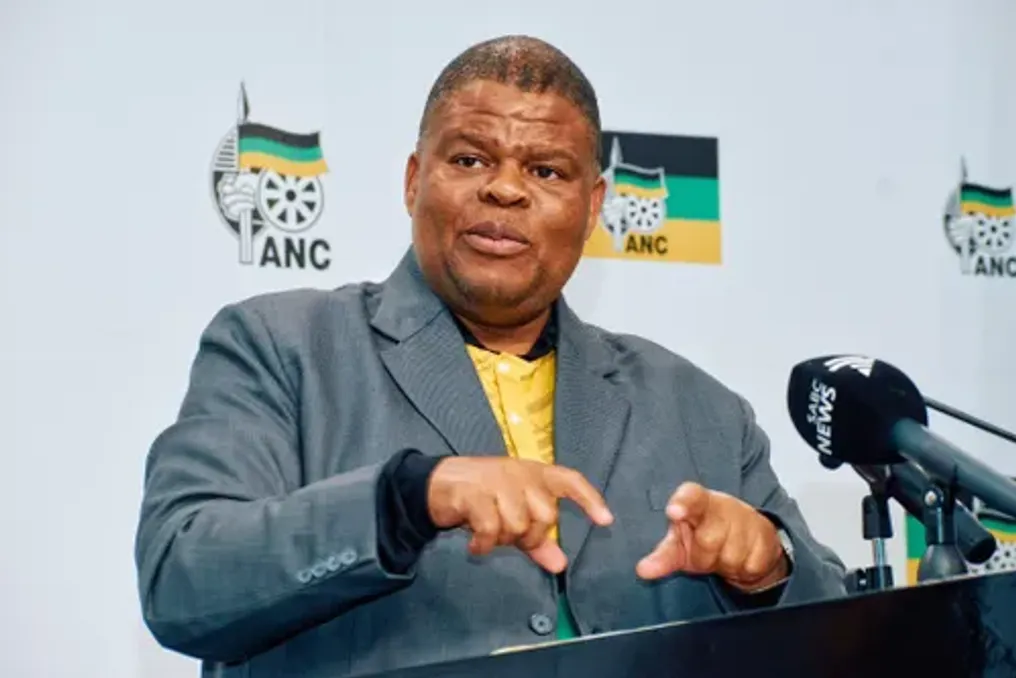
Deputy Minister David Mahlobo stated that access to water in South Africa has reached 91.3%, and sanitation access is 85.6%, but he warned that these figures do not always reflect the reliability of water supply.
The Deputy Minister of Water Resources and Sanitation, and an ANC NEC member, David Mahlobo, emphasized that South Africa will not exhaust its water resources. Nevertheless, he noted that local deficits, aging infrastructure, and unreliable supply continue to leave some businesses and communities uncertain about water access.
Speaking at a briefing on Sunday, Mahlobo reported that ensuring water security has become the government's highest priority, and measures are currently underway to expand access, improve infrastructure, and secure the country's future water supply.
He acknowledged the pressure on water resources but assured that the country will not run dry, while adding that local deficits exist. Mahlobo specified that water access increased to 91.3% in 2026, and sanitation access to 85.6%.
However, he insisted that these figures should be viewed in the context of supply reliability, as some communities continue to face water supply interruptions. He explained that the crucial aspect relates precisely to reliability, meaning the number of days per week or year when water will be available from the tap.
Mahlobo also pointed out that aging infrastructure continues to expose households and businesses to the risk of water insecurity. He stated that the government's task is not only to expand access but also to ensure that water and sanitation services are reliable, sustainable, and capable of meeting the needs of a growing population and economy.
He noted that the ANC government has demonstrated strong leadership in water security, water supply, and sanitation matters. Mahlobo highlighted that President Cyril Ramaphosa elevated the issue of water security to the same level as energy security, noting that this issue is being overseen by His Excellency President Cyril Ramaphosa for the first time.
ANC, according to Mahlobo, has worked to expand access to water and sanitation over the past 32 years. The government has developed a national water resource action plan outlining necessary interventions in the short, medium, and long term, but the focus must now be on implementation. He stated that discipline and performance must be checked.
Mahlobo added that municipalities will not be left alone in solving water and sanitation problems if their capacity is insufficient. He stressed the need for coordinated action across all spheres of government, stronger institutions, and additional investment in infrastructure, as well as decisive intervention where municipalities cannot or will not fulfill their duties.
Over 156 billion rand has been allocated in grants and subsidies over the next three years to support local access to water and sanitation. Furthermore, the government is implementing a program aimed at 'unserved communities' in rural areas, on private land, farms, and informal settlements. This program includes studying alternative sources such as groundwater, rainwater harvesting, and sand water extraction.
Mahlobo presented several infrastructure projects aimed at expanding water access and strengthening water security. More than 70 projects worth over 140 billion rand have been initiated for dam construction, infrastructure repair, and improvement of existing water supply systems. He mentioned the completion of the Nandoni-to-Zamane pipeline, which provides water to 24 villages, as well as the implementation of other projects to support thousands of households.
He also referred to the Lesotho reservoir project, which is currently 57% complete and will contribute to the country's water security. Recognizing that the country faces water scarcity, the government is considering various options, including building additional dams, utilizing groundwater, water reuse, and desalination.
Mahlobo warned that deteriorating water quality remains a problem, especially where pollution affects water sources. He stated that measures are being taken against more than 57 municipalities for pollution, warning that without addressing the pollution problem, public health could suffer and water treatment costs could rise.
Sanitation access has reached 85.6%, but issues with wastewater treatment infrastructure, its maintenance, and operational difficulties continue to affect service delivery. The government has intervened in municipalities where wastewater treatment systems failed and continues to address infrastructural challenges.
Mahlobo also defended the involvement of the private sector in water infrastructure projects, stating that this is not privatization. He emphasized that the infrastructure will remain state-owned because 'the asset, which is the pipeline and other infrastructure, remains under state trusteeship.' He named corruption and vandalism as threats to water infrastructure, reporting that the government is working with the Special Investigating Unit and other mechanisms to address this issue. Municipalities failing to perform their duties will face legal intervention, and he concluded that reforming local government is key to protecting water supply and sanitation.