Instead of following the standard route through Sani Pass, one can explore a quieter part of the Kingdom in the sky, located in Lesotho's western highlands. Here, winding roads lead to sandy valleys, traditional villages, waterfalls, and mountain trails.
A three-day trip is enough to see some of the most memorable landscapes of western Lesotho, especially in the areas of Morija, Malaleale, and Semonkong. During the trip, you can replace a car with a Basotho pony, hike in the mountains, try local cuisine, meet communities, and stand above one of South Africa's most impressive waterfalls.
This journey is intended for travelers who prefer to slow down and truly experience the place, rather than just ticking off sights.
Starting the Journey in Morija
The route begins in Maseru, from where you travel south towards the mountains, with the first stop in the historic town of Morija. This town is home to the Morija Museum and Archives and the Maeder House, one of Lesotho's oldest surviving buildings. The Protestant mission in Morija was founded in 1833, making it one of the country's most significant historical settlements.
After visiting Morija, you head towards Malaleale. The landscape gradually changes as the lowlands give way to rugged valleys and majestic sand formations. Part of this experience includes crossing the 'Gate of Paradise Pass'. Soon the road opens up into the mountains around Malaleale, where the landscape is adorned with traditional villages and grazing animals.
Malaleale is an ideal place to slow down. This area is particularly known for horseback riding, hiking, mountain biking, and cultural events. Lesotho's tourism authorities describe the Central Horse Trekking/Hiking route as a journey through rural mountainous terrain that can connect Malaleale with Semonkong, including opportunities to stay in traditional Basotho villages along the way.
You don't need to plan a multi-day trek to enjoy this. Instead, you can book a shorter pony excursion and let the Basotho ponies do what they have done for generations: navigate mountain trails. The essence of this experience is not just moving from one viewpoint to another; on horseback, you can watch shepherds move livestock across the hills, pass by remote settlements, and see how people and animals naturally fit into the highland landscape.
It is worth taking time to wander around Malaleale instead of spending the whole day in a hotel. Look for traditional rondavels, fields carved into the slopes, and locals engaged in daily activities. A local guide can provide context to what you are seeing, ranging from traditional architecture and agriculture to the importance of horses in rural life. It is here that the trip begins to feel completely different from a typical mountain getaway. The scenery is magnificent, but the people and the pace of life give it meaning.
Local Traditions and Overnight Stay
After a day outdoors, choose a simple and local dinner. Seek opportunities to try traditional Basotho food, including pap, vegetables like moroho, beans, and other hearty dishes. A home-cooked meal in the mountains is much more memorable than rushing back to Maseru for dinner. The goal of this trip is to experience Lesotho, not just photograph it.
It is best to spend the night in the Malaleale area, and if the weather is clear, go out after dark. Away from city lights, the highland sky becomes another attraction.
Day Two: Adventure Between Malaleale and Semonkong
The second day is dedicated to adventure in the heart of the trip. The official Central Horse Trekking/Hiking route connects Malaleale and Semonkong through rural mountainous terrain, although the full route is conceived as a multi-day horse or hiking expedition, not a quick drive. For a 72-hour plan, you can travel between these two bases and include shorter walks, viewpoints, and stops in villages along the way.
Do not rush this section. The road itself is part of the attraction. The western highlands are made for spontaneous stops. You can stop wherever it is safe and admire the valleys, cliffs, and distant peaks. In warmer months, the mountains can be surprisingly green, while winter brings harsh beauty to the landscape and the possibility of snow at higher altitudes. Lesotho's tourism body notes that summer is especially suitable for hiking and exploring the countryside, while winter offers snow and skiing opportunities in other parts of the country.
Don't forget to keep your camera ready to capture small details: colorful blankets, horses on mountain trails, shepherds on slopes, and villages hidden in valleys. Semonkong is situated in a dramatic mountain setting near the Maletsunyane River, surrounded by the Maluti Mountains. Semonkong Lodge offers a base for exploring the area by pony, mountain bike, or on foot. The town and surrounding countryside are particularly attractive to adventure lovers, offering activities such as hiking, mountain biking, horseback riding, fishing, and waterfall activities.
If time permits, take a short hike until sunset. The changing light over the hills is reason enough to linger.
Climax: Maletsunyane Waterfall
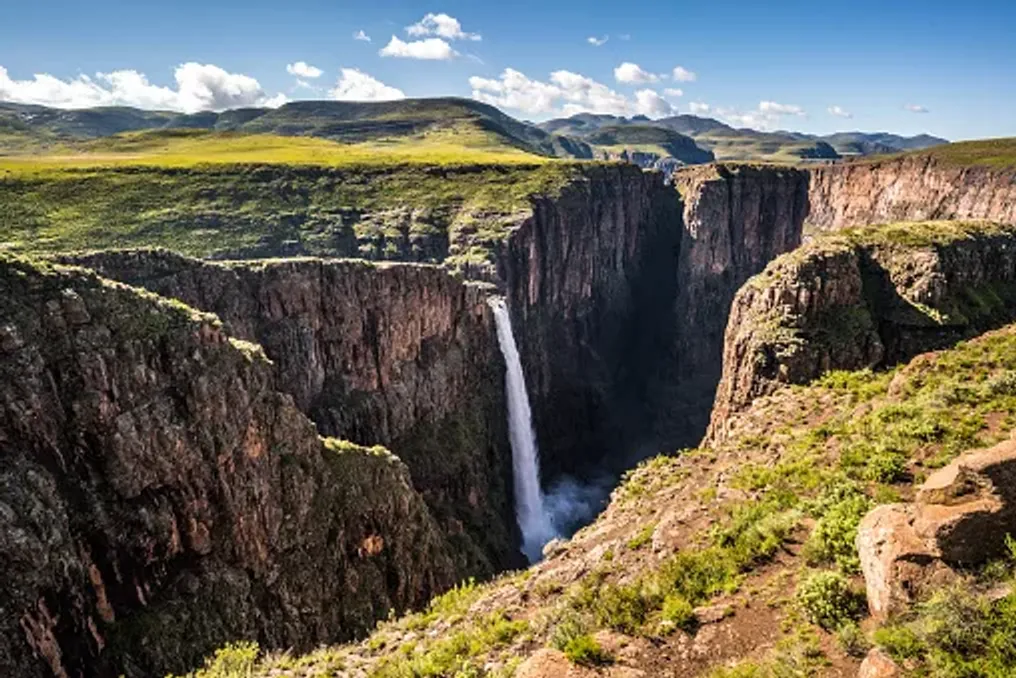
The last morning brings the biggest natural spectacle of the trip. The Maletsunyane Waterfall plunges 192 meters into a dramatic canyon, making it one of the highest single-drop waterfalls in South Africa. The waterfall is also a central element of adventure tourism in Semonkong, offering organized tours from the local area.
There are several ways to see Maletsunyane. You can walk to enjoy the surrounding scenery, or organize a horseback tour for a more traditional Lesotho experience. The local tourism offering combines the waterfall with hikes and horse rides, allowing the trip itself to be part of the adventure, rather than just arriving at a viewpoint.
When you finally reach the canyon, take time to absorb it. The waterfall seems almost too large against the backdrop of the surrounding mountains, and the water disappears into the canyon below. For thrill-seekers, Semonkong offers one of Lesotho's most famous adventures: a zip line descent near the Maletsunyane Waterfall. The commercial descent exceeds 200 meters and is promoted by Lesotho Tourism as the longest commercial single-drop descent in the world. This is not necessary for everyone. For everyone else, simply standing above the waterfall, watching the spray rise from the canyon, and listening to the water below is an adventure in itself.
After viewing the waterfall, find a place to sit and eat while the mountains entertain you. Manong Restaurant, located near the waterfall, is advertised as a place to enjoy food with a view of the falls. Its name refers to the bearded vultures inhabiting the area. It is a fitting final stop: food, mountain air, and the waterfall stretching out below.
If the return journey allows extra time, consider adding Thaba Bosiu to the itinerary. This mountain is closely associated with King Moshoeshoe I, the founder of the Sotho kingdom, and served as his residence and military fortress from 1824 until his death in 1870. Lesotho Tourism also promotes a three-day historical trekking and horseback riding route that follows Moshoeshoe's footsteps to Thaba Bosiu. Even a short visit adds an important historical layer to the journey.
After several days of scenery and active recreation, it reminds you that these mountains are not just beautiful nature. They have shaped the history and identity of the country.
Lesotho is often reduced to a pass, a ski resort, or a stopover point on a longer road trip through South Africa. But this underestimates the country. The western highlands offer something slower and deeper. You can spend the morning on horseback, take a walk through a mountain village in the afternoon, and see a 192-meter waterfall the next day. You can sleep under the mountains, eat locally prepared food, and travel for hours on roads where the scenery changes around every bend. Most importantly, you don't need to plan an epic expedition. A long weekend might be enough to feel it. And once, seeing the mountains from behind a Basotho pony, standing above the Maletsunyane Waterfall and watching the last light disappear behind the highlands, three days might leave you wanting to book three weeks.
Lesotho is accessible by road from South Africa through several border posts, making a road trip one of the easiest ways to explore the country. For this route, allocate enough time for the mountain roads, rather than planning days around rigid arrival deadlines. If you want to hike between Malaleale and Semonkong, organize a corresponding multi-day route with a guide, rather than trying to improvise it as a car trip. Lesotho is a year-round destination. Summer is ideal for hiking and exploring the countryside, while winter brings colder conditions and the possibility of snow at high altitudes. The western highlands reward travelers who leave room for surprises: a village worth photographing, a mountain trail that looks too good to ignore, or a roadside view that makes you stop.