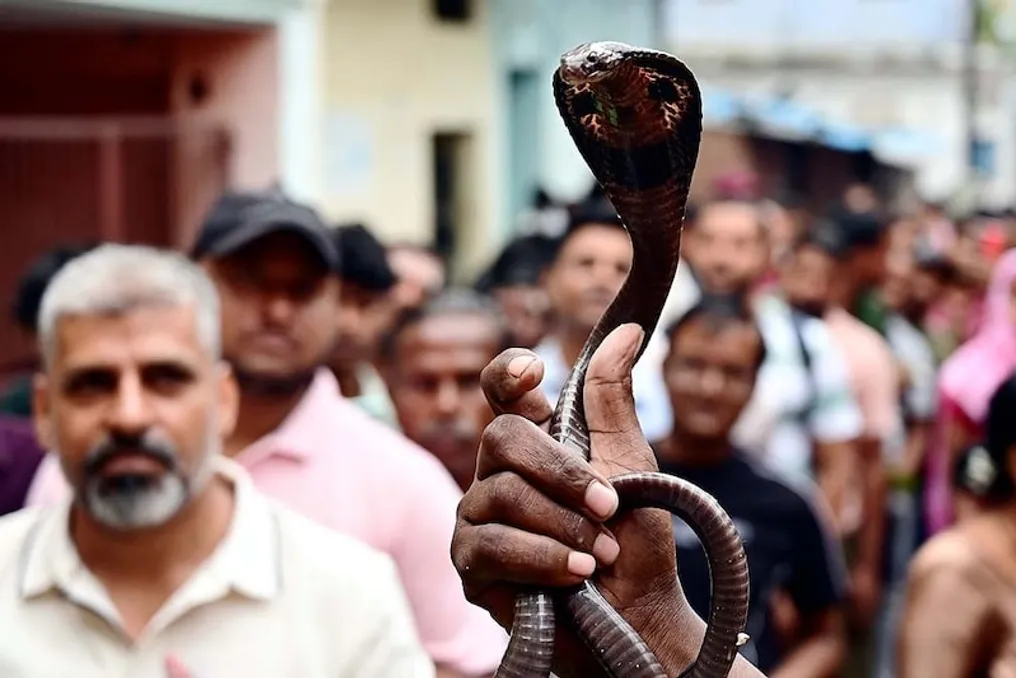
People often see photos or videos of snakes drinking milk, which has led to the common misconception that snakes consume dairy products. However, according to scientific data, milk is not part of a snake's diet because they are predators.
Different species of snakes feed on rodents, frogs, fish, birds, insects, and other small animals. The question is why snakes might appear to be drinking milk and whether this is suitable food for them.
A snake's body is structured to digest its natural prey, and milk is not necessary nutrition for it. If a snake is observed drinking milk, it does not mean it enjoys it. This is especially true when a snake is kept in captivity and deprived of water for a long time; in such cases, it may try to drink any available liquid.
Snakes are obligate carnivores, meaning their diet consists of other living creatures. Small snakes may consume insects and worms, while larger snakes hunt mice, birds, fish, frogs, and other small animals. Snakes usually swallow their prey whole. Their digestive system is adapted to break down meat and nutrients obtained from the victim, so considering milk as a regular food for snakes is incorrect.
Milk contains a sugar called lactose, which requires the enzyme lactase for digestion in the body. Snakes are not animals that drink milk, and their bodies are not adapted to digest dairy products. Giving milk to a snake can cause stomach problems, such as diarrhea or dehydration. Furthermore, forcibly putting milk or any other liquid into a snake's mouth is dangerous, as the liquid can enter the lungs and cause breathing difficulties.
People often mistakenly believe that a snake is drinking milk by observing it drinking liquid from a bowl. However, the main reason for this may be thirst. If a snake lacks clean water for a long time, it may try to drink any liquid in front of it. Snakes actually need clean water, which they can find in small ponds, holes, accumulated water, or other natural sources in the forest or open areas. They also obtain some water from their prey.
You should not give milk to snakes. If a snake appears in your home or nearby, you should not attempt to catch or feed it. It is necessary to maintain distance and seek help from forestry services or a trained snake rescue team if necessary. Simply put, milk is not a natural food for snakes; they require clean water and their natural diet.