Explanation of why the Nagchandreshwar temple opens for only 24 hours a year
Read more
Aaj Tak
www.aajtak.in

Explanation of why the Nagchandreshwar temple opens for only 24 hours a year

During the third Monday of the month of Sawan, a large crowd of pilgrims gathered in Ujjain square, wishing to see the deities of Shiva in the Mahakalishwar temple. During this period, a large number of visitors were also observed at the Nagchandreshwar temple, which opens only once a year on Nag Panchami. Due to the large gathering of devotees on the temple premises, a situation resembling panic arose, resulting in reports of fainting and deterioration of health among some attendees. Nevertheless, the Mahakalishwar temple committee refuted the information spread on social media regarding the incident.

Questions arise: why did such situations occur around the Nagchandreshwar temple, and why does this temple open only once a year, on the day of Nag Panchami? The explanation of this tradition is presented below.

Significance of the Nagchandreshwar Temple

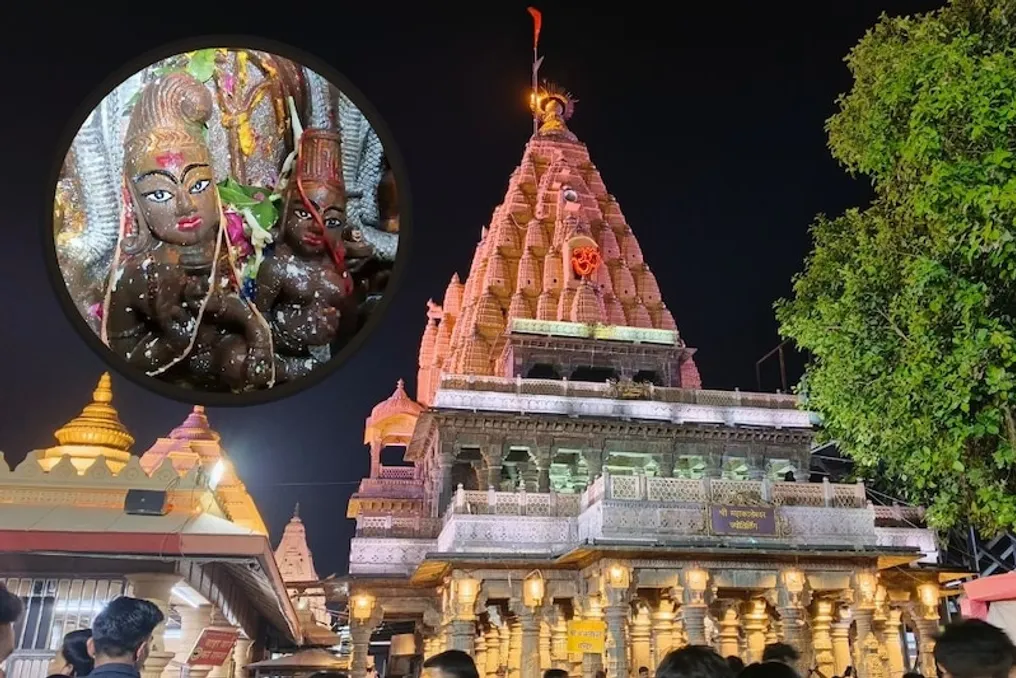
The Nagchandreshwar temple is located in Ujjain, on the third floor of the Mahakalishwar temple. Its main feature is that its doors are open to pilgrims only once a year, on the day of Nag Panchami, for 24 hours.

According to an ancient legend, the serpent king Takshak performed severe austerities to appease Lord Shiva. Buddhanath was pleased with his devotion and granted him immortality. However, having received this blessing, Takshak was not completely satisfied. He asked Mahadeva for permission to live always near him, requesting permission to reside in the Mahakal forest. Lord Shiva agreed to this request and also blessed him that there would be no disturbances in his solitude and practice. This is why the doors of this temple open only once a year, on Nag Panchami, to preserve Takshak's solitude.

Trikala Puja at the Nagchandreshwar Temple

The ethereal form of Shri Nagchandreshwar is located on the third floor of the Shri Mahakalishwar temple in Ujjain and is considered the sacred abode of the serpent king Takshak. According to religious beliefs, simply seeing the deity Nagchandreshwar in this temple frees a person from all types of snake curses.

As soon as the doors of the Nagchandreshwar temple open, a special Trikala Puja ceremony is conducted here, which includes three separate worships throughout the day.

The first worship is performed by the Mahanirvani Akhada immediately after the temple doors open at midnight. The second worship (during the day) is conducted by government representatives at noon on Nag Panchami. The third worship (in the evening) is performed by the priests of the Mahakal temple after the evening Aarti of Lord Mahakala at 7:30 PM by the temple committee.

After this, a special Mahaaarti is performed at midnight, and after the Aarti concludes, the temple doors are closed for another year.

Traditions of the Nagchandreshwar Temple

Every year on Nag Panchami, as soon as the doors of the Nagchandreshwar temple open at midnight, a stream of pilgrims begins to visit to see the deities of Shiva and the serpent king. According to centuries-old tradition, monks from the Mahanirvani Akhada conduct the ritual of opening the temple doors. As part of this rite, according to Shaivite tradition, worship and puja are performed with the tying of a coconut. After this, the temple doors are opened for ordinary pilgrims under the chants of 'Jai Shri Mahakal' and 'Jai Nagchandreshwar.'
Similar stories

Dashashwamedh Ghat in Prayagraj buzzes with chants of Jai Slava, crowds of pilgrims collect Ganga water for Kawad
Read more
www.aajtak.in

Dashashwamedh Ghat in Prayagraj buzzes with chants of Jai Slava, crowds of pilgrims collect Ganga water for Kawad

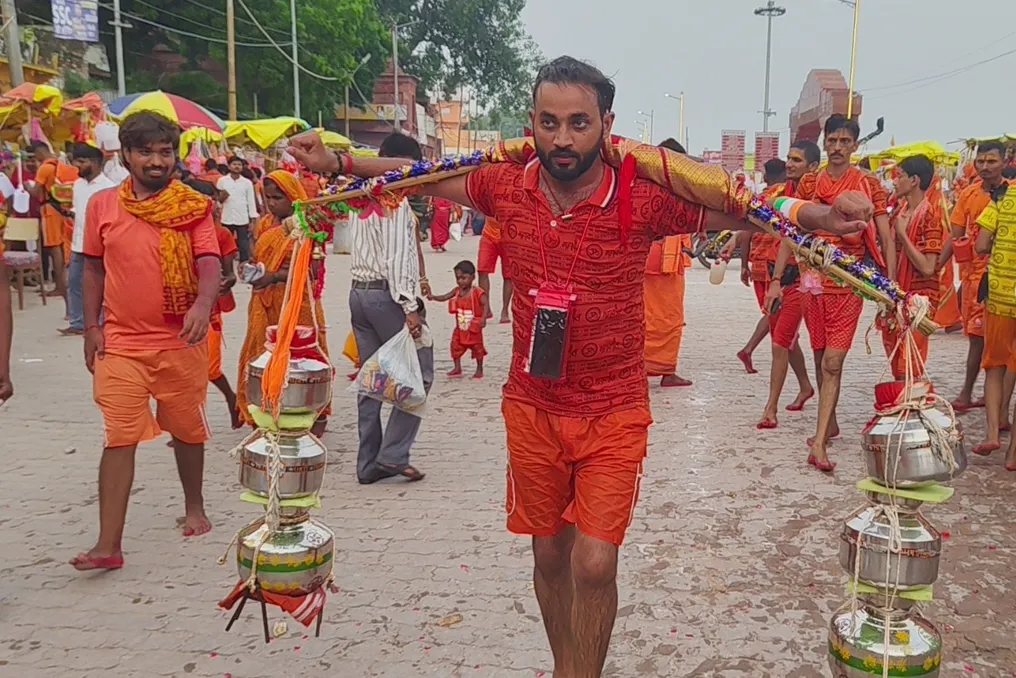
During the month of Sawan, the atmosphere of devotion to Bholenath reigns on the Dashashwamedh Ghat in Prayagraj, accompanied by loud shouts of 'Har Har Mahadeva'. On the Dashashwamedh Ghat, located in the Daraganj area of Sangam city, there is a complete immersion in the cult of Shiva. Huge masses of devotees flow towards the banks of the Ganga.

People of all ages—from small children to the elderly and youth—take a dip in the sacred Ganga to fill their kawads with holy water. Pilgrims approach the priests, the Tirthapurohits, performing rituals, and praying to the deity Bholenath for the well-being and prosperity of their families.

On the ghat, devotees are seen performing exercises to atone for sins before God while holding their hands. An atmosphere of reverence prevails, and the shouts of 'Bol Bam' and 'Har Har Mahadeva' fill the air with spirituality.

This year, two types of Kawadiyas stand out in the pilgrimage. Some, dressed in white attire, are called 'Daak Bam' Kawadiyas; they run non-stop to perform Jalabhishek (water pouring) in temples at designated times. Others, regular Kawadiyas, travel to various Shiva temples, singing hymns and performing dances to ask for peace, tranquility, and prosperity for their families.

The divine beauty of the month of Sawan has completely enveloped Prayagraj, attracting everyone with its amazing blend of faith, trust, and devotion. The Daraganj Ghat in the month of Sawan is colored with the hues of devotion. From bathing in the Ganga to preparing for the water offering to Bholenath, all pilgrims desire one thing—that the grace of Bolla Baba may be upon their entire family. This is why the echo of 'Bol Bam' and 'Har Har Mahadeva' can be heard everywhere in Prayagraj.

Mass influx of devotees observed in Haridwar before Shivratri, causing traffic issues at Shankaracharya Square
Read more
www.aajtak.in

Mass influx of devotees observed in Haridwar before Shivratri, causing traffic issues at Shankaracharya Square

The final stage of the Savan Kawad Mela has begun in Haridwar, and the final phase of the Dak Kawad is also gaining momentum. Since Jalabishek for Lord Shiva will take place on August 11th, a large number of Dak Kawadiyas are arriving in Haridwar to collect water from the Ganges.

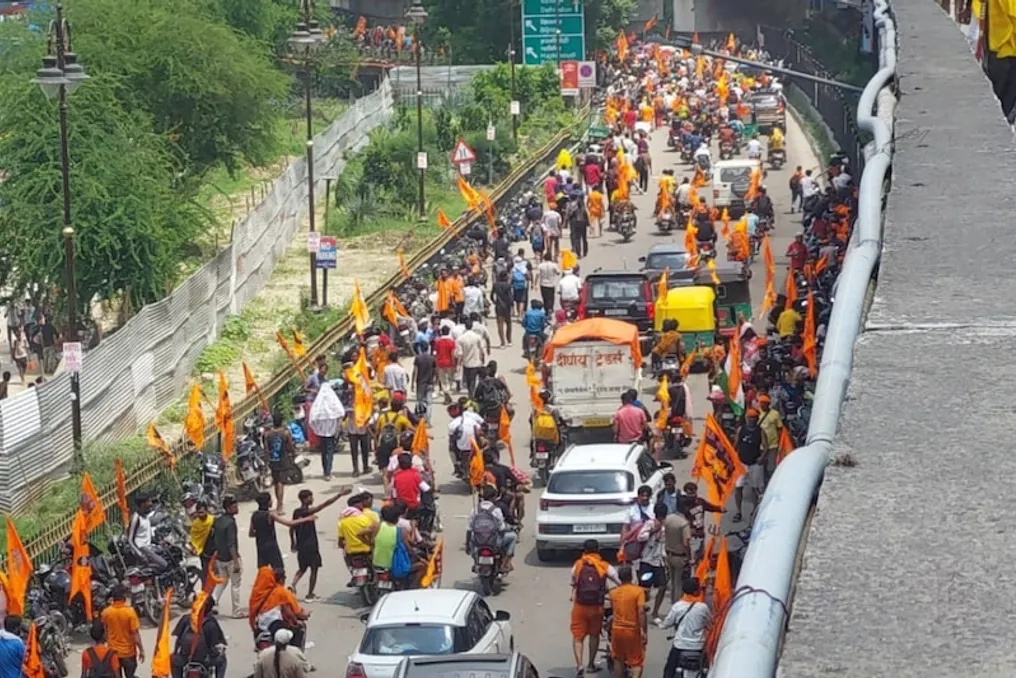
Currently, the streets of Haridwar are filled with a stream of Dak Kawadiyas, with a noticeable increase in the number of pilgrims arriving by motorcycle. The large gathering of Kawadiya motorcyclists at Shankaracharya Square has made traffic management a complex task for the police.

The situation at Shankaracharya Square is characterized by a dense concentration of pilgrims and vehicles. A significant number of Shiva followers are heading to Har Ki Pauri for sacred water, leading to congestion in the square and surrounding streets.

According to administration data, approximately three and a half million Kawadiyas have already collected water from the Ganges in Haridwar and proceeded to their final destinations. Nevertheless, the number of incoming pilgrims during the final stage of Dak Kawad continues to rise, with a significant portion being motorcyclists.

Dak Kawadiyas aim to obtain water from the Ganges and reach their destination quickly. The activity of pilgrims in Haridwar has intensified because they are preparing to perform the ritual bathing in Shiva temples in their respective regions on the day of Shivratri. This has led to an increase in the movement of vehicles and Kawadiyas along the city's main routes.

The situation at Shankaracharya Square indicates a significant increase in crowds during the final phase of Dak Kawad. A large number of Shiva followers are moving towards Har Ki Pauri to collect water from the Ganges before proceeding further.

Sishupal Singh Negi, head of the city police department, reported that the Dak Kawad Mela is underway, and the number of Kawadiyas arriving by motorcycle has significantly increased. Parking has been arranged for these vehicles. However, some people continue to drive into the city in their cars, causing chaos in traffic.

He specified that the police are continuously working to maintain law and order in traffic. Local residents were asked not to come to the city in private vehicles during this period, as it might be inconvenient for them due to the large crowd. According to the head of the city police department, the Kawad Yatra is proceeding normally. Diversion routes have been introduced to account for the flow of pilgrims in different areas, and police forces have been deployed to maintain order among the growing number of Shiva followers.

With the increase in Dak Kawadiyas during the final stage of Kawad, the pressure on Haridwar is mounting. Shankaracharya Square is a prime example of this situation, where a large number of Kawadiya motorcyclists are moving for water from the Ganges. These pilgrims will proceed to their destinations after collecting the water. Then, on August 11th, Jalabishek will be performed for Lord Bholenath in observance of Shivratri. Pilgrims are preparing to honor Lord Shiva and fulfill their faith by worshipping him with water from the Ganges.

The flow of Kawadiyas arriving in Haridwar in the last phase of Dak Kawad continues. Consequently, a further increase in the concentration of people on the city's streets is expected in the near future. The police have urged local residents to cooperate and avoid coming to crowded areas in private vehicles unless necessary.

Pilgrims in revolutionary costumes bring water for Shiva Linga during Kawad Yatra
Read more
www.aajtak.in

Pilgrims in revolutionary costumes bring water for Shiva Linga during Kawad Yatra

The Kawad Yatra pilgrimage continues during the month of Sawan, during which people carry water from the Ganges River to their homes, collected in Haridwar. It is planned that on the day of Sawan Shivaratri, August 11, pilgrims will perform the Jalabhishek ritual with this water on the Shiva Linga.

During this event, various unusual and interesting processions appeared in Haridwar. One such procession arrived from Haridwar to the Muzaffarnagar district, carrying a patriotic message.

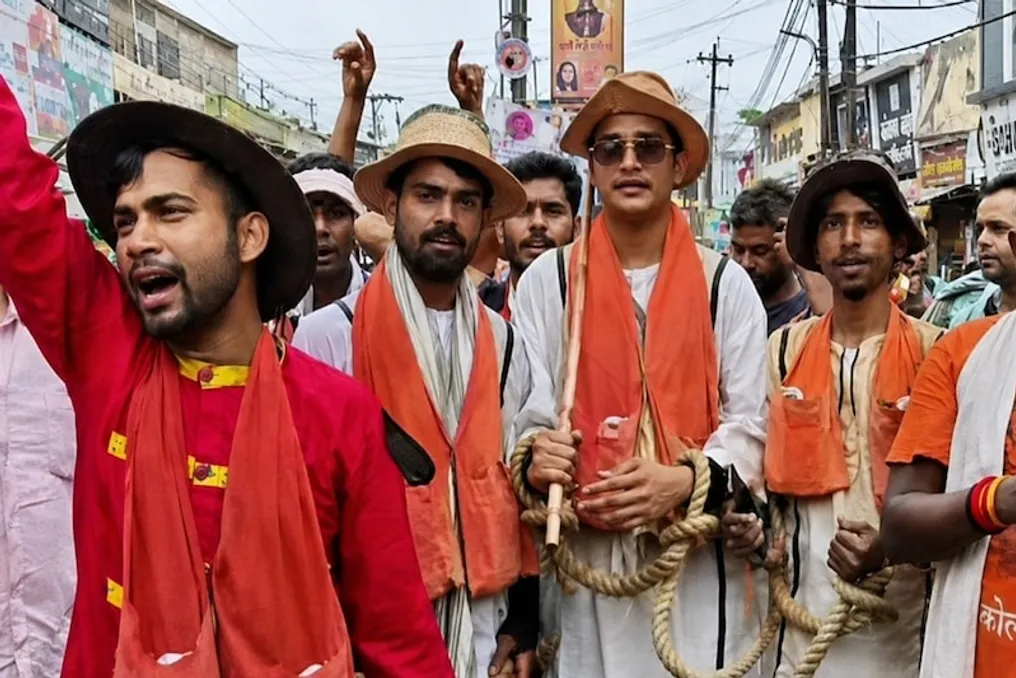
In the city of Muzaffarnagar, at Shiv Chowk square, a procession appeared on Friday that drew admiration from all present. Three followers of Shiva attracted attention by portraying themselves in the images of Bhagat Singh, Rajguru, and Sukhdev. These pilgrims, carrying the Kawad, were dressed in prison attire, and ropes were worn on their hands.

These pilgrims carried the Kawad, suspending a vessel of Ganges water around their necks. Instead of the usual saffron-colored clothes, they came in prison uniforms. This procession attracted a large crowd of people who wanted to see the demonstration of patriotism among the youth.

Members of this group reported that they are heading to Delhi to deliver the water from Haridwar. They walk about 25–30 kilometers daily to their final destination in Delhi.

A group member, Shubham Singh, explained that they have come to pay tribute to the great revolutionaries of the country. He emphasized the enormous contribution of these revolutionaries to the nation's independence. Shub Bhagat Singh, Pravin Sukhdev, and Tarun Rajguru participate in this group, portraying these revolutionaries. One member of the group, Golu, acts as a representative of the British rule.

Members of this group believe that many young people today do not know who Bhagat Singh, Rajguru, and Sukhdev are, or what contribution they made to the liberation of the country. Their goal is to raise youth awareness so that patriotism remains alive among the younger generation. The pilgrims specified that they came from New Ashok Nagar in Delhi, and their journey will conclude on the day of Shivaratri when they offer the water to the Shiva Linga.

Popular