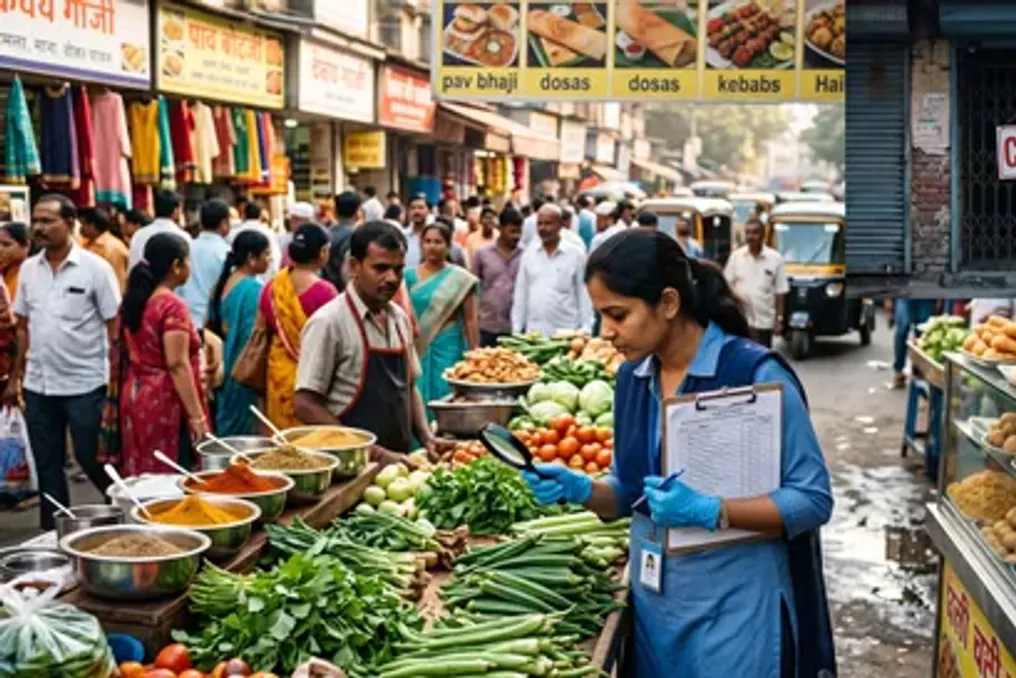
Sanitary inspectors in Mumbai have launched a large-scale campaign to combat hygiene violations, resulting in the closure of several well-known dining establishments. During an inspection of a dessert cafe famous for its ice cream sandwiches, inspectors discovered rats, flies, and expired flavorings.
In another popular restaurant specializing in braised mutton and beef, dirty meat storage containers, greasy floors, and open windows—through which insects and crows could enter—were found. Both establishments were ordered to close as part of the strictest campaign against restaurants in the metropolis of over 20 million people in recent years.
Residents of India's financial capital highly value their culinary culture, yet many welcomed the closure of some of the most famous spots due to cleanliness issues.
Assessment of Food Quality
A significant part of this campaign is overseen by Tukaram Munde, the new head of the Maharashtra food safety regulator. Munde told AFP: 'If they follow the law... they have nothing to fear. And those who do not comply have nowhere to hide.'
In July alone, his office inspected about 900 establishments and temporarily suspended more than 100 licenses. This inspection covered a wide range of venues—from elite restaurants and luxury hotels to cafeterias in prestigious educational institutions, including the nearly century-old Indian Cricket Club.
Munde, who has 2.6 million followers on Instagram, expressed surprise at the number of owners who do not even know basic food safety rules. He noted: 'How to receive raw materials, how to store them, how to process them... whether one needs (special) coverage. Many things are unknown to them.'
Although India has a robust food safety system on paper, its implementation remains weak. According to government data for the period 2022 to 2025, approximately one in six food samples tested by the federal regulator did not meet basic standards.
While Indians are accustomed to street carts using dirty rags or rancid oils, their expectations for established restaurants are higher. Munde's strict approach has received support from residents who believe that some operators regularly bribe officials to ignore violations.
Mumbai resident Pramod Shinde stated: 'There should be an official like Munde in every department. Corruption and falsification can only be stopped through the decisive actions of such employees.'
However, the campaign also faces opposition from hotel lobbying groups, who criticize it as too harsh. Three industry associations stated in a joint release that 'the sudden suspension or cancellation of licenses without prior notice or opportunity for correction is a matter of serious concern,' adding that they have appealed to Prime Minister Narendra Modi.
The judiciary has also begun to intervene. In one case, local media reported that the Bombay High Court overturned the license suspension of a hotel, advising regulators to soften their approach given that 'we are in India.'
Anxiety has spread among street vendors, many of whom fear they might be next.
More Than He Can Handle?
Ashok Verma, owner of a sandwich shop, expressed concern: 'If small street kiosks are closed, where will we go? We have a family and children to support.'
Munde, who took office in May, claims that much of the criticism he receives is unfair, as only a small fraction of inspections led to license suspensions. He emphasized: 'But we will not compromise with unhealthy or unsafe food that could end up in a person's stomach.'
Experts believe that food safety issues in India are structural and cannot be solved by inspections alone. One of the biggest problems is staff shortage. The Maharashtra regulator has fewer than 400 employees, although regulations require more than twice that number.
Food safety consultant Sanjay Indani noted: 'They ideally need 2000 for proper functioning.'
Many residents worry that Munde may not serve long enough to carry out a complete reorganization, given India's reputation for frequent bureaucratic turnover, which causes dissatisfaction among influential circles. It is reported that Munde has been transferred 20 times in his career spanning over two decades.
He has received support from wealthy and influential figures, including billionaire Harsh Goenka. Goenka wrote on social media: 'Nothing restores public trust as quickly as watching strong people be treated like everyone else. Nothing destroys it as quickly as transferring an official who did it. Let's hope it will be different this time.'
Munde himself is not worried about the prospect of transfer. He stated: 'I do not see this as a hanging sword over me. I am simply focused on my post where I have been appointed. I try to do it in the best way possible.'