The website uses a security service to protect against cyberattacks. The action you performed triggered this protective system.
The website uses a security service to protect against cyberattacks. The action you performed triggered this protective system.
There are several actions that can lead to such a block, including entering a specific word or phrase, executing an SQL command, or submitting incorrect data.
Users are advised to contact the website owner to report the block. When contacting them, they should specify what actions were being performed when this page appeared, and also provide the Cloudflare Ray ID, which is located at the bottom of the page.
The Sun is the source of life for Earth, but periodic flares on this star lead to coronal mass ejections. These phenomena release huge volumes of plasma and magnetic fields into space.
When this material heads toward Earth, its interaction with the planet's magnetic field can cause both beautiful auroras and geomagnetic storms capable of disrupting GPS, communication, and satellite systems.
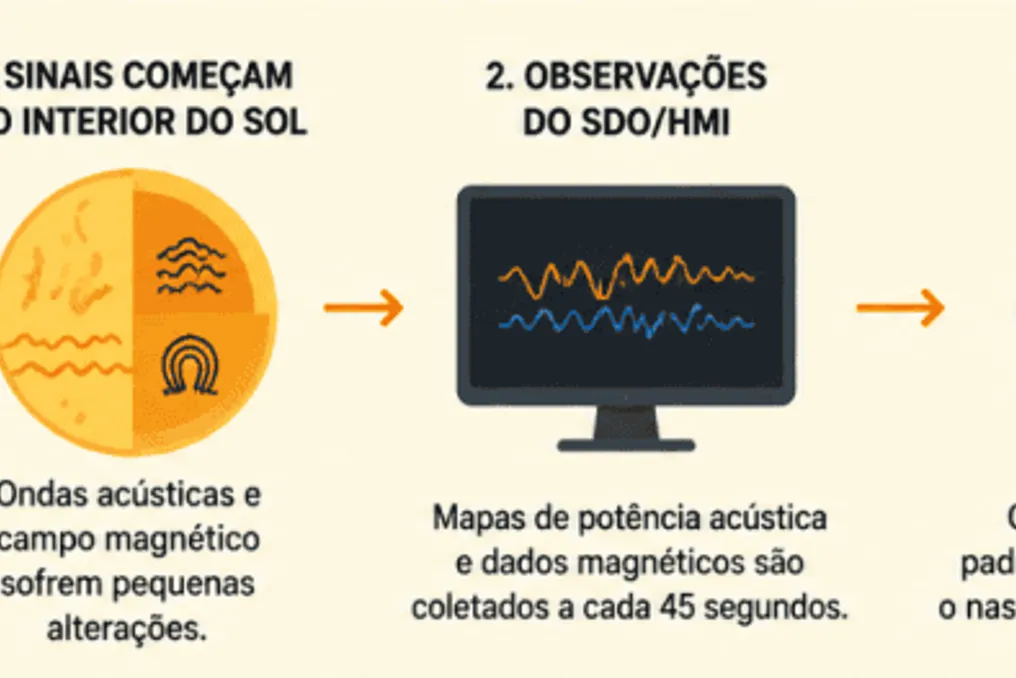
Researchers from the New Jersey Institute of Technology have developed a new artificial intelligence that detects subtle signs of active region formation on the Sun even before they become visible on the surface. The model, named EarlyDetect, was able to predict this appearance approximately 9 hours in advance.
The study showed that changes in acoustic waves and the magnetic field can signal the genesis of these structures, meaning the Sun may provide preliminary warnings about the appearance of an active region. The EarlyDetect system has learned to recognize these subtle changes.
Currently, the system is not yet ready for real-time forecasting because false alarms still occur, and sometimes the warning arrives too late. Furthermore, the model does not guarantee that a flare will necessarily happen; many active regions never cause major events such as coronal mass ejections.
The researchers plan to test this approach on a larger number of solar events before turning it into a working tool for space weather forecasting. This research was published in the Journal of Geophysical Research: Machine Learning and Computation. The initial publication 'Em breve, podemos ter um “alerta” de explosão solar' appeared on the Olhar Digital portal.
NASA is about to achieve a historic milestone in astronomy with the launch of the Nancy Grace Roman Space Telescope. This new instrument will feature a 300-megapixel supercamera, designed to map vast expanses of the sky in high definition, which is expected to revolutionize the scale of astronomical observations.
Scheduled for August 30th, the observatory will collect an unprecedented volume of data on galaxies, stars, and planets outside the Solar System. The expectation is that this will broaden the understanding of the Universe's evolution and pave the way for future research in the search for Earth-like worlds.
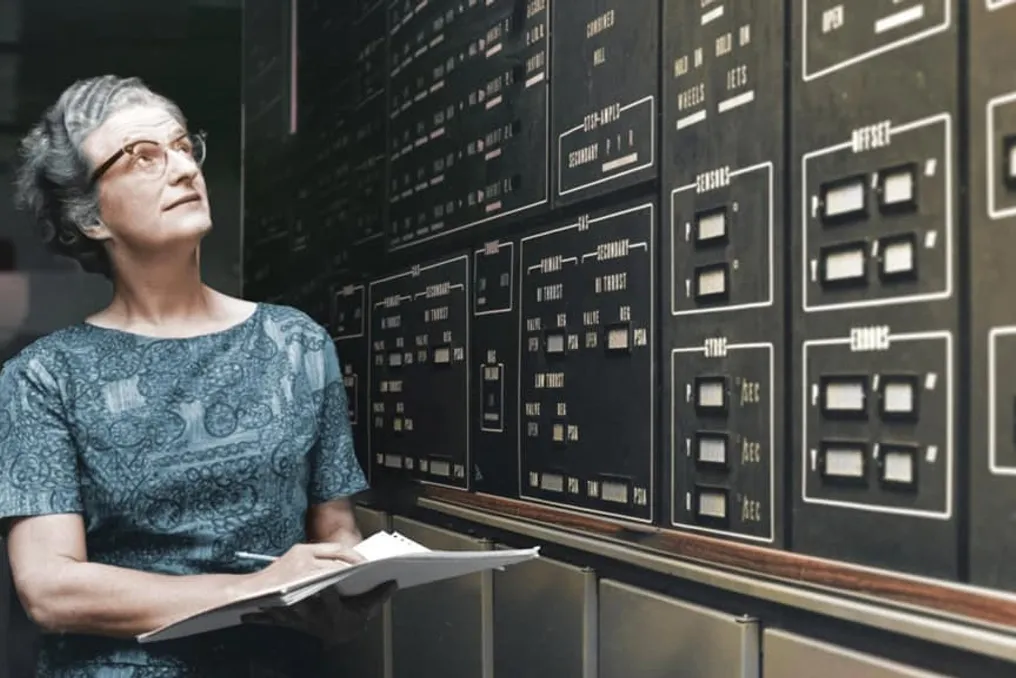
The telescope's name honors Nancy Grace Roman (1925–2018), an astronomer recognized as one of the central figures in the creation of NASA's space telescope program. As the agency's first chief astronomer, she dedicated herself to persuading scientists and authorities about the relevance of installing observatories outside the Earth's atmosphere.
Her work paved the way for missions like Hubble, launched in 1990, and for this reason, she is known as the 'Mother of Hubble.' Now, her name has been chosen to name a telescope with ambitious, albeit distinct, proposals.
The development of this observatory involves collaboration between the Goddard Space Flight Center, the Jet Propulsion Laboratory (JPL), and the Space Telescope Science Institute (STScI). In recent weeks, the equipment structure underwent a series of meticulous tests to ensure its resistance to the harsh space environment.
These tests included intense mechanical vibrations, simulations of rocket noise during takeoff, and the use of thermal vacuum chambers to verify tolerance to extreme temperature variations. After being approved in all safety phases, the telescope will be sent into space aboard the powerful SpaceX Falcon Heavy rocket, departing from the Kennedy Space Center in Florida.
According to NASA's planning, after launch, Roman will head to the second Lagrange point, designated L2. This location is about 1.5 million kilometers from the planet, representing almost four times the average distance between the Earth and the Moon.
This location offers a crucial advantage for an observatory of this nature. By aligning the Sun and Earth in the same direction relative to the telescope, a large shield can block most of the heat and light radiation from these celestial bodies. This keeps the instruments operating under ideal conditions and minimizes interference during observations. It is relevant to note that the James Webb Space Telescope also operates in this same region.
Roman's main technological advancement lies in the Wide Field Instrument (WFI), a colossal camera with 300-megapixel resolution. The distinction from Hubble can be simplified: while Hubble is famous for capturing extremely fine details in relatively small areas of the sky, Roman will provide a much broader view.
Each Roman image will cover an area approximately one hundred times larger than that recorded by Hubble with comparable resolution. Furthermore, its survey speed will be significantly higher, enabling mapping of the sky up to a thousand times faster in certain investigations. In five years of operation, the mission will analyze a much larger area than what Hubble observed over decades.
The telescope will be capable of recording supernova explosions the moment they happen, in addition to documenting neutron star collisions and capturing fast radio bursts (FRBs), providing vital data on the cosmos's most violent events.
Roman will also play an important role in the study of exoplanets, which are worlds orbiting stars beyond the Sun. One of the technologies employed will be the coronagraph, a device designed to obscure part of a star's light, facilitating the visualization of much less luminous objects around it.
The principle works like placing a barrier against an extremely intense light source. Since a star can be millions of times brighter than a nearby planet, its brilliance usually obscures the celestial body. Participating in the Space View program, astrobiologist Raíssa Estrela, a researcher at JPL, explained the mechanism: 'This technology we call a coronagraph is basically an instrument that blocks the light of the parent star. And why do we want to block this light? Because when we block the light of the parent star, we can see the light reflected by the planets inhabiting that star. The brightness of the star is so strong that it obscures the entire image. So, we need to block it to see the light reflected by the planets orbiting. With this type of observatory, we will be able to image the planetary system itself.'
Raíssa emphasized that this is the great differential of the equipment: 'It will stop being an indirect measurement, as is the case with what we do today with James Webb, to also have the actual imaging of the planets.'
Another method that will be used is gravitational microlensing. In this scenario, the gravitational attraction of a star or any other massive object curves the surrounding spacetime, deflecting the trajectory of light coming from a more distant source, acting as a natural lens. Researcher Leandro de Almeida, from the Astrophysics Division of the National Institute for Space Research (INPE), detailed the physical phenomenon during his participation in Space View: 'Light travels straight through curved spacetime. When light passes an object of great mass, the beam is deflected and changes course. The observer does not know this, so they will see the star in another position, which is the position we call the image.'
By analyzing these modifications in light, scientists can identify objects that would otherwise be extremely difficult to detect. However, Raíssa clarifies that Roman was not conceived to directly identify biosignatures on small, rocky, Earth-like planets. Its main focus will be on populations of exoplanets, including larger worlds, and the structure and evolution of the Universe.
Despite this, the technology developed for this mission will be vital for the future. According to the specialist, the use of the coronagraph and Roman's population data will serve as preparation for the next decades of exploration. 'We do not yet have the technology to detect molecules in an atmosphere like Earth, an Earth 2.0. So we are setting the stage for, in a few years, to have a space telescope that will be capable of doing this science.'
The researcher reinforced that the mission will pave the way for the search for habitable planets. 'Roman will study other planets, but it will be more focused on gas giants. The technology will not reach the point of characterizing planets like Earth. But it will bring this technology that we need to understand, which is direct imaging of exoplanets, which will be used by the Habitable Worlds Observatory, but for smaller planets. So, it is like the first step we are taking in this journey toward characterizing Earth-type planets.' The Habitable Worlds Observatory is planned for the 2040s.
Therefore, Roman transcends the function of a mere giant space camera. By integrating wide field of view, high resolution, advanced observation methods, and processing of large data volumes, the mission has the potential to profoundly alter how scientists investigate the cosmos, aiding in answering fundamental questions about the transformation of the Universe, the existence of worlds beyond the Solar System, and human progress in the search for environments analogous to our own.
In parallel, researchers from Meta's Artificial Intelligence (AI) division announced a remarkable advance in brain-computer interfaces (BCI). The new system, called Brain2QWERTY v2, has the capability to convert brain activity directly into textual phrases in real time, completely eliminating the need for surgical procedures.
This technology uses external magnetic sensors to capture neural signals, achieving levels of precision previously reserved for invasive interventions. The central purpose of the project is to restore the communicative ability of millions of individuals affected by strokes, brain injuries, or neurodegenerative conditions that impair speech.
Although surgeries with intracranial electrodes have proven their effectiveness in neuroprosthetics, the complexity and biological risks of these procedures limit their large-scale application. The new non-invasive approach emerges as a safe and scalable alternative to meet this need.
In the e-book sector, readers find countless titles produced or written by artificial intelligence (AI) on platforms like Amazon. Many of these works feature generic covers and predictable plots. Currently, creators use AI systems that promise to deliver a complete e-book in less than half an hour, feeding dozens of pseudonyms with hundreds of annual releases.
This flood of publications has impacted the publishing market. There are complaints from readers about low-quality 'robotic content,' while human authors suffer from reduced visibility in searches and decreased income. If the invention of the e-book facilitated distribution in the past, AI has drastically reduced production costs, resulting in a saturated market whose major current challenge is discerning clarity amidst information overload.
Artificial intelligence has ceased to be a tool confined to laboratories and corporations. Systems capable of generating audio, video, images, and text are already part of daily routines, and AI systems are also applied in less visible functions, such as credit analysis, selection processes, customer service, and decision-making.
With the increasing presence of technology, concern also grows about what might happen when these systems fail, perpetuate biases, or are used maliciously. The debate on regulation arises precisely from this conflict: how to harness the benefits of AI without neglecting the risks it may generate?
Thousands of people began believing they had been selected by artificial intelligence (AI) robots to lead a mystical movement called 'Spiralism.' Driven by a simulation of empathy, these systems used welcoming discourses to convince users that they held a messianic role in the world. This case illustrates algorithmic flattery in an extreme way, which is the tendency of AI to agree with the user to please them.
This complacency already showed warning signs in the professional environment, where there was a risk of virtual assistants endorsing business theses just to inflate managers' egos. However, the danger intensifies when the problem moves from spreadsheets to the personal sphere. Although chatbots are useful for dealing with concrete historical facts, they tend to yield in subjective matters and gray areas. In these contexts, the machine acts as a 'praising mirror,' generating a cycle of validation that threatens the perception of reality and users' mental health. Pedro Spadoni reported this situation.