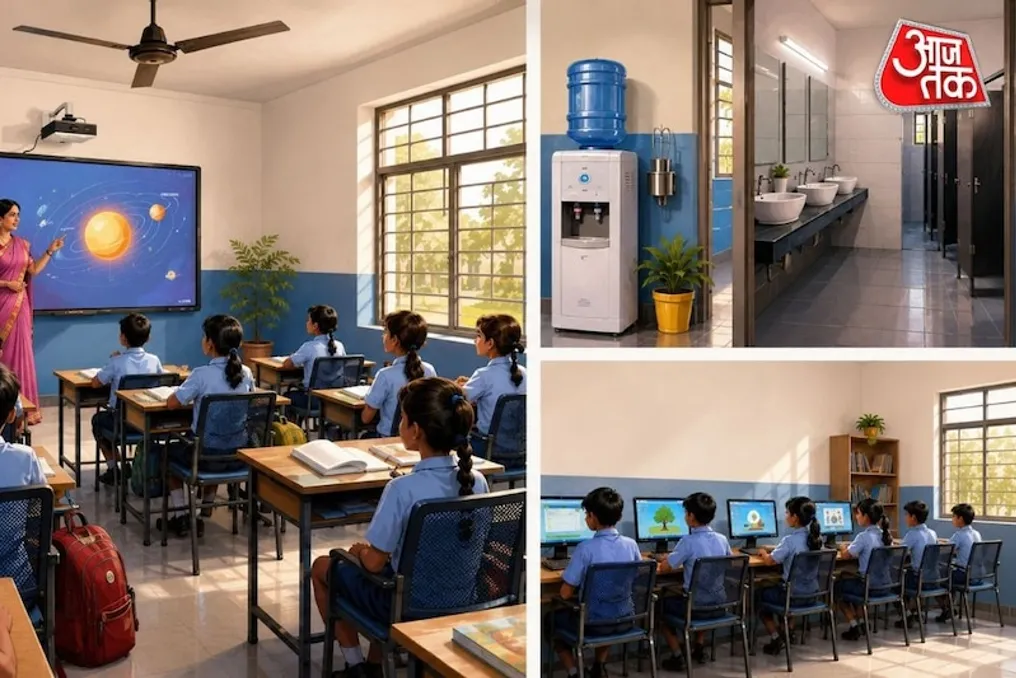
The condition of rural and public schools across the country raises serious questions not only about the future but also regarding the conditions that children remain unaware of. Following the 'School Theek Karo' campaign, initiated by Abhijit Dipke of the Kokroch Janta party, this issue has become a subject of national discussion. The campaign prompted reflection on the fact that children attending public schools, so many years after gaining independence, are forced to live without basic amenities. Consequently, the question arises as to what specific amenities should be provided to these children, but first, legislative norms must be examined.
Legal basis for children
According to the Right to Education Act of 2009 (RTE Act), there is a legal framework for free and compulsory education for children aged 6 to 14. The appendices of this law stipulate various minimum standards for schools, including the availability of safe and sufficient drinking water, separate toilets for boys and girls, standards related to classrooms and teachers, sports grounds, and facilities for children with disabilities.
Water and toilets: not just an absence, but a basic right
The lack of safe and adequate drinking water in a public school cannot be ignored by simply calling it a 'school problem.' According to the RTE, the school infrastructure must ensure safe water supply. Furthermore, the provision of separate toilets for boys and girls is mandated. However, the key question is not merely the existence of a toilet, but whether it is usable, clean, safe, and meets the needs of the children.
What other amenities should be included
Providing clean drinking water is mandatory for every school; the rules also require the availability of cold water during hot weather. Schools must have separate, functional toilets for boys and girls. Special attention is paid to girls: ensuring sanitizers, water, and proper hygiene is their fundamental right, the absence of which often leads to girls dropping out of school in rural areas.
Electricity and ventilation are also necessary: classrooms must have adequate lighting, fans, and a stable power supply so that studies are not hampered by extreme heat or humid weather. The school building must be safe (without dilapidated or leaking roofs). Additionally, a sports ground and fencing are important for children's physical development. Children are also entitled to nutritious and quality food as part of the school meal program. In the modern world, children's rights also include the concept of digital education, so schools are expected to have computer labs and interactive classrooms so that children do not fall behind in the technological race.
Is having a computer in every public school mandatory
However, the question arises: is having a computer mandatory in all public schools? The initial minimum appendix of the RTE does not contain a specific provision requiring a certain number of computers in every primary school. Therefore, one cannot assert that the absence of a computer in a public school automatically constitutes a violation of the RTE. Nevertheless, this does not mean that digital education is not a government priority. There are provisions for creating computer labs, ICT services, interactive classrooms, and other digital resources to strengthen school infrastructure.
What is the 'School Theek Karo' campaign
It should be noted that through Abhijit Dipke's 'School Theek Karo' campaign, questions about the actual condition of public schools on the ground are being raised. The report mentions issues raised during school inspections concerning basic amenities. He also called on parents to take an active part in this work.