Control over food safety has been intensified in the state of Karnataka. Samples of hazardous shawarma and kebabs were taken. The Food Safety and Drug Administration of Karnataka conducted raids at all food-related locations, including hotels, dhabas, schools, e-commerce warehouses, hostels, and other establishments.
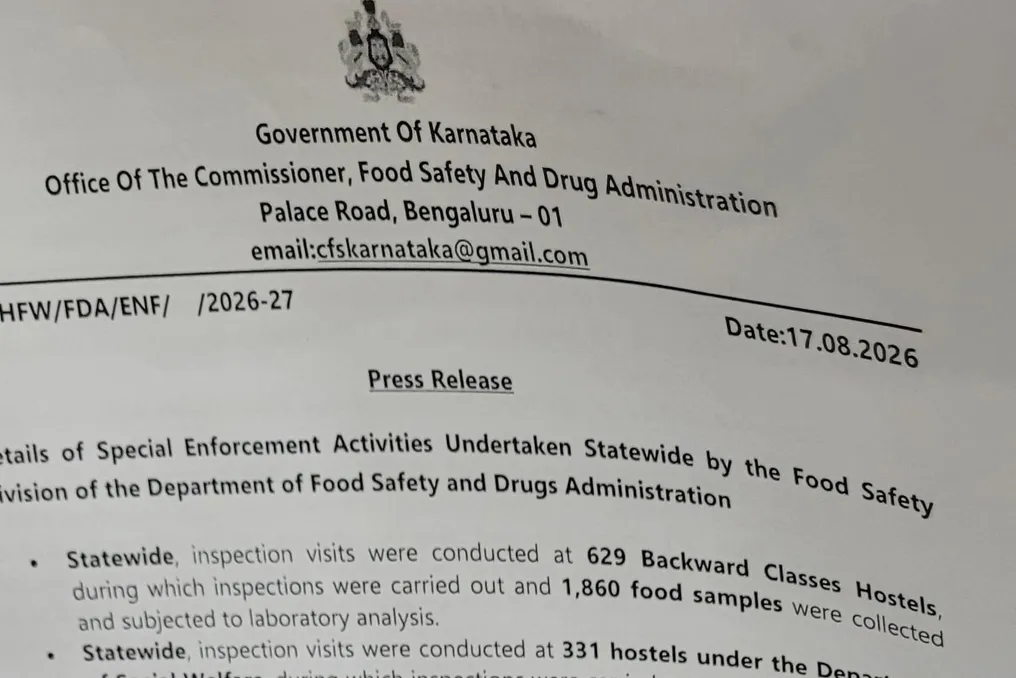
Inspections were carried out in 629 hostels for underprivileged populations. From these locations, 1860 samples were collected for laboratory analysis. Additionally, 331 hostels of the Department of Social Welfare were checked, collecting 556 samples. Furthermore, 889 food establishments at 186 bus stands were inspected, and notices were issued to approximately 206 places with a fine of 55 thousand rupees.
Checks were also conducted at Anganwadi centers, where about 549 samples were collected and are currently being sent for analysis. As part of the FSSAI training and certification program, a training session was held for approximately 11 thousand people engaged in food activities. Raids also covered dhabas located along major highways.
A fine of 3.67 lakh rupees was imposed due to lack of hygiene, use of artificial colors, and violation of other rules. 41 samples of shawarma and 21 samples of kebab were taken, of which 9 shawarmas and one kebab were deemed hazardous. In addition to the fine, other measures have been initiated. These raids were conducted following complaints regarding poor hygiene.
Samples of milk and dairy products arriving from Tamil Nadu to Karnataka were also tested. Inspections were carried out near 124 schools and colleges, from which samples were also collected. In Bengaluru, samples were taken from over 60 hotels rated 3 and 5 stars, including warehouses and international restaurants. 30 individuals involved in food activities were issued notices.
236 e-commerce food warehouse locations underwent inspection. Operations continue at 44 warehouses, while eight warehouses were fined 1.97 lakh rupees due to hygiene issues.
During the food safety campaign across the state, large quantities of spoiled and expired food products were found in dhabas and restaurants. These included 378 kg of chicken meat, 203 kg of fish, 200 kg of vegetarian food, 76 kg of vegetables, 45 liters of milk, 12 kg of bakery products, and 67 kg of grain.