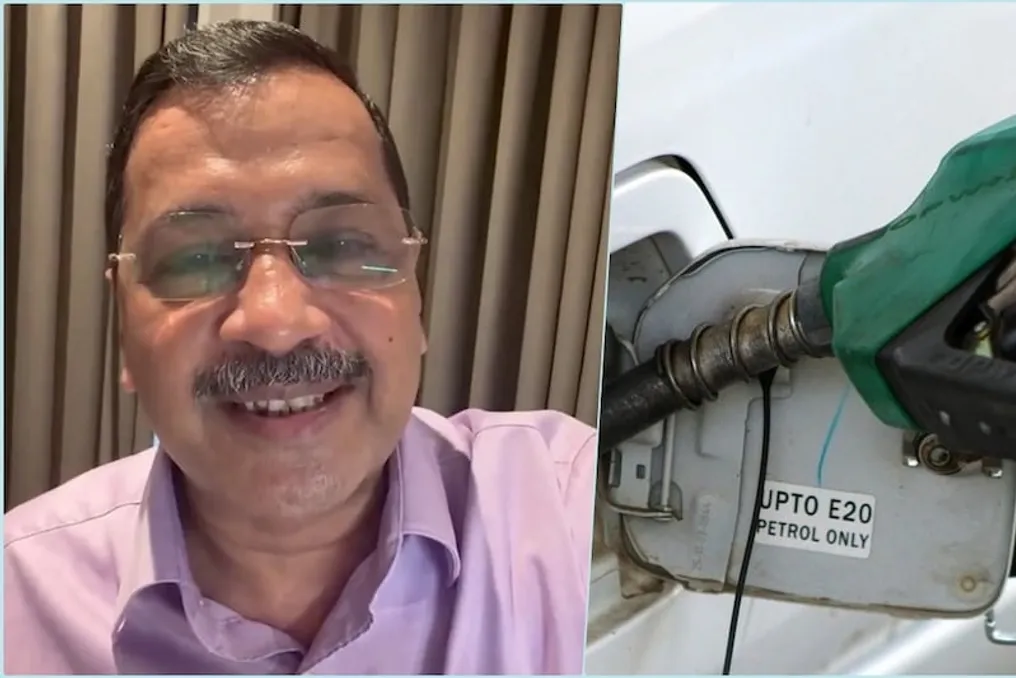
An active discussion is underway in the country regarding E20 gasoline. Issues are being debated everywhere—from roads to parliament and social media. Concerns are arising that using this fuel leads to reduced fuel efficiency and component failure in vehicles. Consequently, many citizens are demanding the option to use low-ethanol blended fuels, such as E5 and E10. Notably, for the first time, a government representative has raised the possibility of reintroducing E10 fuel.
The debates now concern not only engine performance but also whether the drive for fuel economy compromises the balance in the country's agriculture, water supply, and food security. This issue cannot be ignored because it is being raised not by a social media critic, but by V. Anantha Nageswaran, the chief economic advisor to the government of India.
In an article published in The Indian Express, Nageswaran emphasized that before transitioning from E20 to E27 or E30, a full analysis of the so-called 'nutrition versus fuel compromise' must be conducted. E20 fuel, which was previously seen as an alternative to gasoline, a tool for reducing oil imports, and an environmental advantage, requires deeper consideration. The main question is whether corn will fuel gas tanks or feed people. Since the debate over engines is distracting attention, the real fight is for land and water, which, once directed towards fuel, are difficult to return for agricultural needs.
Nageswaran's advice is for the government to restore the availability of E10 fuel for older vehicles. This fuel is a mixture of 90 percent pure gasoline and 10 percent ethanol. However, he also addresses common concerns about E20. He notes that there is widespread fear on social media that E20 reduces fuel consumption and damages vehicle components. Nevertheless, these claims are not entirely accurate, and he refers to the results of various tests.
According to Nageswaran, ethanol contains less energy compared to gasoline; the energy obtained from one liter of ethanol is about two-thirds the energy obtained from gasoline. Therefore, a vehicle on E20 may travel slightly less distance per liter of fuel. However, this does not mean engine failure. Since E20 contains 20 percent ethanol, the total energy reduction is approximately 6–7 percent, not 30 percent as claimed on social media.
Interestingly, using E20 can help reduce pollutants such as carbon monoxide and unburnt hydrocarbons. So far, tests have not revealed anything alarming regarding engine durability and stability. For instance, the National Oak Laboratory in the USA conducted tests on 86 vehicles not compliant with E20 standards, driving them for about 10 million kilometers. No additional component wear was found during these tests. Similar conclusions were drawn in India through tests by ARAI, Petroleum Institute, and Indian Oil, refuting claims of engine failure in every E20 vehicle.
There is a significant exception. India has about 75–80 million old two-wheeled vehicles manufactured before the BS4 standard that use carburetors. These old carburetors cannot automatically regulate fuel delivery according to the excess oxygen contained in ethanol. As a result, the engine may receive less fuel than required, which can lead to overheating. Furthermore, rubber seals in older vehicles present a separate problem: they may fail upon prolonged contact with ethanol if they are not designed to handle it. Although replacing these seals with ethanol-resistant ones is not too costly, the problem is that modernizing 75–80 million old two-wheeled vehicles in India will be a difficult task, and even with immediate action, it will take many years to update the entire fleet.
Nageswaran points out that the initial policy intended to solve this problem by ensuring the availability of low-ethanol gasoline for older machines. However, low-ethanol fuel has gradually disappeared from petrol pumps. Therefore, it is necessary to ensure the availability of fuel like E10 alongside E20. This will ease the lives of older vehicle owners and reduce fears associated with E20. It is important to note that this will not require an increase in overall ethanol consumption: a low-ethanol option can be provided for older cars, while new vehicles can continue to use E20.