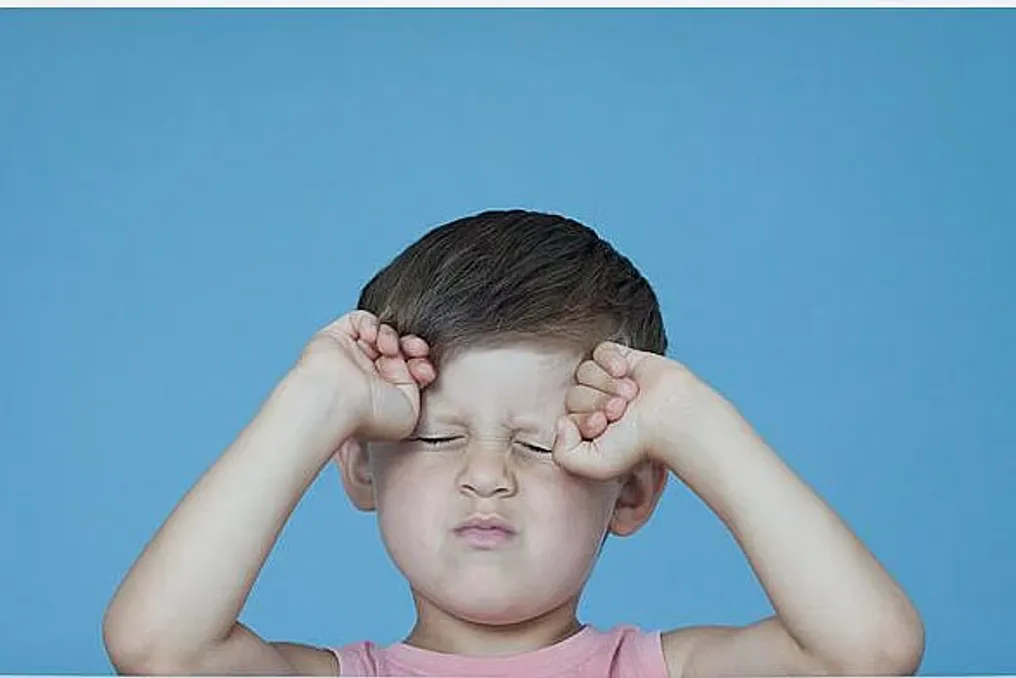

Doctors from the United Arab Emirates caution that the practice of 'Instagram parenting' may cause children to feel exploited by their parents. One example that drew attention involved a video uploaded by parents when their son was young. Years later, classmates discovered this clip, mocking his manner of speaking, laughter, and behavior on camera.
The child experienced severe stress, leading him to lose interest in going to school. His family had to seek legal assistance to get these videos removed, according to well-being coach Dr. Hanadi Al Jaber.
This case is part of a series of examples that psychologists believe demonstrate the growing problem of children's digital footprint: parents might consider a photo or video an innocent childhood memory, while the child is forced to live with that content long after they have outgrown the image captured on the recording.
These warnings came after the Abu Dhabi court ruled to prohibit divorced parents from publishing photos, videos, and personal information about their daughters online, and to delete existing content that could harm the child's best interests.
The court also restricted the parent who filed the lawsuit, emphasizing that the issue goes beyond a simple dispute between parents over the right to publish children's pictures; it concerns the child's right to privacy and protection.
Psychologists told Khaleej Times that this case should prompt parents to consider not only whether the child is happy to be photographed today, but also whether they would want this material to be accessible when they become a teenager or an adult.
Al Jaber recalled the case of a boy whose parents created content about him and posted videos on YouTube when he was young. She explained: 'At that time, he was just a normal child. He didn't understand and couldn't say yes or no.'
The situation changed when he became a teenager. His peers found the old videos and began using them for ridicule. 'They created digital stickers from his photos—how he snored, how he spoke, how he laughed,' Al Jaber recounted.
The bullying became so intense that the teenager stopped wanting to attend school. Ultimately, the boy asked his family to delete the videos. However, since the material was already online, its removal proved to be a difficult task. According to Al Jaber, one of the measures the family was forced to take was seeking legal intervention for the mandatory removal of the content. The teenager suffered from serious psychological distress and, as she noted, at one point started thinking about suicide. 'It took us a long time to treat him.'
For Al Jaber, this case illustrates the importance of a child's ability to understand and consent to the public disclosure of information. 'When he was creating content, he was a normal child. He didn't understand and couldn't say yes or no.' But as he grew older, his concept of privacy changed. 'And when he grew up and started to understand, of course, he tried to ask his family to delete the videos.'
Dr. Amir Javed, Director of Pediatric Psychiatry and Intellectual Disabilities Service and Consultant Psychiatrist at Burjeel Medical City, stated that children should gain increasing control over how they are presented as they grow up. 'When their lives are widely documented online before they can give informed consent, they may later face embarrassment, loss of trust, or feel that their personal boundaries were violated.'
In his clinical practice, Javed reported encountering teenagers who were uncomfortable with personal information or photos being published without their permission. 'The common theme is that they wanted more ownership over their digital identity.'
He added that this sense of ownership becomes particularly important as children age, as their understanding of privacy, reputation, and identity develops. A photo that seems funny or cute to parents when a child is five years old can be deeply humiliating for that same child at fifteen. Parents should ask themselves if they would be comfortable sharing the same information about themselves. He noted that the same test should apply to children.
Dr. Hanadi warned that the risks are not limited to school bullying—they can extend to the 'dark web.' Once children's photos and videos become publicly available, strangers can access them, save them, redistribute them, or potentially use them to contact the children. 'There are people who use children's videos.'
She cautioned that some individuals may find children through social media and begin communicating with them, potentially exposing them to risks of exploitation or threats. This is why parents should carefully consider before turning private family moments into public content.
A family photo shared privately with relatives is fundamentally different from a video uploaded to a public account, where it can be viewed, copied, and redistributed by people the family does not know.
The clearest signal may come directly from the child. Al Jaber advised parents to pay attention if a child starts questioning old photos or videos or asks for them to be deleted. 'If he says, 'I don't like this photo, I want a better one'; that is what parents should know.'
Similarly, if a child sees an old video and asks why they looked or behaved a certain way, or simply says, 'No, delete this, I don't want to,' parents should listen. The problem is exacerbated when parents refuse because the content has gained value through views, subscribers, or revenue. 'When it becomes content, all of that can unfortunately be destroyed.'
Psychologists also drew a line between ordinary family sharing and the growing phenomenon of exploiting children in online content. Hiba Badawi, a psychologist, stated that documenting family moments can be positive if it remains a way of preserving memories. 'But when this documentation turns into content creation and a project for profit and income, and the child becomes part of this project, disaster strikes.'
She expressed concern that a parent might start viewing the child's appearance not just as a family moment, but as an asset generating engagement or income. This can make it difficult for the child to refuse later. Javed advised parents to consider whether the publication respects the child's dignity and whether they would be comfortable if the same information were spread about them. 'Parents can continue to record special moments for family albums or private sharing, being more selective about what becomes permanently available on public platforms.'
_