Denisovans, considered extinct relatives of Homo sapiens, possessed a high stature, according to recent fossil discoveries.
The first mention of these hominids occurred in 2008 when archaeologists located an adult tooth, minimal finger bone fragments from a child, and other prehistoric traces in the Denisova Cave, located in Siberia. Two years later, in 2010, DNA analyses of these remains, dated to 40 thousand years ago, demonstrated that they did not correspond to any known species. This discovery led to the naming of the new hominid as Denisovan, due to the cave of its location, and it showed similarities to both Neanderthals and sapiens.
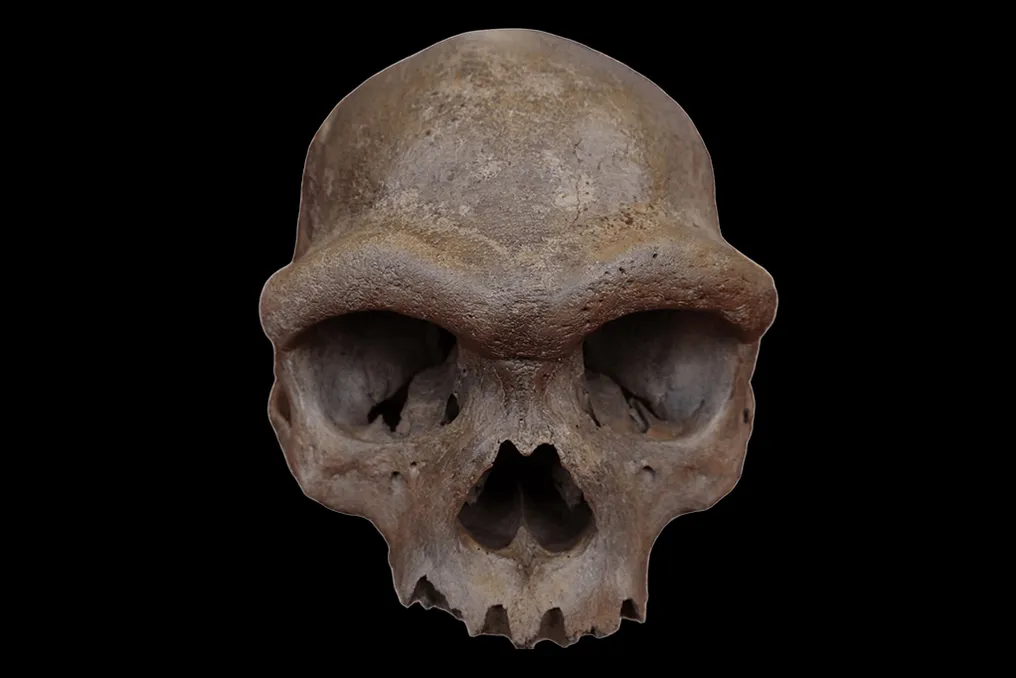
Historically, the study of these extinct relatives was hindered by the scarcity of fossil material; from the beginning, only one more Denisovan skull and a few teeth and bone fragments were found. However, a current investigation is contributing to clarifying more about this species.
An article, still under review on the bioRxiv server, details new Denisovan fossils—a femur and part of a tibia, both leg bones, recovered from the seabed of the Taiwan Strait. These fossils were found in 2010 and have undergone continuous study. The confirmation that they belong to Denisovan individuals was obtained through the identification of proteins present in the fragments.
This new analysis points out that Denisovans were among the tallest hominids of their time, with one specimen reaching 1.90 meters in height, which represents approximately 15 centimeters more than the average height of Brazilian men. For comparison, Neanderthals had an average height of about 1.68 meters, while the average among Homo sapiens is slightly higher: about 1.75 m for men and 1.68 m for women.
Evidence suggests that the life of the Denisovans was mainly spread across Asia, ranging from Siberia to China, until approximately 30 thousand years ago. During this period, they coexisted with other hominids, such as Homo sapiens, Homo erectus, and Homo floresiensis. It is important to note that today, some people possess DNA inherited from the Denisovans, proving that our species interacted with them at various past times.
Although the leg bones resemble those of other archaic hominids, they also exhibit certain anatomical features common to Homo sapiens, reflecting the traces of this crossbreeding. Researchers faced difficulties in determining which individual each bone belonged to and how they fit into a complete chronology, given that the findings were mixed and not arranged in ordered sedimentary layers.
However, it was possible to conclude that the first Denisovan fossil was male, weighing about 83 kg and measuring approximately 1.80 m. The second, also presumed male, weighed 91 kg and reached about 1.90 m. To obtain more details about the unknown tibia and femur, scientists collected bone collagen to date them by radiocarbon and searched for ancient DNA within them. Furthermore, the chemical composition of the fossils was analyzed, providing information about the environment and diet of the Denisovans.
It is likely that they inhabited a savanna or open field environment, where they had abundant access to animal protein, as no signs of consuming food from marine or freshwater environments were found. Another surprising discovery relates to the age of the fossils. Initially, in 2023, the authors estimated the age of the bones to be around 160 thousand years; however, new radiocarbon dating indicates that they are significantly more recent, with only about 45 thousand years.