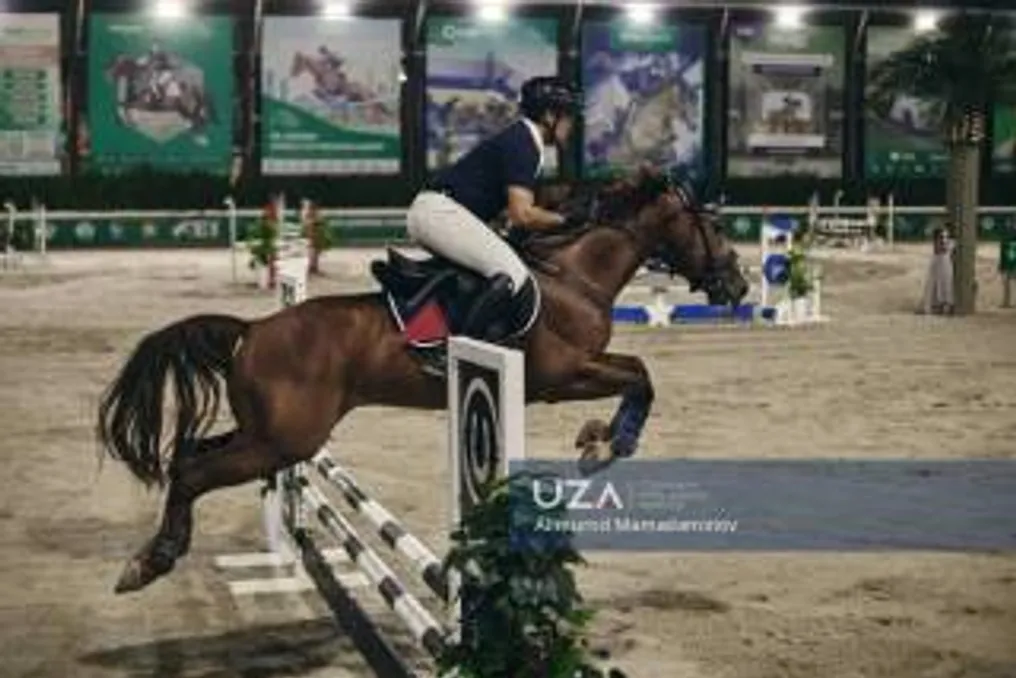
The seventh stage of the "Global Tour – 2026" series of competitions in the discipline of concourse (obstacle jumping) took place in the capital within the "Universal Horses Stable" sports complex.
The seventh stage of the "Global Tour – 2026" series of competitions in the discipline of concourse (obstacle jumping) took place in the capital within the "Universal Horses Stable" sports complex.
By the end of the third day of the match in Galle, the Indian team held a comfortable advantage, leading their opponents by 178 runs. However, the Indian team had the option to give Sri Lanka a follow-on if they failed to score more than 200 runs.
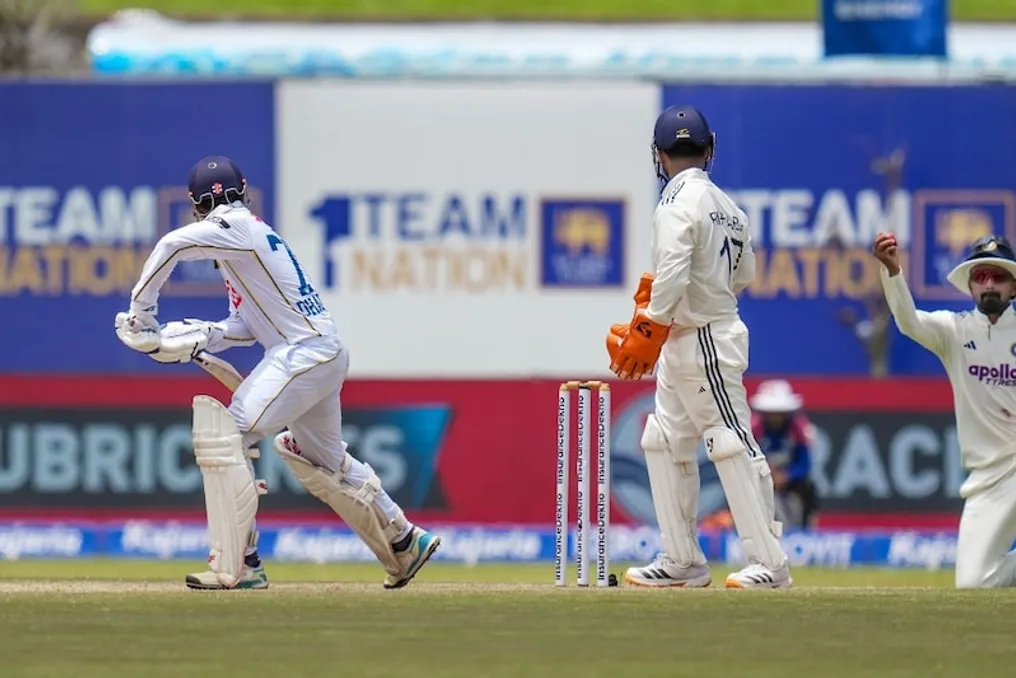
But one mistake on the field caused the entire calculation of the Indian team to be disrupted. If Kael Rohul had not missed this chance, the Sri Lankan team would not have reached the mark of 200 runs in the first innings.
The incident occurred during the 36th over of Sri Lanka's innings. Indian spinner Manav Sutthar bowled an excellent flighted delivery that bypassed Niroshan Dickwela. The ball, touching the outer edge of the bat, quickly flew towards the slot where Kael Rohul was positioned. Rohul attempted to catch the ball by reaching right, but due to the high speed, the ball slipped from his hands.
At that moment, Dickwela was only scoring 20 runs. The dropped catch gave Sri Lanka a chance for a revival. Earlier, the team was struggling, having only 5 wickets down with a total of 90 runs, in a very weak position. Among the dismissed players were Udara (27), Chandimal (4), Chamindu Mendis (14), and captain Danjaya Dissanayake (21).
After Rohul failed to catch the ball, Dickwela took the initiative along with Sonal Dinusha. They built a historic partnership of 146 runs for the sixth wicket. Taking advantage of this opportunity, Dickwela scored 80 runs off 115 balls. Sonal Dinusha demonstrated magnificent play, spending over four and a half hours on the field and scoring 100 runs.
Thanks to these two players, Sri Lanka managed to score 284 runs, exceeding the required threshold of 263 runs for a follow-on and avoiding a major humiliation. As for the Indian bowlers, Manav Sutthar took the most—4 wickets. Ravindra Jadeja achieved 3 wickets, while Prasidh Krishna, Mohammed Siraj, and Kuldeep Yadav each took one wicket.
Rain started on the third day after the completion of the first innings, and the umpires declared the match over earlier than planned. Now India will take the field in its second innings with an advantage of 178 runs. Despite the advantage remaining with India, the ball missed by Rohul could prove critical for the Indian team.
For Indian field coach Subhipa Ghosh, this is his first visit with the team, and now the responsibility falls on him to improve the level of fielding in the Indian team. Often, such small errors lead to the complete opposite result of the match, so the Indian team aims to learn from these mistakes and improve its fielding standard.
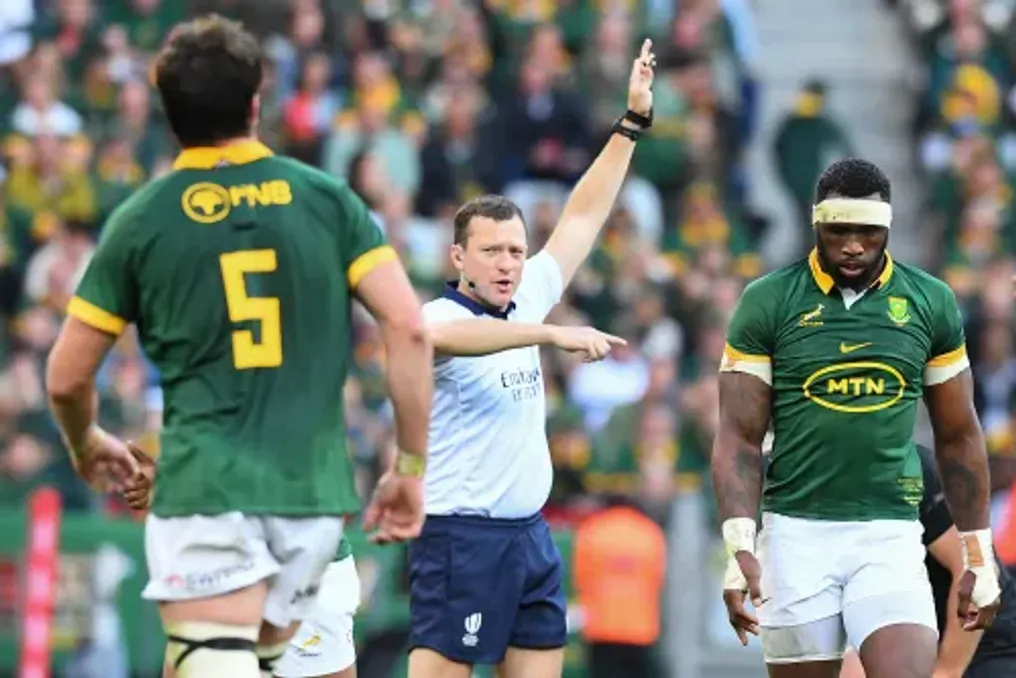
During the press conference on Monday preceding the first match of the greatest rivalry in rugby, Rassie Erasmus took center stage alongside rules advisor Jacques Pepper. This marked the beginning of a psychological battle between Erasmus, his All Blacks colleague Dave Rennie, and referee Matteo Carling, who will officiate the game on Saturday.
Typically, the Monday press conference during match week involves the Springboks assistant coach and one of the players, but this Monday was different. Erasmus himself addressed the press, initiating the verbal sparring.
Erasmus openly stated that it is now 'almost impossible' to speak with the referee before the match due to a new World Rugby directive. This directive requires both coaches to coordinate a meeting with the match official and attend it together; individual discussions with referees are no longer permitted.
Acknowledging that issues he could previously raise confidentially must now be voiced publicly, Erasmus did just that. He responded to the narrative coming from New Zealand that the Springboks are slowing down the pace of the game.
He countered by noting: 'In five games this season, we have not received a single comment that we are slowing down the game.' He suggested that the All Blacks might be playing against teams in pre-season preparation mode, comparing it to Super Rugby training matches in January.
Erasmus also pointed out that the inability to meet with the referee privately hinders warning the official about tactical matters. He explained that in usual meetings, one can inform the referee: 'Listen, we can do a midfield maul, just keep that in mind, know the rules about it.' However, this is now impossible because another coach's presence is required.
He added that one cannot say: 'Listen, we can do a front-pile in the out line, maybe don't stand there when we do a front-pile, because you might not see if it's an obstruction.' Thus, preparing the referees for the team's actions becomes very difficult, and he understands the All Blacks' concerns. He concluded that if they truly believe the team is slowing down the game, they cannot state this at a meeting involving his team, and then they will contest that assertion.
Therefore, in his view, appealing to the media is a natural way to express an opinion. Erasmus expressed incomprehension regarding the reasons for this change, noting that many international coaches share his view. He admitted that there is a gap between coaches, scrum coaches, and referees regarding minor tactical details, and the media is becoming the only option for expressing opinions.
Furthermore, Erasmus highlighted the tackle area as an area that could be decisive in Saturday's match. He emphasized that the 'hard breakdowns' will be the most challenging part for them, noting that the players have already faced this at the franchise level.