Although South Africa is a relatively young country from the perspective of the modern political system, the places people call home have a deep history. Long before colonial settlements were mapped, roads were laid, or church bells began to ring, people lived, traveled, traded, and adapted to these landscapes.
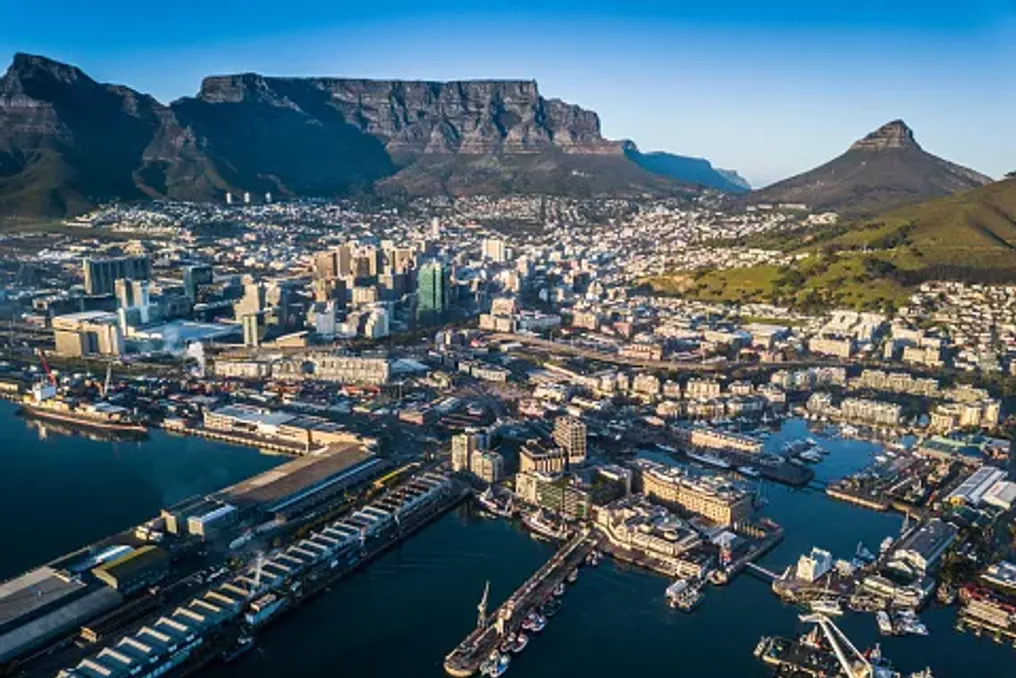
This makes the concept of 'oldest continuously inhabited places' in South Africa more complex than just a list of founding dates. While Cape Town can be considered the oldest founded city in the country, Stellenbosch is recognized as the oldest city in the formal European sense. However, indigenous communities have lived in different parts of the country for thousands of years, and some of these traditions are still part of the landscape.
Below are places where this long history remains visible, and where a visit feels less like visiting a museum and more like immersing oneself in ongoing history.
If Cape Town is the oldest founded city, then Stellenbosch has a different basis for this claim. The Municipality of Stellenbosch calls it the second oldest city in South Africa, dating its founding to 1679 when Governor Simon van der Stel named the island in the Eerste River Stellenbosch. The first agricultural work in the area began in the same year.
It is important to note that the definition of 'oldest city' refers to a formal, European-style settlement. The Stellenbosch Heritage Foundation emphasizes that indigenous settlements existed long before the founding of the colonial town. The town developed around agriculture, especially viticulture and fruit growing, and its oak-lined streets and Cape Dutch architecture are now among its most recognizable features.
The history of Stellenbosch is not limited to its most beautiful buildings; its narrative also includes slavery, forced labor, segregation, and the formation of a society of people from very different backgrounds. Here, you can spend a morning walking through history and enjoy good food in the afternoon. The historic center is compact enough for a walking tour, offering routes that include Cape Dutch style buildings, old streets, and centuries-old landmarks.
It is worth visiting the Stellenbosch Village Museum, where restored houses from past eras cover the period from 1709 to 1850, giving insight into various periods of the town's domestic history. And, of course, there is wine. The surrounding wineries have become one of South Africa's most famous gastronomic and wine destinations, allowing for an easy combination of heritage with cellar tastings, long lunches, and scenic drives.
Moving east, the towns become smaller, quieter, and perhaps even more atmospheric. Swellendam was officially established as a magistracy in 1745, making it the third oldest city in the generally accepted South African ranking after Cape Town and Stellenbosch. This district was created as Cape settlements expanded inland, as farmers required government administration closer to home. The name Swellendam was adopted in 1747 in honor of Cape Governor Hendrik van der Merwe and his wife Helena ten Dam.
However, the history of this region goes much deeper. Khoikhoi hunter-gatherers and pastoralists inhabited the Western Cape thousands of years before European settlement. The Swellendam Heritage Association notes that these communities were part of the region's landscape and history long before the town's founding.
Later, Swellendam became an important gateway to the interior. In 1795, its residents even declared independence from Dutch rule, creating the short-lived Republic of Swellendam, before British forces took control of Cape later that same year. Swellendam is perfect for a slow weekend. The town is situated under the Langeberg mountains, near the Breede River, with easy access to hiking, nature, and the wider Overberg region. Its historic center is best explored on foot, and the Drotsdi Museum provides insight into the town's colonial past. Beyond the town, the surrounding mountains and reserves offer many reasons to stay longer than just a brief heritage stop. It is also an excellent base for exploring the Tradouw Pass and further trips towards Klein Karoo.
On the Cape Peninsula, Simon's Town offers a completely different atmosphere of the old world. The town developed around Simon's Bay, an important natural anchorage that became the official station of the Dutch East India Company in 1743. The settlement initially remained small, with many residents tied to the seasonal movement of ships and the VOC fleet. Its significance grew considerably after the British established a permanent naval base in the bay in the 19th century. This naval history remains part of the city's identity today.
The history here is also more diverse than military structures might suggest. The early population of Simon's Town included VOC officials, soldiers, slaves from parts of Africa and Asia, indigenous Khoisan peoples, sailors, farmers, and traders. Come for the combination of sea views, history, and a walkable old town. The Simon's Town Historical Society has mapped the Historic Mile through the city, while the Simon's Town Museum explores community history, and the South African Naval Museum adds another layer to this history. Since you are on the peninsula, Simon's Town is also a natural stop on a longer trip to the Cape of Good Hope and the False Bay coast.
Founded in 1786, Graaff-Reinet is one of South Africa's oldest formal towns and the fourth oldest magistracy established under colonial administration. It was named after Governor Cornelis Jacobus van der Graaf and his wife Cornelia Reinet. Unlike the lush Winelands, Graaff-Reinet is situated in the rugged beauty of the Great Karoo, almost entirely surrounded by the Cederberg National Park. The town boasts over 220 heritage sites and an unusually rich collection of Cape Dutch, Victorian, and Karoo-style architecture.
However, the history of this area is much older. Archaeological traces of hunter-gatherer communities are found in the surrounding landscape, including Kuupule Boulder, where intentionally struck depressions are believed to have held ritual or symbolic meaning. Graaff-Reinet is a place where history and landscape truly merge. Spend time exploring the town's historic buildings before heading to the Cederberg National Park, which almost surrounds it. The park offers wildlife viewing, bird watching, hiking, mountain biking, off-road routes, and scenic viewpoints. The main attraction is the Valley of Loneliness, where massive dolerite columns rise above the Great Karoo. Viewpoints are easily accessible, and the Kraag Lizard trail and longer walks in Eerstefontein allow exploration of the surroundings on foot. For a road trip through South Africa combining heritage with vast landscapes, Graaff-Reinet is hard to beat.
Here, the conventional definition of an 'old town' begins to break down. The cultural and botanical landscape of Richterveld in the North Cape is not an old town at all. It is an extensive mountainous desert landscape where the Nama people continue a semi-nomadic pastoralist lifestyle. UNESCO recognizes the seasonal patterns in the landscape that may have persisted for up to 2,000 years. The Nama people move between pastures and grazing points, traditionally using portable dwellings made of reed mats, known as haru oms, while maintaining detailed knowledge of the landscape and its medicinal plants. This is an exceptional example of a place where cultural heritage is not locked behind glass; the landscape itself is part of the heritage. Richterveld was inscribed on the UNESCO World Heritage List in 2007 as a living, evolving cultural landscape. As for the scenery, undoubtedly. But more importantly—it is the opportunity to understand how people adapt to one of the country's harshest environments.
The surrounding Richterveld National Park is harsh and remote, featuring dramatic mountains, the Orange River, unusual desert vegetation, and characteristic rock formations. Visitors should be prepared for a truly wild experience, as much of the park requires driving off-road. This is a place where slowing down is part of the experience. Drive, hike, photograph the landscape, and if possible, seek out events hosted by the communities that allow the Nama story to be told to those connected to it.
Further north, the red dunes of the Kalahari tell an even older story. The ǂKhomani cultural landscape, on the border of South Africa, Botswana, and Namibia, contains evidence of human presence from the Stone Age to the present day. UNESCO describes this landscape as being linked to the ǂKhomani San people and their deep knowledge of plants, animals, water, and survival in an extremely challenging environment. This is not just archaeological history; the ǂKhomani community continues to revive cultural knowledge, languages, and traditions that were severely disrupted during apartheid-era forced removals. The landscape was inscribed on the UNESCO World Heritage List in 2017. The obvious attraction is the Kaggalagadi Transfrontier Park, with its vast dunes, wildlife, and endless sky. But visitors interested in the cultural history of the landscape should also take time to interpret the ǂKhomani heritage in the Twee Rivieren. The SANParks interpretation center showcases the knowledge and stories of the Southern Kalahari people and was specifically created to preserve the ǂKhomani cultural landscape. There is also a deeper lesson here: visiting the Kalahari is not just about viewing an ancient landscape; it is about understanding that people have always been in the landscape, and their connection to it is what makes this place outstanding.
There is no single simple answer. If we speak of formal cities and settlements, Cape Town is the oldest founded city in the country, its colonial settlement dating back to 1652, followed by Stellenbosch in 1679 and Swellendam in 1745. Graaff-Reinet followed in 1786, while Simon's Town developed as an important settlement around its VOC anchorage from 1743. But this ranking shows only one version of South Africa's history. Stepping outside the colonial city framework, the timeline stretches back thousands of years. The ǂKhomani cultural landscape holds evidence of human presence from the Stone Age to the present day, while Richterveld preserves the traditions of the Nama pastoralists, which UNESCO states have been maintained for two millennia. Perhaps the most interesting thing about traveling through South Africa's oldest places is precisely this.
True history is not just about how old the buildings are. It is about the people who lived here before them, the people who built the cities, the people who were displaced from them, and the communities that continue to give meaning to these landscapes. Because sometimes the oldest places are not those with the oldest buildings. They are those where the connection between people and place has managed to endure.