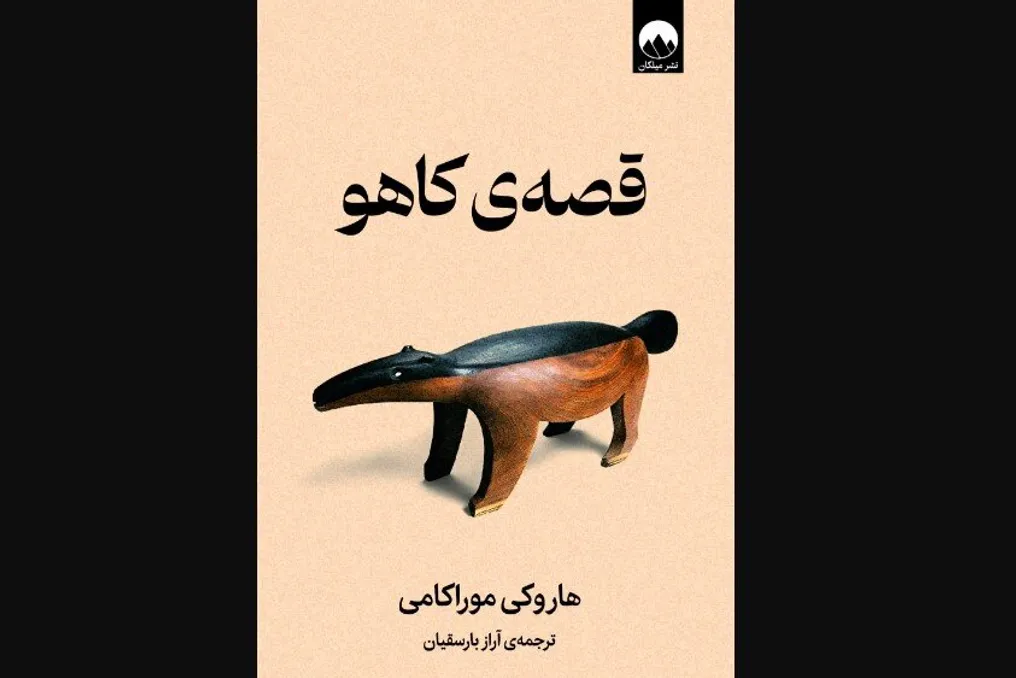
The latest novel by Japanese writer Haruki Murakami, titled 'The Tale of KAHO,' has recently been translated into Persian and is now available in Iranian bookstores.
The latest novel by Japanese writer Haruki Murakami, titled 'The Tale of KAHO,' has recently been translated into Persian and is now available in Iranian bookstores.
Aras Barsekian served as the translator, and Milkan Publications is the publisher in Tehran. The novel, which was first published in Japan in July 2026, spans 352 pages and marks Murakami's first major work where a woman plays the central role.
The plot revolves around Kaho, a 26-year-old children's book author. She presents herself as an ordinary young woman, lacking outstanding beauty or brilliant intellect, but possessing greater curiosity than most people. Kaho's life takes an unexpected turn after her editor arranges a blind date for her.
During this meeting, the man directly tells Kaho that she is the least attractive woman he has ever met. Instead of becoming angry or offended, Kaho feels deep bewilderment and curiosity about the true meaning of his words. Her attempts to understand the stranger's motives become the starting point for a series of increasingly strange and mysterious events.
As Kaho tries to make sense of this encounter, her surrounding reality gradually acquires surreal and dreamlike qualities characteristic of Murakami's works. Various unusual characters and situations appear in the story, including a platypus, a jaguar, a queen termite, a guardian angel, an elephant egg, and Scarlett Johansson. Four chapters of the novel are titled: 'Kaho and the Motorcyclist,' 'The Platypus from Musashi-Sakai,' 'Kaho and the Queen Termite,' and 'The Guardian Angel, the Elephant Egg, and Scarlett Johansson.'
However, the novel is not merely a surreal adventure. Kaho's strange journey also serves as an exploration of identity, self-perception, and how women are perceived by others. The initial insult forces Kaho, who previously paid little attention to her appearance, to confront questions about how she sees herself and how society, especially men, sees her.
Interestingly, Murakami stated that he wrote this novel imagining himself in Kaho's shoes. It developed from a short story called 'Kaho,' which was published in the magazine 'Shincho' in 2024, and was subsequently expanded into a four-part series before being edited and compiled into a novel.
Haruki Murakami is one of the world's most recognized contemporary Japanese authors, known for his ability to blend surrealism, dreamlike narratives, and elements of Western popular culture with themes of loneliness, memory, love, and alienation. Among his most famous works are 'Norwegian Wood,' 'Kafka on the Shore,' 'The Wind-Up Bird Chronicle,' '1Q84,' and 'The Wind-Up Killer.' His novels have been translated into numerous languages and have gained a global audience, while his unique literary style makes him a constant contender for major international literary prizes.
A pickup truck inspired by the Chevrolet Caravan, named Caravan El Camino, will represent Brazil in the continental phase of the Hot Wheels Legends contest. This annual contest recognizes the best project and results in the creation of a miniature based on it.
The vehicle replicates the style of North American pickup trucks that remained in production for almost three decades in the United States. Its construction was carried out by the Sauro Garage workshop, located in Santa Catarina, using the station wagon base and incorporating the inclined B-pillar characteristic, typical of the El Camino design, which historically followed models such as Impala, Chevelle, and Malibu.
The modification process of the Caravan El Camino involved removing the roof, windows, and trunk lid. A new rear windshield and a rear panel for the cabin were added, along with a new finish on the bed and the floor.
The vehicle's finish is remarkable. Painted orange, the Sauro Garagem team paid special attention to the alignment of the bed, removing the window curves but keeping a sticker that evokes the original curvature. The look is complemented by Cooper Cobra tires installed on Magnum 500 wheels. Under the hood, there is the classic 250 six-cylinder engine from the Opala and Caravan, although the 4400 emblem indicates that the block was modified with increased displacement, a common practice among tuners.
Currently, the pickup is advancing to the regional stage of Hot Wheels Legends, where it will compete against other Latin American participants. If it manages to advance, the Caravan El Camino will participate in the grand final in El Segundo, California, scheduled for October 3rd.
As per standard procedure, the winning project will be converted into a 1/64 scale miniature and distributed by Mattel.
In a historical note, in the 1970s, General Motors had developed a prototype pickup derived from the Chevrolet Opala. This model had the potential to occupy a position below the D10 but was ultimately shelved. This information was recently revealed in a book celebrating the centenary of GM's activities in Brazil.
It is common to hear the iconic expression citroën… créative technologie, which evokes a fun and memorable image, although it has become the subject of memes. However, upon visiting the Brazilian Citroën website, one observes a portfolio composed of three vehicles: the C3, a compact with mini-SUV characteristics and one of the most affordable cars in Brazil (close to R$ 80,000); the Basalt, which resembles a well-executed Fiat Fastback; and the Aircross, a wider and more functional version of the Basalt. Although these models are competent, they do not reflect the bold and peculiar nature of Citroën of the past.
In the past, owning a Citroën was an act of declaration, indicating that the owner was aware of the complex maintenance and possible chronic problems, but was willing to accept this due to the beauty or driving quality of the vehicle. In Europe, the situation is similar, despite the presence of curious items such as the electric minicar Ami, the C4 X sedan with raised suspension, and the persistent Berlingo. None of these vehicles compares to the Citroën that produced the remarkable C6, often seen as the last truly eccentric model from the brand.
When analyzing the timeline of Citroën, the disparity becomes clearer: the older the model, the stranger, more charming, and more innovative it proves to be. The evolution of the C6 shows its predecessors, such as the elegant XM, known for its angular lines and computer-controlled Hydractive suspension. The XM, in turn, succeeded the CX, famous for its extreme aerodynamics and concave rear window. The CX replaced the legendary DS, which revolutionized the industry with its floating hydropneumatic suspension and directional headlights. Before the DS, there was the Traction Avant, which, in the 1930s, challenged common sense by offering a luxury car with front-wheel drive.
The DS ended up attracting more attention, sharing the focus on innovation with the 2CV, the model most remembered for its contributions. While the DS represented high technology, the 2CV used innovation to promote practicality and low cost, helping France establish itself in the post-war period. All this serves to remind us that the past Citroën was indeed a creative technology manufacturer. Besides successful cars, there were unsuccessful experiments, one of the most interesting being the launch of the Citroën GS Birotor in 1973, in France, when the French opted to replace reciprocating pistons with a more triangular design.
This article addresses the Wankel engine, whose smooth operation (due to the absence of reciprocating motion), high specific power, and shrill roar are appreciated characteristics. Mazda was the only manufacturer to successfully invest in Felix Wankel's invention, using the engine in legendary lines such as the RX-7 and winning the 24 Hours of Le Mans with the 787B. However, other attempts were not as successful. NSU, the precursor to modern Audi, launched the NSU Ro 80, a luxury sedan that became a reliability problem due to premature wear of the rotor seals, leading to the company's bankruptcy.
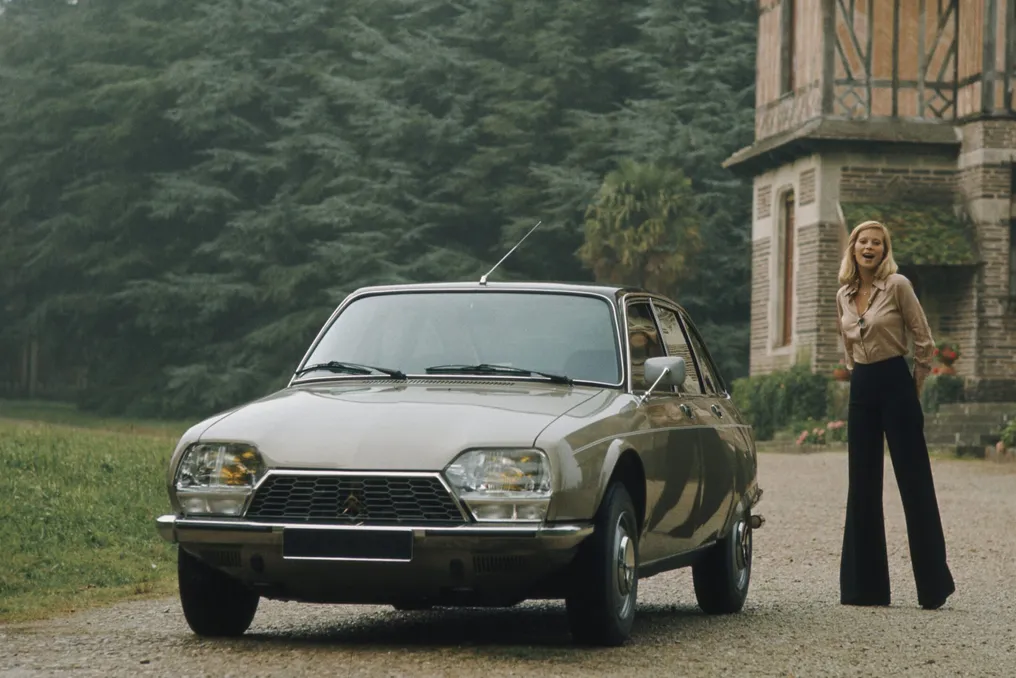
The fiasco of the Ro 80 affected NSU's reputation, but the German brand joined forces with Citroën in a joint venture called Comotor in the late 1960s to produce rotary engines on a large scale. It was from this collaboration that the Citroën GS Birotor emerged. The Citroën GS, launched in 1970, occupied the intermediate position in the brand's range, situated between the economical 2CV (and the Dyane) and the luxurious SM. Classified as a small family car in Europe, it offered the appearance of a more expensive and faster car, thanks to its long hood, fastback silhouette with a large glazed area, and partially covered fenders.
The GS marked Citroën's entry into the volume segment, aiming to meet the growing European middle class, as the brand only offered very basic or extremely sophisticated options. The goal was to compete with successful models of the time, such as the Renault 12, Peugeot 304, Simca 1100, and Fiat 128. To persuade consumers to switch from more traditional and cheaper rivals, Citroën implemented the strategy of democratizing luxury, equipping the GS with hydropneumatic suspension, four-wheel disc brakes, and exemplary aerodynamics, such as the Kamm tail, providing the comfort of a DS or CX for a fraction of the price.
Even in the simplest versions, the mechanics were unusual: the front engine was an air-cooled flat-four, with a displacement between 1.0 and 1.3 liters and power between 54 hp and 66 hp, capable of being coupled with four-speed manual or three-speed semi-automatic transmissions with hydraulic clutch actuation.
Presented at the 1970 Paris Motor Show, the GS received acclaim from the press and the public, winning the European Car of the Year award in 1971. Commercially, it was an immediate success, leaving Rennes in over 20,000 units monthly and becoming Citroën's best-selling car of its time. Combining the original GS and the GSA hatchback, the model exceeded 2.45 million units between 1970 and 1986, making it the second best-selling model of the brand, behind only the 2CV.
With the success of the GS, Citroën saw it as an ideal laboratory for its most ambitious experiment. The partnership with NSU, established in 1967, allowed for the mass production of the rotary engine used in the experimental M35, a compact with hydropneumatic suspension and a small rotary engine. 267 units were built between 1969 and 1971 for testing. For NSU, the agreement was an attempt to recover losses after the NSU Ro80, which survived until being integrated into Volkswagen in 1977.
The M35 program was short-lived due to reliability issues and excessive fuel consumption, as well as rotor seal wear. However, realizing that the GS would benefit from a more powerful engine, Citroën decided to implement the Wankel. The result was the GS Birotor in 1973, an evolution of the M35 with the addition of a second rotor, increasing the displacement to 995 cm³. Although it was the smallest in the line, it was the most powerful, with a dual-body Solex carburetor and 106 hp, available only with the three-speed semi-automatic transmission.
Visually, the difference between the GS Birotor and the standard GS was subtle but structural. The fenders were widened to support wider wheels and tires, the floor was modified to accommodate the new mechanical assembly, and the brakes were mounted on the wheel hubs (unlike other GS models, where they were internal). The interior also featured superior finishing, aligned with the premium proposal of the Birotor. Citroën's intention was not to sell large volumes, but rather to affirm the brand's commitment to innovation and luxury, charging a price 70% higher than the standard GS, approaching that of the DS.
Additionally, the French tax authority imposed a fiscal burden. The annual tax was based on 'puissance fiscale' (fiscal horsepower), which favored low-displacement engines. Despite the modest 995 cm³, the legislation applied a punitive multiplier to Wankel engines, classifying the car in the 11 CV bracket, the same category as two-liter sedans like the Peugeot 504 and the DS, causing the owner to pay executive car taxes even before starting it.
Architecture is viewed as a necessity for establishing a connection between humans and the surrounding world. Before serving as a shelter, it is a way of creating a place—a space that can guide the body, organize experience, and make visible relationships often hidden in daily life. It is from this understanding that the Mirante de São Jorge project arose.
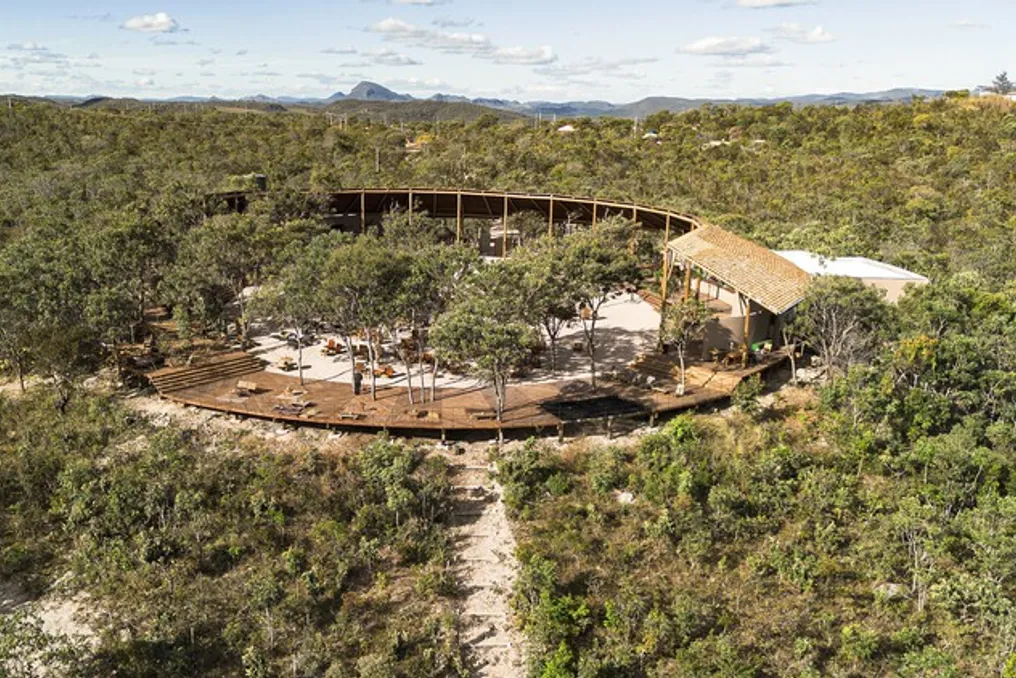
Located in Chapada dos Veadeiros, near the National Park, in one of the most ecologically significant areas of the Brazilian Cerrado, the project is based on recognizing an existing place in collective memory. The hilltop traditionally served as a gathering spot to contemplate the sunset over the mountain horizon. The project acknowledges this feature and creates conditions for a more intense experience of this experience.
The realization of the project is built on the principle of minimal landscape alteration: it occupies an existing clearing, preserving local vegetation and avoiding earthworks. The elevated structure follows the natural topography using pile foundations, allowing the area to maintain its original form, drainage processes, and vegetation cover.
Mirante is organized as a continuous circular ribbon eight meters wide and fifty-seven meters in total diameter, which outlines a large central empty space (1256 m²). This geometry does not aim to assert an isolated object in the landscape, but rather to create a place. The circular shape is inspired by geometric patterns that have historically organized spaces for meetings, contemplation, and orientation. It represents not just a symbol, but a structure capable of bringing people closer to each other and restoring their connection to the rhythms of nature. In an era of acceleration and dispersion, the project offers the opposite experience: presence and attention.
The central void is the true heart of the project. Here, the sky becomes a covering, the flow of time becomes visible, and the daily cycle of the sun takes on central importance. During sunset, visitors share the same horizon; at night, the space hosts gatherings around a fire. The architecture does not dictate these events, but merely provides the conditions for them to occur.
The curved wooden roof provides shelter, comfort, and human scale without disrupting the continuity between interior and exterior. Existing trees naturally pass through the architecture, dissolving the boundaries between the built environment and the territory. Vegetation ceases to be a decorative element and becomes an integral part of the spatial experience.
In Chapada dos Veadeiros—an area recognized as the cradle of waters and one of the country's most important ecological heritages—this experience takes on an even deeper meaning. The project understands that preserving the landscape depends on protecting its ecosystems, but also on building cultural and emotional connections between people and the place. In addition to offering eco-tourism infrastructure for visitors, Mirante seeks to strengthen this connection, viewing architecture as a tool capable of bringing people closer to the territory and promoting its preservation.