The administration of the Fergana region reported that the Fergana region and Afghanistan have reached an agreement to accelerate the implementation of joint investment projects in the fields of construction, textiles, agriculture, and aviation.
The administration of the Fergana region reported that the Fergana region and Afghanistan have reached an agreement to accelerate the implementation of joint investment projects in the fields of construction, textiles, agriculture, and aviation.
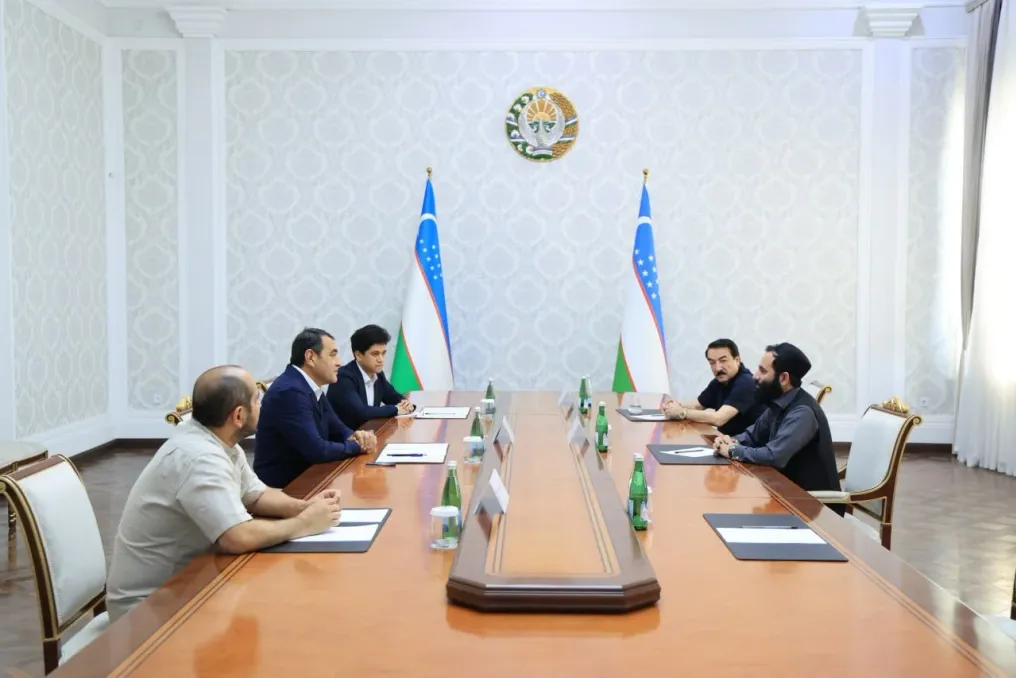
The expansion of bilateral cooperation was discussed at a meeting between the Hokim of the Fergana region, Khayrullo Bozorov, Abdul Hafiz Fariadi, head of the Afghan state corporation 'Spinzar Kunduz', and Zamara Kamgar, chairman of the airline 'Kam Air'.
These negotiations were based on agreements reached during the visit of a delegation from the Fergana region to Afghanistan on July 26–27, 2026. During this trip, official meetings and business dialogues took place aimed at developing trade, economic, and investment ties, which led to the opening of trade representations of the Fergana region in Kabul and Mazar-i-Sharif.
At the last meeting, the parties discussed transitioning from existing agreements to the practical implementation of joint initiatives and launching new investment projects. Entrepreneurs from Afghanistan expressed interest in partnering with local enterprises of the Fergana region in key sectors such as construction, textile industry, agriculture, and aviation.
Bozorov noted the stable development of trade and economic relations between Uzbekistan and Afghanistan, emphasizing that the recent delegation visit opened opportunities for new initiatives and expanded practical interaction. The regional Hokim stressed the need to effectively utilize available chances to launch joint projects with representatives of Afghan business and promote cooperation in each target area.
Following the meeting, the parties agreed to accelerate the introduction of joint investment projects, ensure the fulfillment of previously reached agreements, and bring bilateral cooperation to a new level.
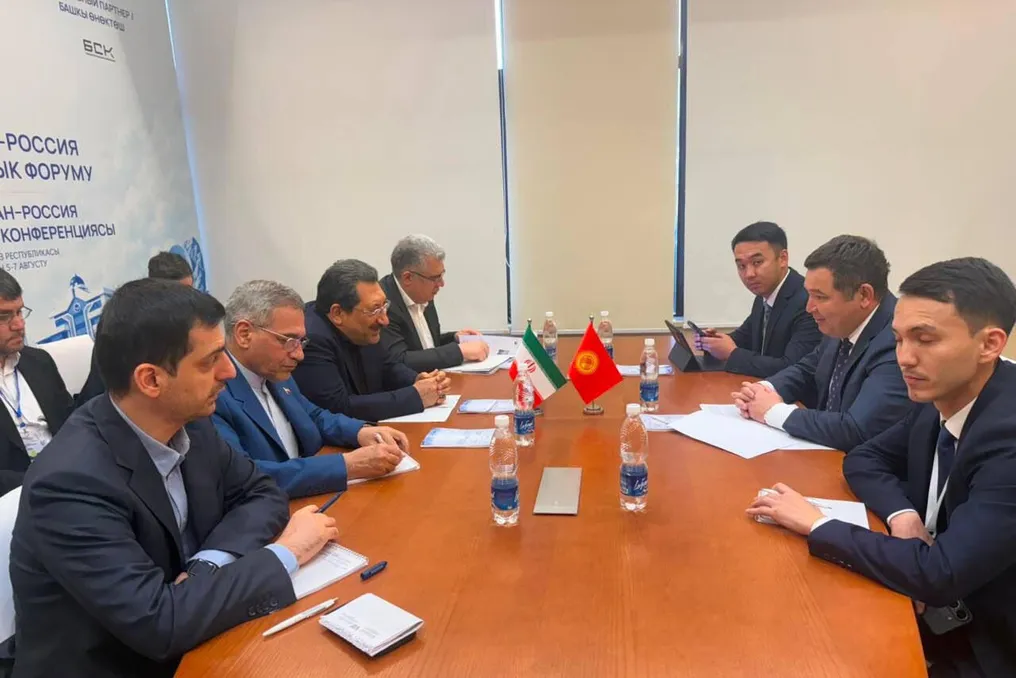
During the meeting of Iranian and Kyrgyz ministers, both sides focused on developing trade exchange, joint investments, and expanding cooperation in industrial, mining, energy, transport, and free zone areas. The goal of these measures is to enhance economic ties between the two states.
According to IRNA from the Ministry of Industry, Mining and Trade, the meeting included the Minister of Industry, Mining and Trade 'Seyyed Mohammad Atabak' and the Minister of Economy and Trade of Kyrgyzstan, Bakyt Tolomushevich Sidykov. Emphasizing the significant potential for economic interaction, the sides insisted on strengthening trade relations and attracting investment within regional agreements, including the Eurasian Economic Union and the Shanghai Cooperation Organisation.
Furthermore, the importance of developing joint production for export to third-country markets, strengthening cooperation in exporting knowledge-based products, pharmaceuticals, and medical equipment, as well as expanding interaction between free zones and increasing investment in the industrial and mining sectors, was noted.
In the field of mining and energy, Iran stated its readiness to cooperate with Kyrgyzstan in exploration, extraction, processing, provision of technical and engineering services, modernization of the mining industry, and transfer of technical knowledge, referencing Kyrgyzstan's mineral resources.
Regarding transport and transit, the sides agreed to intensify work on the Bandar Abbas–Osh railway route, organize direct flights, reduce transit costs, and complete the creation of regional corridors. Special attention was paid to the importance of participation in the 'Belt and Road' initiative and utilizing Iran's transit potential to connect Kyrgyzstan with international and regional markets.
The sides also agreed to develop banking, logistics, and transport infrastructure, establish a joint banking committee, use national currencies, create joint investment funds, and apply modern financing methods.
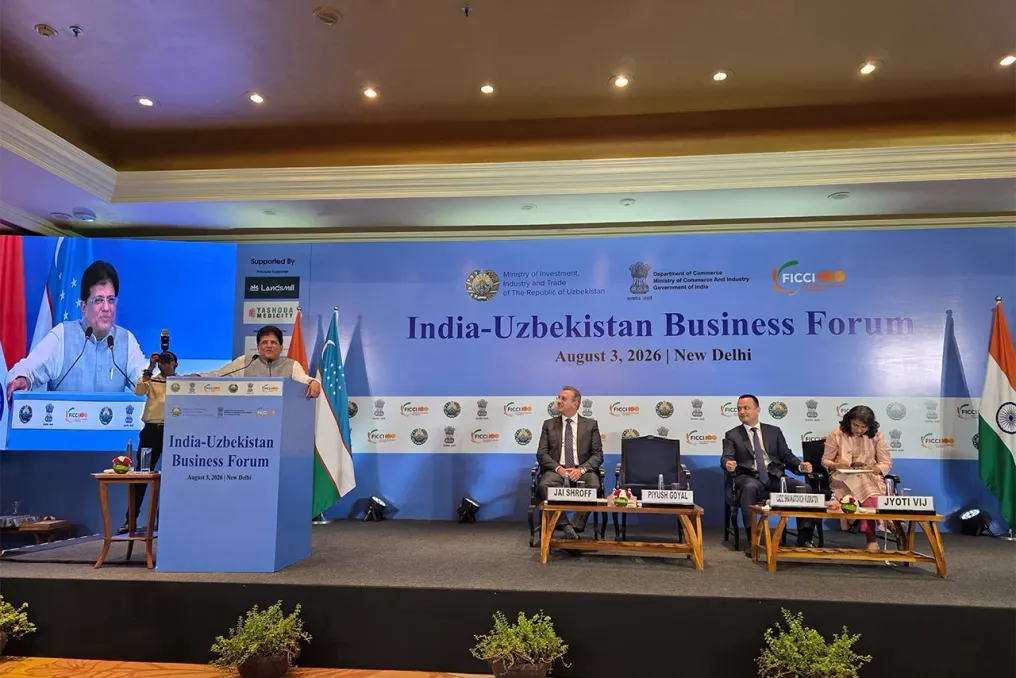
A business forum between India and Uzbekistan took place in New Delhi on August 3rd. The event gathered representatives from governments and business leaders to discuss expanding trade, economic, and investment cooperation between the two countries.
Participants included Laziz Kudratov, the Minister of Investments, Industry, and Trade of Uzbekistan; Piyush Goyal, the Indian Minister of Commerce and Industry; senior representatives from the Federation of Indian Chambers of Commerce & Industry (FICCI) and Invest India, as well as over one hundred business representatives.
Attendees reviewed the current state of bilateral interaction, identified key areas for further development, and discussed measures to strengthen trade and investment ties. It was noted that bilateral trade increased by 30% last year, exceeding $1.3 billion USD for the first time. Both sides aim to bring trade turnover to $2 billion USD by simplifying trade procedures, improving market access, and reducing administrative barriers. A memorandum of understanding to facilitate trade is currently being prepared to achieve this goal.
The forum also highlighted the complementary nature of the two economies. Uzbekistan is interested in increasing exports of agricultural and food products, fertilizers, chemicals, non-ferrous metals, textiles, electrical equipment, and other industrial goods. In turn, imports from India could increase through supplies of pharmaceuticals, technology, machinery, and automotive components.
Investment cooperation attracted particular attention. Currently, about 400 enterprises with Indian capital operate in Uzbekistan, and the total value of joint investment projects exceeds $5 billion USD. Priority areas for future cooperation were named as metallurgy, mining, chemical industry, energy, digital infrastructure, pharmaceuticals, healthcare, mechanical engineering, and agriculture. The sides also discussed projects related to deep raw material processing, production localization, renewable energy development, data centers, modern medical facilities, and agro-industrial infrastructure.
During B2B and G2B meetings, business representatives and government officials examined specific initiatives, financing mechanisms, and potential cooperation models in detail. The Ministry of Investments, Industry, and Trade of Uzbekistan reaffirmed its commitment to supporting promising investment projects at all stages—from site selection and financial agreements to commissioning. At the conclusion of the forum, the parties agreed to focus on implementing the most advanced initiatives and further strengthening Uzbekistan-India business partnership.
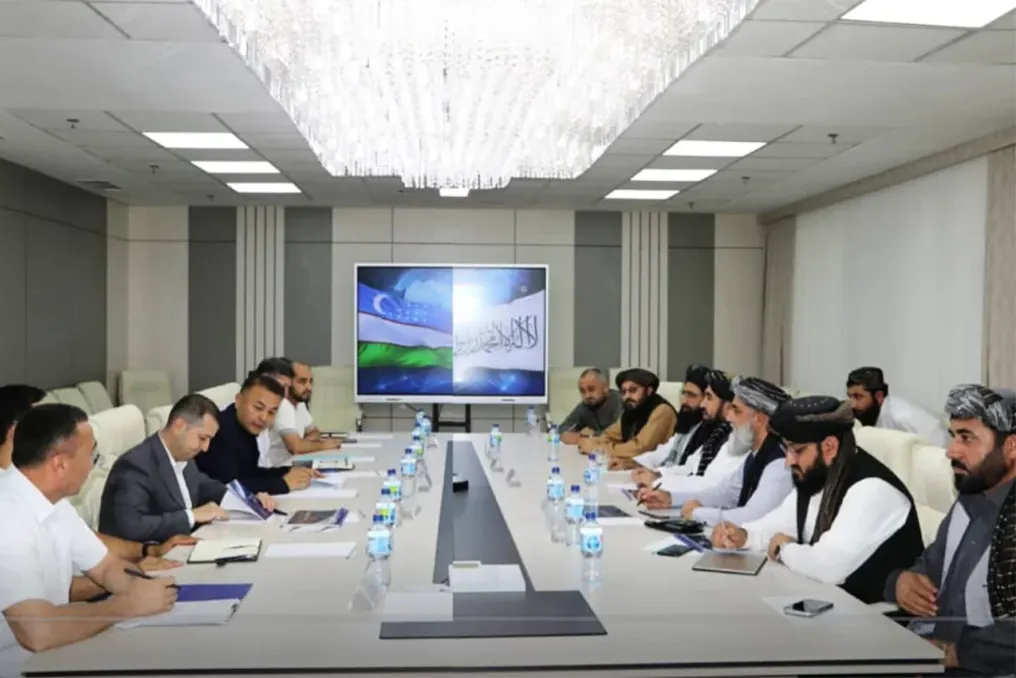
Uzbekistan and Afghanistan have reached an agreement to expand strategic interaction in the field of energy. This includes developing a fifteen-year energy development program for Afghanistan and establishing joint technical working groups, as reported by the energy company Da Afghanistan Breshna Shirkat (DABS).
The CEO of DABS, Mulla Abdul Haq Hamkar, met with the First Deputy Minister of Energy of Uzbekistan, Umid Mamadalinov, accompanied by technical and engineering specialists.
During the negotiations, the parties discussed issues of electricity generation, transmission, and distribution, as well as strengthening technical potential, engineering cooperation, implementation of smart metering, long-term energy planning, and modernization of Afghanistan's power supply system.
The Uzbek side confirmed its readiness to support the development of Afghanistan's energy sector, emphasizing that stable energy supply is a critically important condition for economic growth, the development of the mining industry, and industrialization in the country.
Representatives of Uzbekistan stressed that the cooperation will cover not only electricity export but also joint projects in the fields of energy generation, transmission, and distribution, as well as the development of technical and personnel bases.
According to DABS information, the First Deputy Minister of Energy of Uzbekistan announced plans to prepare a comprehensive fifteen-year program for Afghanistan's energy sector. After conducting feasibility studies and assessments, the Uzbek side will provide the Afghan energy company with technical specifications and preliminary costs for priority projects.
The parties also agreed to establish joint technical working groups, intensify the exchange of experience and technologies, strengthen professional training, and continue practical cooperation on modernizing Afghanistan's energy industry.