According to data from the Thermal Power Generation Company, Iran has increased the capacity of its national grid by 2028 megawatts, reaching 75 percent of the target of 2709 megawatts for the current Iranian calendar year, which began on March 21.
According to data from the Thermal Power Generation Company, Iran has increased the capacity of its national grid by 2028 megawatts, reaching 75 percent of the target of 2709 megawatts for the current Iranian calendar year, which began on March 21.
Ruhollah Esfahani, Deputy for Project Development, reported that despite challenging conditions over the past seven months, the development of any power plant projects has not been suspended. Key achievements include a 183-megawatt gas unit at the Neka power plant, which was commissioned in 99 days, and a 345-megawatt steam unit at Rudshur—the largest of its class in the Middle East, boasting an efficiency of 58 percent and annual fuel savings exceeding 700 million liters.
Steam units were also put into operation at the Asaluye and Ferdowsi power plants, completing a package of 18 units under a 3000-megawatt contract. Furthermore, the first geothermal power plant, located on the slopes of Sabalan with a capacity of 5.4 megawatts, is now operational and capable of supplying electricity for 95 percent of the year.
Masoud Moradi, Deputy for Production Operations, noted that thermal power plants account for over 93 percent of the country's total installed capacity of 101,366 megawatts. Despite fuel shortages in winter and disruptions related to the war, maintenance programs have been largely executed, allowing for a record readiness rate of 98.8 percent during peak consumption and reducing emergency shutdowns to only 1.2 percent.
In the near future, two additional units are planned for launch—a 300-megawatt combined cycle steam unit and a 183-megawatt gas unit—which will add another 490 megawatts to the grid. Moradi also called on the public to cooperate in managing consumption during the remaining hot weeks.
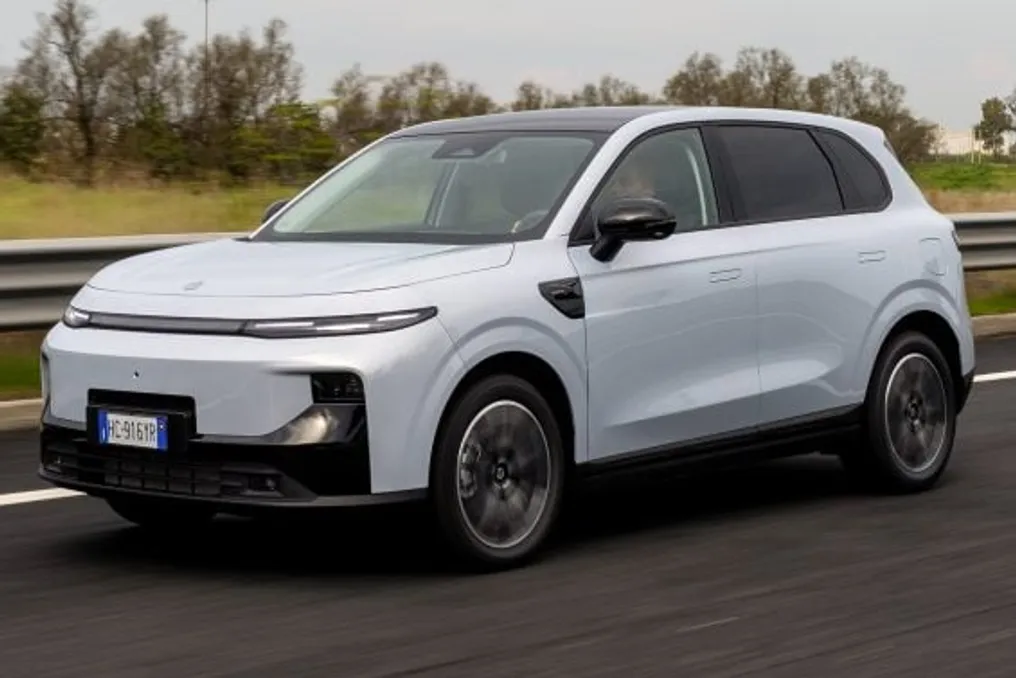
Leapmotor announced that it will introduce the Leapmotor B10 model in its 'Ultra-Hybrid' version to the Brazilian market, which incorporates REEV technology, meaning a range extender. The official presentation of this vehicle in Brazil is scheduled to take place at the Interlagos Festival 2026, which will be held between August 27 and 30, at the José Carlos Pace Autodrome, located in São Paulo (SP).
The Chinese manufacturer, which is controlled by Stellantis, has not yet disclosed the selling prices or detailed technical specifications for the configuration intended for Brazil. In an official statement, the company only informed that the model will be launched with a series of innovations in the national line, the details of which will be revealed during the event. The brand's booth will also feature the Electric B10, the Electric C10, and the Ultra-Hybrid C10.
The REEV nomenclature indicates a distinct operation compared to conventional hybrids. In the case of the B10 Ultra-Hybrid, wheel movement is always provided by the electric motor. The internal combustion engine has no mechanical connection to the transmission; it acts exclusively as a generator, producing electricity to supply the battery when its charge level reaches a predetermined point.
In practice, the car's behavior is identical to that of a purely electric vehicle in all situations, offering instant torque, silent operation, and eliminating the perceptible transitions found in traditional hybrid models. The distinction lies in the method of energy replenishment: the driver can choose to connect the car to a socket or stop at a gas station. This principle is the same one applied to the C10 REEV already available in the country.
In markets where it is already being sold, such as Europe and Argentina, the B10 REEV features a 218 hp rear electric motor and 24.5 kgfm, coupled with a 68 hp naturally aspirated gasoline engine, whose function is restricted to energy generation. Its LFP battery, with a capacity of 18.8 kWh, is smaller than that of the electric B10 and allows for up to 86 km on the WLTP cycle. With a 50-liter tank, the combined range reaches approximately 900 km.
Recharging supports 6.6 kW in AC and 46 kW in DC. In Argentina, where it was launched in July, the version starts at a price of US$ 31,990, which is equivalent to about R$ 167 thousand at the current exchange rate.
It is worth noting that the B10 arrived at Brazilian dealerships in April, offered in a fully electric version solely for R$ 182,990. Leapmotor promotes campaigns with trade-in bonuses for R$ 175,990 and offers special conditions for people with disabilities, taxi drivers, and CNPJ holders, always including a wallbox. This electric package has 218 hp, a 56.2 kWh battery, and a range of 288 km according to the Inmetro cycle, or 361 km according to WLTP.
The SUV dimensions are 4.53 m in length and 2.74 m in wheelbase. It is equipped with a 14.6-inch multimedia center with wireless connectivity for Android Auto and Apple CarPlay, seats upholstered with OEKO-TEX material, seven airbags, and the Leap Pilot semi-autonomous driving system, classified as Level 2. All these features are expected to be maintained in the version that includes the range extender.
Finally, Stellantis has confirmed that both the B10 and the C10 will be the first Leapmotor vehicles to be manufactured at the plant located in the Goiana Automotive Hub, in Pernambuco.
The Galaxy Tab S11 5G, equipped with 12 GB of RAM, has returned to one of the lowest prices recorded this year during a promotion available on Amazon. Those who missed the chance last week can purchase this premium Samsung tablet for R$ 5,559 using the coupon SMART200 when paying via Pix.
This device offers a significant 26% discount compared to its original price of R$ 7,499 in the 5G connectivity version. The tablet stands out for having an advanced 120 Hz screen and 12 GB of RAM.
Considered one of the best tablets manufactured by Samsung due to its cutting-edge technology, the Galaxy Tab S11 features a 11-inch Dynamic AMOLED 2X panel with an adjustable refresh rate of 120 Hz. This configuration allows for extremely fluid and immersive navigation, supporting HDR10+ with high brightness and contrast.
The advanced performance required for various applications, such as gaming, video editing, and productivity app usage, is guaranteed by the combination of the Mediatek Dimensity 9400+ processor and 12 GB of RAM. Additionally, the Extended Samsung Dex feature allows the tablet to function as an extension of a monitor or vice versa.
The user experience is complemented by the inclusion of the S Pen stylus and keyboard cover in the box, useful accessories for daily tasks such as design and typing. The physical design of the tablet is remarkably thin, measuring only 5.5 mm thick, making it easy to carry in bags or backpacks.
In terms of autonomy and durability, the Tab S11 comes equipped with an 8,400 mAh battery, which Samsung claims offers up to 18 hours of video playback. It also supports 45W wired fast charging. Regarding resistance, the IP68 certification guarantees complete protection against dust and water immersion.
To ensure independent mobile connectivity, the device is compatible with Wi-Fi 6E, Bluetooth 5.4, and 5G. Thus, those seeking superior performance can get the Galaxy Tab S11 5G for R$ 5,559 via Pix, applying the SMART200 coupon on Amazon.
Paramount Skydance has expressed its desire to force the American states obstructing its merger with Warner Bros. Discovery to assume the costs and fees generated by the transaction's postponement. This request was formalized on Monday, the 17th, through a new document within the antitrust process challenging the operation.
The company requested that the states involved in the lawsuit provide a guarantee of $1.88 billion (approximately R$ 9.8 billion) to cover potential losses resulting from the merger's delay.
In July, a coalition of 12 state attorneys general, led by California Attorney General Rob Bonta, initiated a lawsuit aimed at blocking the $110 billion (about R$ 572 billion) union between Paramount and Warner.
This operation aimed to unite two major film studios—Paramount and Warner Bros.—in addition to consolidating a vast set of cable TV channels in the United States and the streaming platforms HBO Max and Paramount+.
The state attorneys general allege that such a merger would violate the Clayton Antitrust Act, legislation over a hundred years old that prohibits acquisitions and mergers deemed harmful to competition.
A Paramount spokesperson mentioned the Clayton Act and other federal regulations, arguing that they require the plaintiffs—in this case, the states—to provide a guarantee to cover potential damages caused by suspending the transaction during litigation.
Paramount stated: 'Here, every month of delay brings substantial and quantifiable financial consequences.'
The company informed the Judiciary in the document presented that, up to the conclusion of the trial and the presentation of final arguments by the parties, Paramount had already disbursed $1.3 billion in irrecoverable maintenance fees to Warner Bros. shareholders.
Additionally, Paramount argues that the delay jeopardizes the validity of the regulatory approvals that the companies spent months obtaining.
According to the document, 'Without a guarantee, even a complete victory on the merits would not recover a single dollar of these extraordinary losses. This is precisely why federal legislation requires plaintiffs to provide a guarantee as a condition for receiving preliminary measures, such as the court-approved order.'
In its statement, Paramount specified that the requested $1.88 billion corresponds to a 'direct calculation of the maximum potential consideration related to ticking fees and financing costs arising from this process.'
However, the company emphasized that these are not the only costs associated with the operation's delay. Paramount added that due to a delay of at least eight months in finalization, there will be no integration or increase in investments in content, production, and creative talent by the combined company. Employees of both companies are also affected by the uncertainty generated by the merger's postponement.
Besides California, the group of states bringing the lawsuit against Paramount includes a total of 12 states, led by California Attorney General Rob Bonta. The action was filed in July, asserting that the merger between Paramount and Warner Bros. Discovery violates the Clayton Antitrust Act, established more than a century ago to prevent concentrations that harm competition.