The Ministry of Economy and Finance of Uzbekistan has proposed legalizing contracts for foreign trade intermediaries to optimize e-commerce operations and payment transactions in the logistics sector.
The Ministry of Economy and Finance of Uzbekistan has proposed legalizing contracts for foreign trade intermediaries to optimize e-commerce operations and payment transactions in the logistics sector.
According to information from the Ministry of Economy and Finance, a draft government decree has been published, introducing a new form of foreign trade agreement—an agency agreement—to regulate payments and the activities of intermediaries in international transportation and e-commerce.
The draft includes amendments to the Rules of Procedure for Controlling Foreign Trade Operations. Under this document, foreign trade intermediaries are defined as entities that organize transactions on behalf of another party based on agency, commission, or other service agreements. Such services can be provided by legal entities registered in Uzbekistan, as well as registered individual entrepreneurs.
Intermediaries will be allowed to conduct settlements, receive funds, and transfer payments to non-residents or other specified parties. Funds received from third parties for subsequent transfer to the designated beneficiary under an intermediary contract will be classified as transit funds and will not be counted as income for the intermediary. However, intermediaries retain the right to withhold commission fees from these funds for services rendered according to the contract terms.
The draft also establishes procedural rules for commercial banks processing such operations. The transfer of transit funds will be made based on the agency contract. These operations will not be classified as imports or exports for the intermediary and will not be subject to tax.
The explanatory note to the draft indicates that the amendments aim to eliminate legal conflicts arising from the rapid growth of e-commerce and international transportation. In these sectors, foreign trade operations increasingly depend on online trading platforms, digital information intermediaries, agents, and commission merchants who operate without standard foreign trade agreements.
Existing regulations allow for export through online platforms and the use of invoices, but they lack mechanisms to record intermediary contracts and transactions in the Customs Committee's E-Contract system. According to the developers, this gap prevents the entry of data about the agency contract into E-Contract, creating administrative barriers when settling with non-residents.
For example, owners of Uzbek platforms that enter into agency contracts with non-residents to list and sell goods currently cannot transfer sales revenue to non-residents while withholding commission fees. Marketplace operators are forced to sign service import agreements and can only receive commissions after the full sales amount is transferred.
The Ministry of Economy and Finance noted that the existing mechanism artificially inflates the volume of imported services, even though the actual service provided equals the export amount in the form of a commission, which creates tax complications. The proposed rules will allow agency contracts to be recognized as an independent category of foreign trade agreement, permit electronic registers of transactions as supporting documentation, and simplify settlements with non-residents. Public discussions on the draft decree will continue until August 30, 2026.
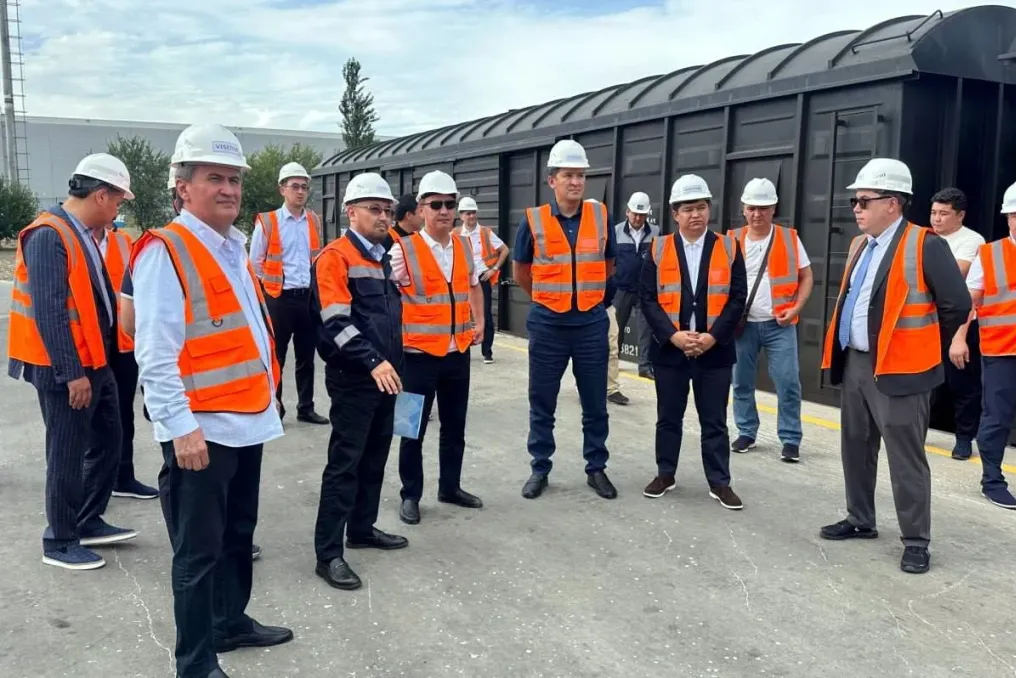
A delegation from the Ministry of Transport of Uzbekistan visited Kazakhstan on August 10-11 to study cross-border transport and logistics infrastructure, as well as to discuss expanding cargo transportation between the two states.
During the visit, the parties reached an agreement to establish a joint venture at the Kedentransservice JSC terminal at the Altynkol station. The Uzbek delegation familiarized itself with the organization of railway and multimodal cargo transportation and studied Kazakhstan's experience in developing transport and logistics infrastructure.
In particular, representatives of the Ministry of Transport visited the Altynkol railway station on the border of Kazakhstan and China, the Kedentransservice JSC terminal, the KTZE-Khorgos Gateway dry port, the Khorgos-Eastern Gate Special Economic Zone, and the Khorgos International Centre for Boundary Cooperation.
Discussions focused on ensuring the uninterrupted movement of goods along the China-Kazakhstan-Central Asia route. The parties also considered issues of increasing container traffic, developing multimodal transport corridors, and diversifying logistics routes.
A separate outcome of the trip was the agreement with the Kazakh side to create a joint venture at the Kedentransservice JSC terminal at the Altynkol station. Participants also discussed prospects for further strengthening transport and logistics cooperation between Uzbekistan and Kazakhstan.
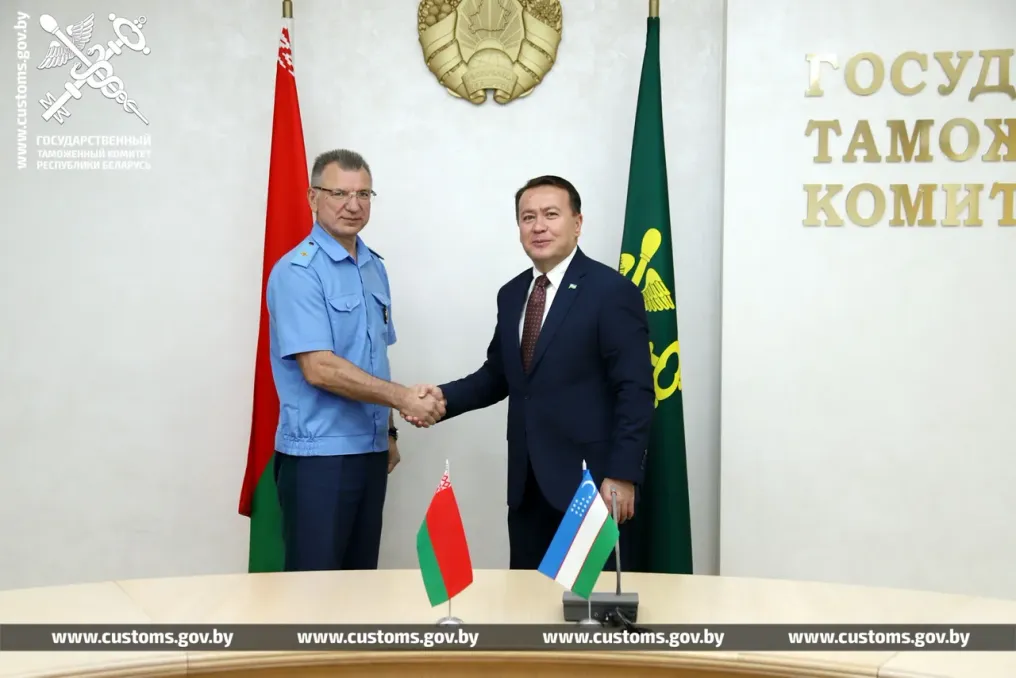
Belarus and Uzbekistan intend to deepen interaction in the field of customs affairs, paying special attention to measures aimed at simplifying bilateral trade and increasing trade turnover. Discussions on these issues took place during a meeting between the Chairman of the State Customs Committee of Belarus, Vladimir Orlovsky, and the Ambassador of Uzbekistan to Belarus, Nuriddin Mamajonov. The State Customs Committee of Belarus reported on this meeting.
The main subject of the negotiations was facilitating the growth of trade flows between the two states. The Committee noted that Belarus and Uzbekistan plan to double mutual trade in the coming years, which aligns with the goal set by the presidents of both countries during recent meetings in Minsk.
The parties also considered issues regarding the implementation of the 2024 agreement signed by the governments of Belarus and Uzbekistan concerning the mutual use of electronic systems for certifying the origin of goods. According to the committee, this digital mechanism will help simplify trade procedures and further increase trade turnover.
Furthermore, it was noted that a document on the mutual recognition of the status of an authorized economic operator has been signed. This document provides for a number of simplifications that will be available to participants in foreign economic activities in both countries.
After the meeting, representatives of the State Customs Committee of Belarus and the Embassy of Uzbekistan identified potential areas for practical cooperation aimed at further developing bilateral trade.