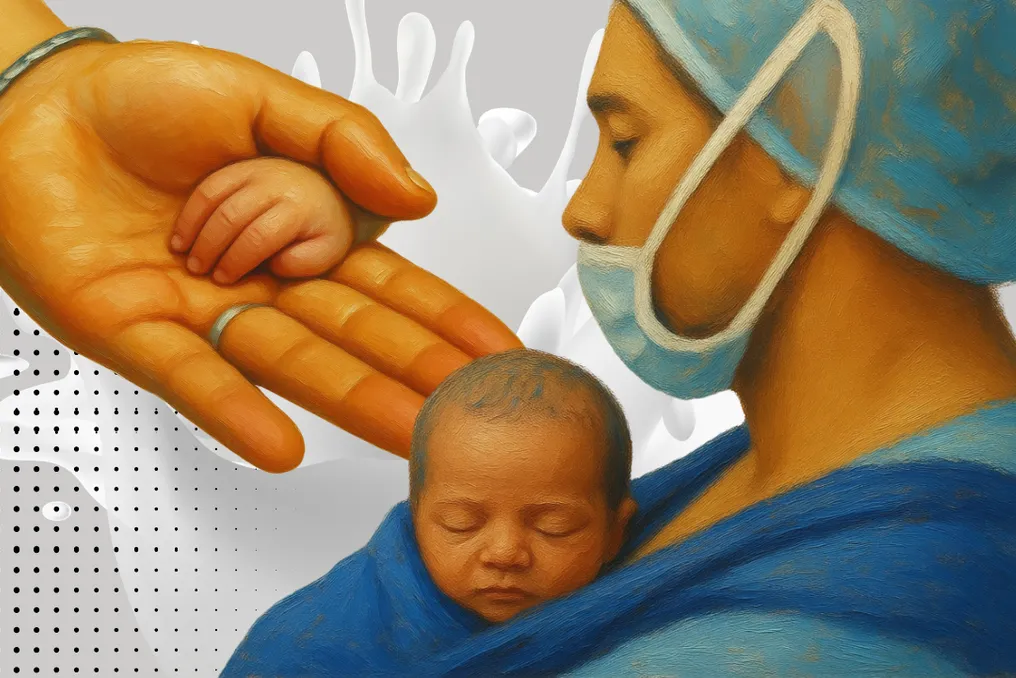
After giving birth, a mother's first need is often to hold her baby close and feed him. However, for some newborns, this first meal never happens. Their mothers may be in critical health condition, separated from the child, unable to start breastfeeding immediately, or, in the most severe cases, may already be deceased.
Nevertheless, for an underdeveloped infant weighing only a few hundred grams, waiting for circumstances to change is not always possible. This is where another mother can intervene.
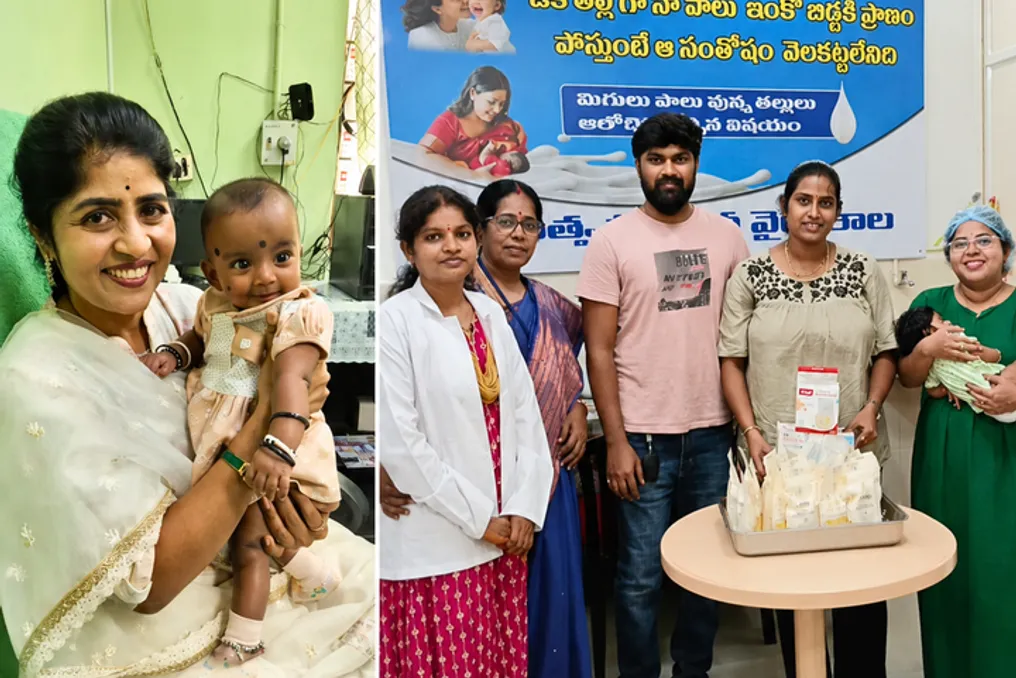
Human milk banks operate in India based on an act of generosity: a lactating mother donates milk from her child that is not needed, and through a carefully regulated medical system, this milk goes to a newborn whose own mother cannot provide nourishment.
Dr. Poonam Sidana, Director of Neonatology and Pediatrics at CK Birla Hospital in Delhi, noted: 'The milk bank helps one mother save another mother's child.' Although the idea seems simple, behind every bottle is a mother who agreed to share something deeply personal, and a family that trusts the system to provide their fragile newborn with the safest nutrition.
When the mother is not present, Dr. Satish Tiwari, founder and chairman of the Association of Human Milk Banks of India and a professor of pediatrics, has worked for decades to expand this system. He traces the history of the movement in India back to 1989, when the first human milk bank in India and Asia was established at Sion Hospital in Mumbai by Dr. Armide Fernandes.
By the mid-1990s, Tiwari began studying the topic of milk banks, working on the nutrition of mothers and children, as well as malnutrition issues. He concluded that 'milk banks are needed not just in Mumbai or Surat or Udaipur, but this is a requirement across all of India.'
Infants requiring donor human milk are often in situations where they have been separated from their mothers due to reasons beyond anyone's control. A newborn might be hospitalized in a Neonatal Intensive Care Unit (NICU) weighing 500 or 700 grams, born in the seventh or eighth month of pregnancy, and too weak for breastfeeding. Perhaps the mother has to return home while the child remains in the hospital.
Tiwari explained that 'the mother may be absent for months while he is in neonatal care.' Furthermore, there are children whose mothers have passed away. He added: 'The mother may die. Thus, the mother herself is unavailable to the child.' This category also includes abandoned newborns and children whose mothers temporarily cannot breastfeed.
In such circumstances, formula or other substitutes often become the traditional backup option. However, doctors argue that human milk can play a vital role for a vulnerable premature baby. Tiwari emphasized: 'If fed milk obtained through a milk bank, the improvement in the child's condition or his life outcome becomes much, much better.'
For low birth weight and premature infants, the issue is not just about calories. Their digestive and immune systems are still developing, making them particularly susceptible to infections and serious complications. Sidana pointed out that the most convincing evidence of the effectiveness of donor human milk is observed precisely in premature, low-weight infants, especially in reducing cases of necrotizing enterocolitis (NEC)—a severe condition that can damage the intestines and, in serious cases, lead to infection and death.
She stated: 'It is believed that donor human milk reduces the incidence of necrotizing enterocolitis and certain infections more than formula in premature infants.' Human milk also contains bioactive and immune components that formulas cannot replicate. Nevertheless, Sidana clearly outlined the priorities: when the mother can breastfeed her child, that remains the ideal option.
'Maternal milk, preferably through breastfeeding, is the best option because it is optimal for her infant and contains the necessary nutrients and immunity that promote its growth and resistance to infection,' she said.
Donor human milk becomes the next choice when the initial option is temporarily or permanently unavailable. Dr. Sakshi Goel, Senior Consultant in Obstetrics and Gynecology at Madhukar Rainbow Children's Hospital in Delhi, described it as a 'transitional or supplementary resource' for high-risk newborns. She warned that 'it should not diminish the importance of establishing and continuing lactation.'
This distinction is significant because milk banks exist not only for milk distribution. They also help mothers breastfeed and, when possible, produce enough milk for their own children. Tiwari strongly refutes the common notion that most mothers simply do not produce enough milk. He considers this concept a misconception.
According to him, in most cases, breastfeeding is a physiological process. Difficulties may arise from late initiation, incorrect positioning, insufficient feeding, or early introduction of formula or bottle feeding. Tiwari noted: 'If we start with milk or powdered milk, the mother's milk begins to decrease.'
Therefore, milk banks and lactation centers first try to understand why the mother believes she does not have enough milk. 'If there is a problem, we try to resolve this feeding problem,' said Tiwari. 'And then we convince the mother that she has more milk than her child requires.'
Only when the mother has enough milk for her own child does the conversation move to donation. 'She can not only feed her child but also donate milk,' he stated. For many mothers, this can be a surprisingly emotional decision. They are not sacrificing something abstract; they are expressing, collecting, and transferring milk produced by their bodies to nourish their own child. But within a regulated system, they know where it goes: to a newborn who needs it.
The donation process starts not with a bottle, but with a conversation. Goel advised mothers wishing to donate to approach an authoritative milk bank or Comprehensive Lactation Management Center, rather than trying to do it unofficially. The center consults her, reviews her medical history, and determines if she meets the requirements.
'After that, the mother undergoes the necessary screening and testing and receives instructions on how to produce, collect, and store her milk,' reported Goel. Then the milk is collected through a recognized channel and undergoes necessary processing and safety checks. Tiwari noted that initially, milk banks heavily relied on mothers who gave birth at the same hospital, but awareness has gradually expanded the pool of donors. He added: 'Now we also have mothers who learn about milk banks and voluntarily approach them.'
Some centers have even started using mobile units to collect milk, moving between hospitals and homes. Tiwari stressed that 'no commercial transactions take place.' He clarified: 'There is no financial benefit for the mother who donates. Likewise, we do not charge the mother for receiving milk. Neither we nor the recipient receive money or financial gain. It is completely voluntary.'
The emotional generosity of donation is balanced by a strict safety system. Donors undergo screening for infectious diseases and other health risks. Their medications, as well as lifestyle factors that could make the milk unsafe, are reviewed. Tiwari reported: 'We take three or four precautions.'
Mothers are tested for diseases such as Hepatitis B and C, as well as other infections that could potentially be transmitted to the recipient. They are also assessed for medications that could harm the child. 'If she takes certain psychotropic or anti-cancer drugs, or if she uses addictive drugs, we must also take this into account,' he said. Smoking and alcohol consumption are also considered. 'All these factors are considered, and the screening is completed before the mother's milk collection.'
The donated milk then undergoes processing and testing. According to Sidana, Indian standards include Holder pasteurization, where the milk is heated to 62.5°C for 30 minutes and then rapidly cooled. Samples undergo microbiological testing, and pasteurized milk is released only if cultures show no bacterial growth.
Sidana explained that pasteurization means that donor human milk is not biologically identical to fresh mother's milk. 'Pasteurization processes alter various parts of human milk, especially a range of thermosensitive enzymes and immune factors,' she said. However, she added that this preserves the nutritional composition and many biological qualities of human milk while significantly increasing safety.
The instinct to help another mother can be strong enough to prompt direct exchange through friends, social media, or online groups. However, doctors caution against confusing generosity with safety. Sidana emphasized: 'A regulated milk bank operates according to proper medical and quality control systems.' There is donor screening, testing, pasteurization, storage, and traceability.
In unofficial exchanges, these guarantees can disappear. 'There may be doubts about the donor's health status, medications taken, how the milk was stored, and where it comes from or whether it is contaminated,' Sidana warned. This warning is especially important for premature and sick newborns whose immune systems are already fragile.
'The problem is not with the people who generously donate milk,' she said. 'The problem is the lack of screening, source control, storage methods, and testing of milk intended for very vulnerable newborns.'
The demand for donor human milk may exceed the available supply. Tiwari noted that many milk banks still cannot fully meet the needs of the hospitals where they work. Goel stated that there is no reliable real-time data indicating a single nationwide shortage, as availability varies greatly between hospitals and regions. However, demand can exceed local supply, especially where a large number of premature or medically frail newborns are treated.
In such cases, priority is given to the most vulnerable infants. Goel concluded: 'The main point is the equitable distribution of resources while helping mothers establish and maintain their own milk supply.'
This is one reason why awareness is so important. According to a PIB report from July 2025 in JIPMER, the average voluntary collection of Amudham Thaipaal Maiyam increased from approximately 400 ml per day in the early years to about 1000 ml per day, with at least 20 infants benefiting daily, especially premature ones. However, Tiwari believes India still has a long way to go. He reported that his association reaches doctors, medical students, and hospitals through conferences, discussions, and awareness campaigns. NGOs and organizations like Rotary have also helped with equipment, infrastructure, and advertising. 'We advertise in the media. We do word-of-mouth through the mother who received milk for her child.'
A small act with immense human meaning. Milk banks are ultimately a story about mothers. One mother may sit next to her healthy child, producing milk that her child does not immediately need. In another ward, another mother may sit next to an incubator, watching a tiny chest rise and fall, wondering if her child will survive the night.