Iran's women's football champion, Bam Khatun, is preparing for a new challenging tournament on the Asian stage as the team returns to the AFC Champions League to strengthen its reputation as one of Iran's leading clubs.
Iran's women's football champion, Bam Khatun, is preparing for a new challenging tournament on the Asian stage as the team returns to the AFC Champions League to strengthen its reputation as one of Iran's leading clubs.
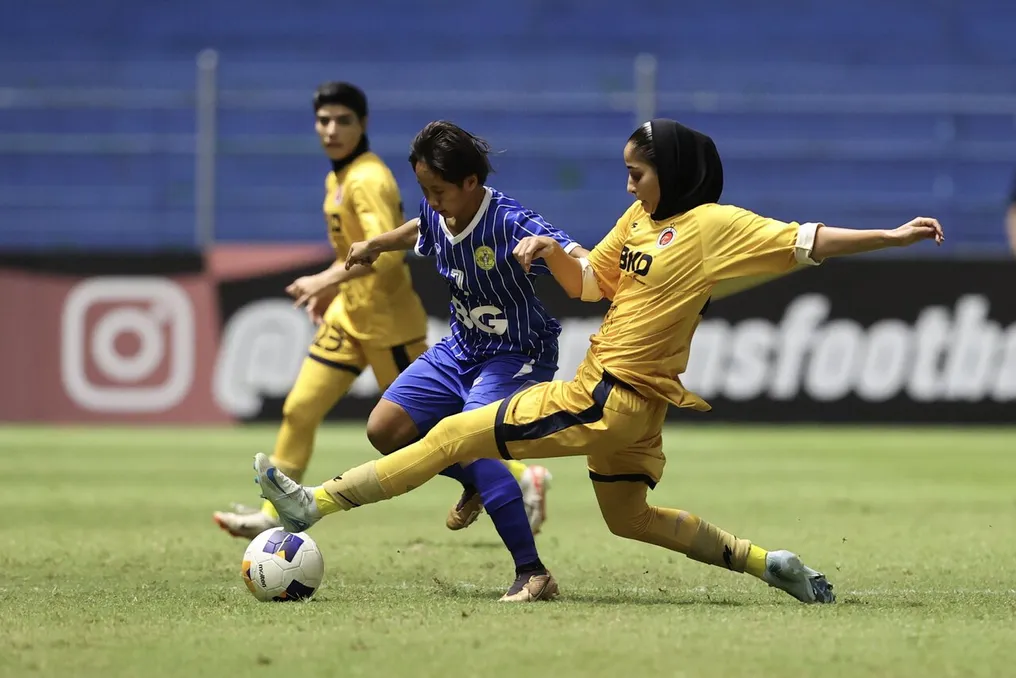
Khatun's team has established itself as a dominant force in Iranian women's football. The Bam club has won the domestic championship 12 times and increasingly demonstrates its presence in continental competitions. Their progress is particularly noticeable in recent editions of the main AFC tournament for women's clubs, where they have shown that Iranian women's football can compete with some of Asia's strongest teams.
The upcoming AFC Women’s Champions League 2026/27 will be a new test for Khatun. The Iranian champions have been placed in Group E of the preliminary round alongside Al-Nassr from Saudi Arabia, Etihad Club from Jordan, and CSKA Dushanbe FC from Tajikistan. The group matches will take place from August 17 to 23, and only the group winners will advance to the next stage of the competition.
Khatun's first match is scheduled against CSKA Dushanbe on Monday, followed by games against Al-Nassr and Etihad Club. The tournament format leaves no room for errors, making every earned point and every goal potentially decisive. Since only one team advances from each preliminary group, Khatun must maintain concentration throughout the tournament.
Jafari noted that Iran's opponents have made significant investments before the start of the competition, highlighting the strength of Al-Nassr from Saudi Arabia, which boasts high-class foreign players from Portugal, France, Brazil, Japan, and several African countries. She also pointed to Etihad from Jordan, which has hired several strong foreign players, and CSKA from Tajikistan, which can count on many international players, as well as four quality foreign players.
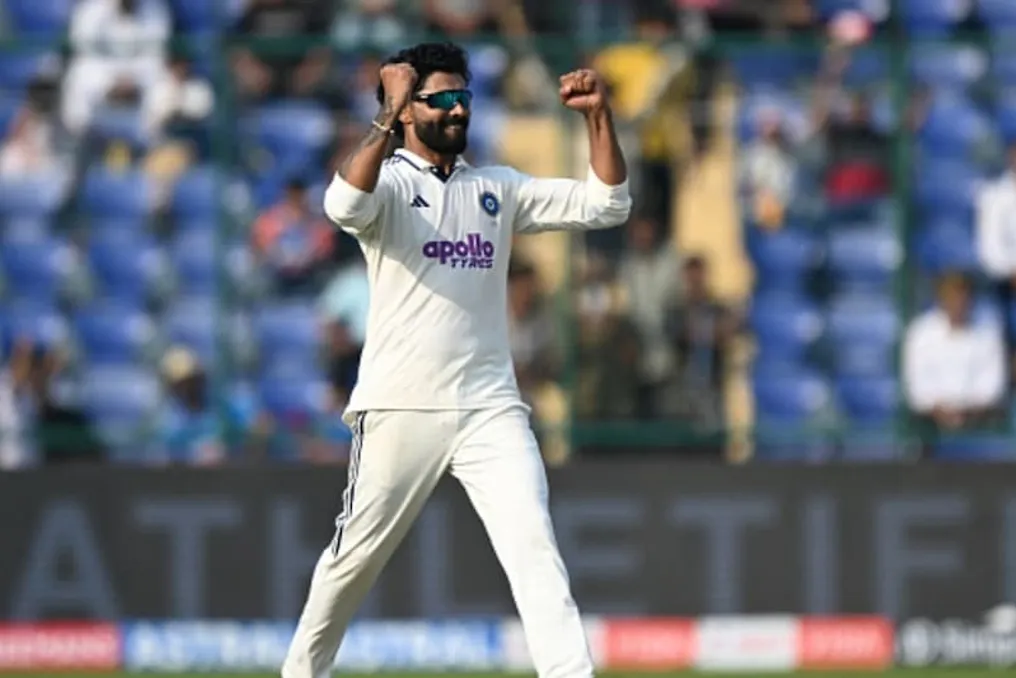
Indian all-rounder Ravindra Jadeja shared candid memories of the beginning of his career. He stated that being constantly sent to lower positions in the lineup to bat negatively affected his self-confidence.
During a conversation with broadcasters before the second day of the match between India and Sri Lanka, Jadeja emphasized that his statistics in domestic cricket were strong. His average in the Ranji Trophy and Duleep Trophy tournaments exceeded 60, and he believed in his ability to play well.
However, after joining the national team, he often had to come onto the field at the eighth or ninth position. He recalled how his morale dropped when he waited for his turn in the dressing room in protective gear while a fast bowler prepared to play nearby. He felt that the team did not fully trust his batting skills.
Jadeja noted that in some cases, he was sent out even lower than Ravichandran Ashwin. These circumstances caused him significant concern and affected his self-esteem. Nevertheless, over time, he managed to develop mental resilience and form the habit of playing long innings in Test matches.
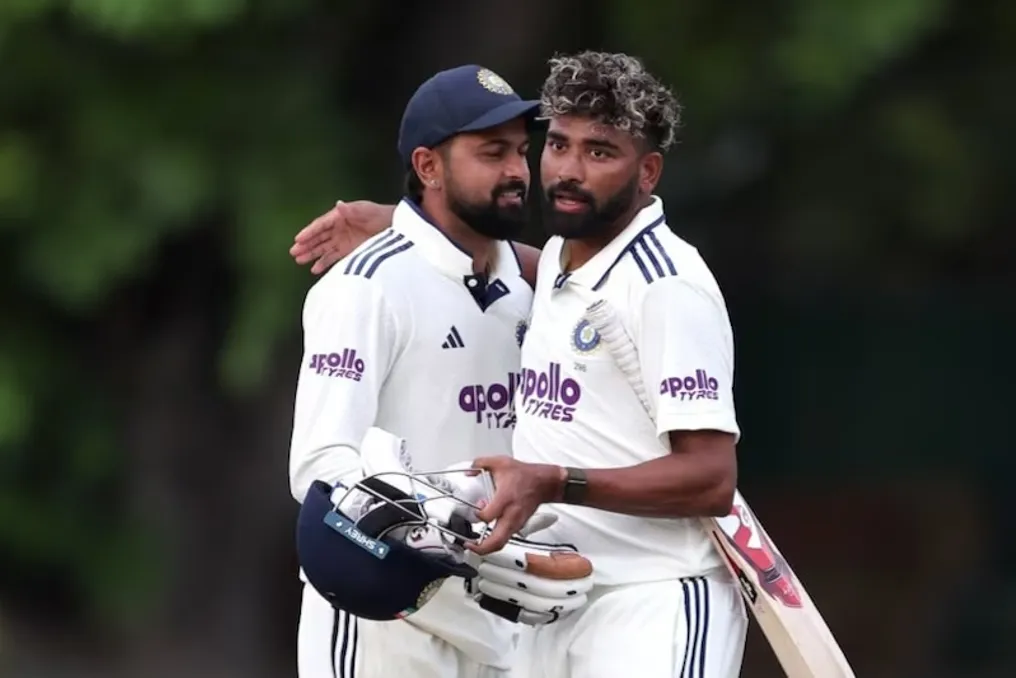
This story became known during the Test match against Sri Lanka. India initially scored a solid total of 288/2 on the first day in Galle, and then the Indian batsmen continued to impress on the second day, scoring 460 runs for the loss of 9 wickets by the end of the match. Devdhadhat Padikkal made a significant contribution, scoring 167 runs.
The second day of the Test match in Galle against Sri Lanka proved to be extremely tense. Despite a delay in the start of the game due to rain, the level of play on the field was impressive. On one hand, Devdhadh Pathikkal demonstrated a magnificent century, and on the other, Mohammed Siraj once again attracted attention with his batting performance.
Mohammed Siraj, known for his powerful bowling, has recently shown outstanding results with the bat. Even in a practice match, Siraj helped India secure a victory by hitting three consecutive sixes in the final over. When Siraj came out onto the field in Galle, he appeared to be in a special mood. The team management sent him out before Kuldeep Yadav so that he could quickly score runs. Siraj met the expectations of the coach and captain.
During his innings, he hit his fourth six in his career, using a strong slog-sweep against Kesara Nuwanta's ball on the fourth delivery. This shot was directed outside the deep mid-wicket boundary. However, it was dismissed after scoring 11 runs off 15 balls, falling victim to Asith Fernando.
The second day of the match began with the first session being lost due to rain. When the game started in the afternoon, the Sri Lankan bowlers tried to regain their footing. India started the day with a score of 288/2. Devdhadh Pathikkal was approaching his first Test double century but was dismissed for 167 runs by Prabhat Jayasuriya.
Rishabh Pant (39) and K.L. Rahul (81) were unable to score significant runs. Following this, Dhruv Jurel played a thoughtful innings of 57 runs from the lower order, and along with Manav Sutara (24), took the team's total to 460/9. By the end of the day, Kuldeep Yadav and Prasad Krishna remained on the field.
Despite losing seven batsmen while adding 172 runs on the second day, the score of 460 on the turning pitch in Galle is considered very solid. Now the Indian bowlers will have an excellent opportunity to put pressure on Sri Lanka on the third day.
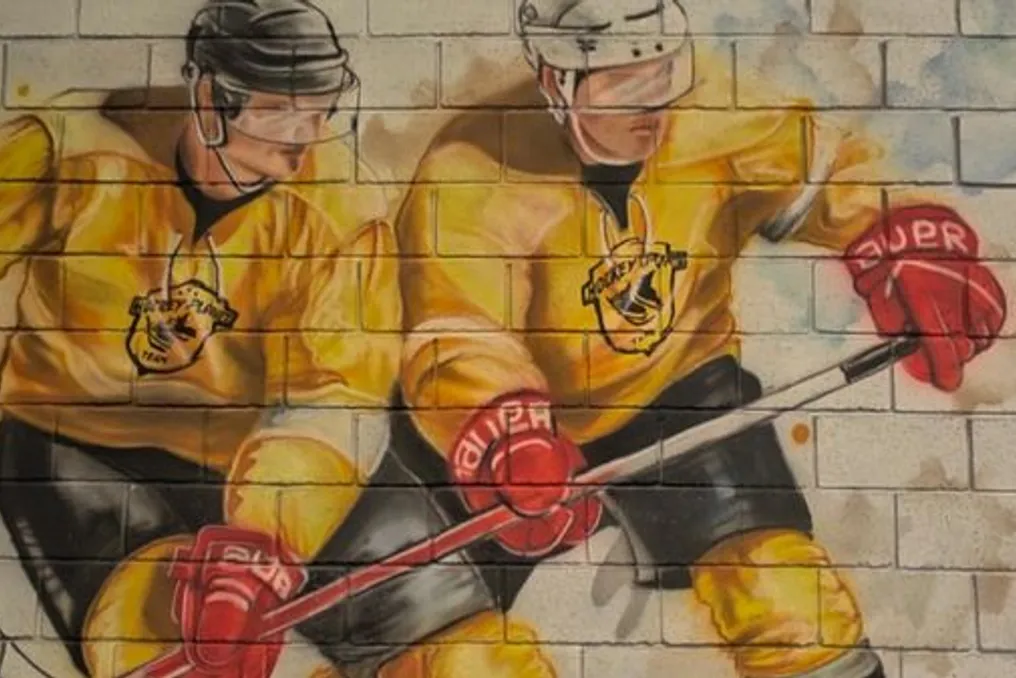
Hockey is developing in Uzbekistan, characterized by the appearance of new ice rinks, an increase in the number of young hockey players, and the activity of adult national teams. One of the hockey clubs in Tashkent currently has about 120 athletes, the youngest of whom is only four years old.
When the sports school first started operating, it had only 15 pupils. Ilya Nazarevich, the head coach and a school alumnus, noted that most children continue to participate in sports because they choose this specific sport. He emphasized that hockey is not an easy sport, and the key factor is the child's desire; if there is a strong urge to try something new, everyone has a chance to start.
Specialists from Russia, including professional hockey players who competed at various levels, work among the coaches. These specialists pass on their experience to the younger generation. Nazarevich stated his desire to make his sport more well-known to prove that talented hockey players capable of achieving victories in games can be trained, even under current conditions.
The school's pupils hope that the next stage of development will involve participation in competitions in one of the strongest hockey countries in the world—Russia. However, for the system to function fully, covering the period from youth hockey to the senior national team, stable ice infrastructure is necessary.
Normunds Seiyas, the head coach of the Uzbekistan national team, believes that building a hockey complex in the Olympic City of Tashkent will significantly expand sporting opportunities. Such a rink will create conditions for regular training and camps, and most importantly, for the constant use of the ice by hockey players.
As noted by the national team player, Javohir Rasulov, Uzbek hockey is in a transitional period. On one hand, children's interest is growing, and new schools are opening. On the other hand, for this growth not to stop, problems related to infrastructure must be solved.
Recent years have demonstrated how quickly hockey is developing in Uzbekistan. Since 2019, clubs, youth schools, and youth and national teams have been formed in the country. In particular, in 2024, the men's national team of Uzbekistan became the champion of the III Division Group B of the world and gained the right to participate in Group A.
Rasulov added: 'From the perspective of sporting results, we are advancing very quickly. But now we face an even more complex task—stabilizing this system. We need to ensure constant ice surfaces and a clear pathway for young players to transition into the senior hockey league.'
Thus, the next stage for hockey in Uzbekistan is not just about new victories. The main mission is to transform the current interest of children into a sustainable system that leads them to professional hockey.