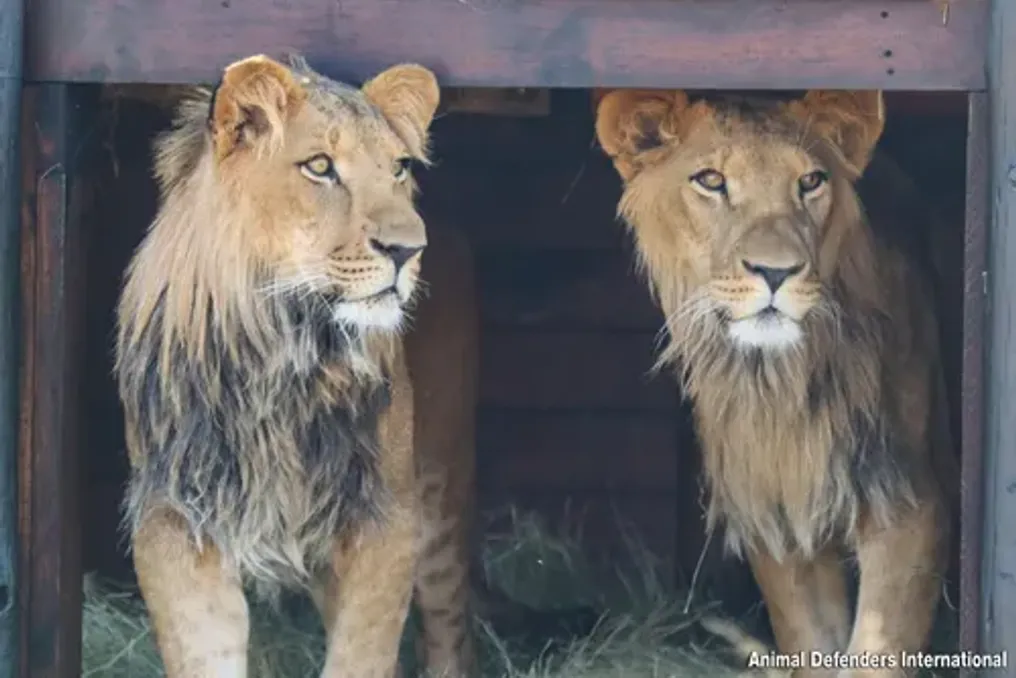
Two young lions, Benzur and Ori, were rescued in Israel from the illegal wildlife trade and subsequently transported to the Animal Defenders International (ADI) reserve in the Free State.
These lions had been isolated for a long time due to the conflict in the Middle East, which led to the suspension of most flights. Eventually, they were able to travel with the ADI team on a cargo flight from Tel Aviv. The journey took 50 hours and included stops in Cairo and Frankfurt, concluding with a landing in Johannesburg.
According to ADI, these 16-month-old cubs were seized by the Israeli Nature and Parks Service (NPA) over a year ago during an operation against animal smuggling. The organization noted that the cubs were separated from their mothers so that instead of nursing, they could be used as 'trophy pets' for photos and social media, a trend fueled by social media culture.
The organization expressed relief when the young lions were released and began exploring their new habitat. ADI President Yan Krimmer stated that trophy pets are animals, such as lions and tigers, taken from their mothers and kept in cruel and unnatural conditions as status symbols.
Krimmer emphasized that such animals are used as accessories for likes on social media, and then discarded when owners get bored or when the animals become too large, dangerous, and expensive to keep. He added that these young animals live in terrible conditions, in cages and small spaces, deprived of maternal love and interaction with their peers, living in basements and on chains, despite needing to roam freely.
It was found that Ori was kept in a basement, while Benzur was tied to a tree in the backyard with a short rope. ADI had previously rescued six young cubs in Kuwait, as well as trophy pets abandoned in the desert or left in cities, tied to lampposts.
The organization pointed out that social media serves as free advertising for cruel and abusive trade, noting that 'influencer' accounts with over six million followers deal in exotic animals, normalizing and monetizing animal cruelty.
Benzur and Ori miraculously avoided danger and undertook the journey of their lives this week. Due to the conflict, very few flights were available. They flew from Tel Aviv to Cairo with a two-hour layover, then to Frankfurt, Germany, where they waited 12 hours before flying to Johannesburg.
ADI founders, Yan Krimmer and Tim Phillips, accompanied the lions to monitor them, replenish water supplies, and give them small pre-prepared pieces of meat through a small opening in the cage.
Krimmer reported that the lions tolerated the long journey well and were very happy when finally released into the ADI reserve home. They rubbed heads, made sounds, and then curled up together on soft straw bedding. Other lions in the reserve immediately noticed the newcomers and announced their presence with roars, causing Benzur and Ori to stand up and listen. Since they were very young, they had never heard the communication of a lion pride.
Measures were taken to adapt the young lions to the transition from Israel's hot climate to mid-winter in South Africa. At night, they were kept in a heated house and given light food.
The organization reported that on Wednesday morning, the moment of opening the doors arrived, and Benzur and Ori stepped onto the land intended by nature, onto the grass under the African sky, surrounded by the sights and sounds of wildlife.
The lions quickly adapted to the new routine, responding to the voices of their caretakers and coming into the house to eat. They enjoyed toys such as giant durable balls and bags of catnip.
Krimmer noted that all the stress associated with bringing them there and the fatigue from the journey vanished when they stepped onto African soil. They had never walked on grass before and were initially cautious, but then began walking together across our dry, golden winter grass, gaining confidence and surveying their surroundings, listening to the voices of other lions; it was clear that they were where they belonged.