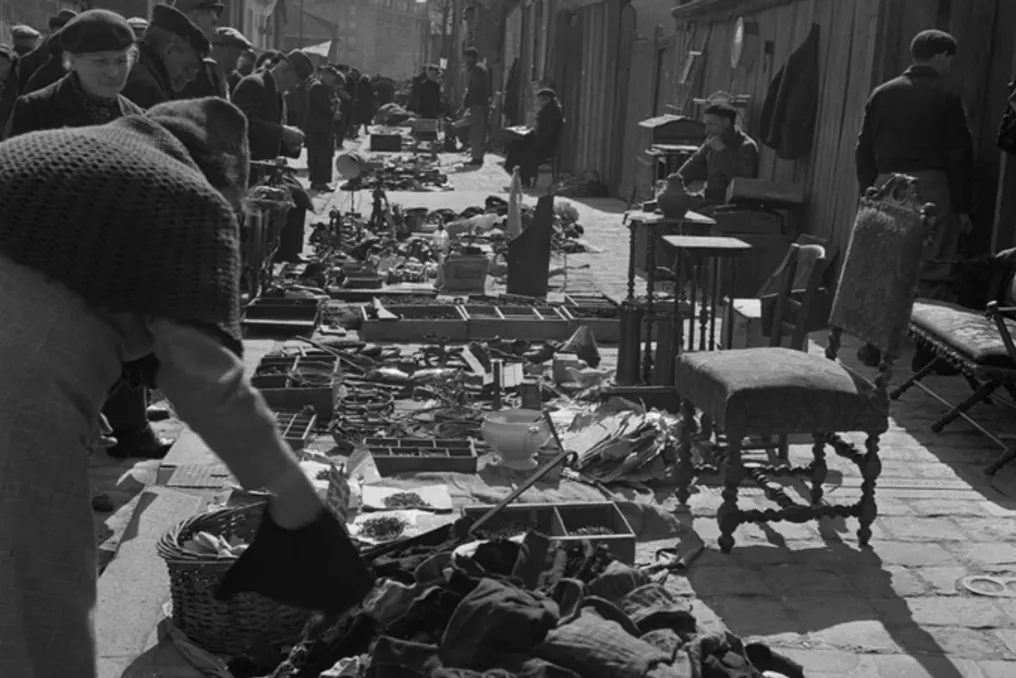
In Uzbekistan, plans are underway to hold auctions of Tashkent markets and their branches with the involvement of private investors. This decision is enshrined in a decree by the President of Uzbekistan dated July 27, 2026, concerning measures for the socio-economic development of the capital for 2026–2027. Among the 35 objects to be put up for auction is 'Yangiyabad'—a spontaneous market that is a direct successor to the legendary Tezikovka, about which Alexander Solzhenitsyn and Dina Rubina wrote. This market attracts collectors and foreign tourists, and excursions dedicated to Soviet antiques are also organized.
Similar stories
Popular
Amid these news, the possibility of demolishing such markets was discussed on social networks. However, the experience of other global cities demonstrates that the fate of flea markets can vary: some are preserved for decades, attracting visitors from all over the world, while others are granted the status of protected monuments. The publication 'Gazeta' presented an overview of six famous flea markets and described their evolution.
Saint-Ouen in Paris, France
Paris's Saint-Ouen is recognized as the world's largest antique market, and it is believed that the term 'flea market' originated here. Its history dates back to the 1880s, when Parisian junk dealers collected and resold found items on the streets. The situation became complicated after Prefect Eugène Poubel introduced a requirement to store garbage in closed metal containers, pushing traders outside the city limits.
The official location appeared in 1885 when the Saint-Ouen municipality first required traders setting up goods on sidewalks to pay rent. The name 'marché aux puces' ('flea market') was established in the early 20th century due to the dilapidated condition of the sold items. Soon after, the Parisian press began writing about the market, and with the advent of the metro, it became a popular spot for Sunday strolls among the bourgeoisie and artistic bohemians. Gradually, the first covered markets emerged around the unorganized stalls, such as Vernisson (1920), Biron (1925), Jules Vallès (1938), and Rosiers (1946), each with its own characteristics.
By the 1920s, the market received official status and began to be designated with a capital letter—les Puces ('Flea Market'). Today, Saint-Ouen includes 11 covered markets, five shopping streets, and numerous stalls covering an area of about seven hectares. More than five million people visit annually, and up to 150,000 on some weekends. By visitor numbers, Saint-Ouen is among the most popular tourist destinations in France, alongside the Louvre, the Eiffel Tower, Notre Dame, and Disneyland. Approximately 1100 antique dealers, junk dealers, and gallery owners operate at the market, allowing it to be called the 'attic of the world.' In 2001, the Parisian flea market became one of the first areas in France to receive ZPPAUP (Zone of Protection of Architectural, Urban, and Natural Heritage) status due to the atmosphere and spirit of the place.
Portobello in London, UK
The Portobello market in London has existed for over 150 years. Its appearance was a result of the urbanization process that occurred in the mid-19th century. As neighboring plots on Portobello Road were developed, shops and grocery stores opened for the growing population. Over time, traders from various countries appeared at the market, reflecting the diversity of the goods offered.
After the start of the Spanish Civil War in 1936, Spanish refugees settled at the market, contributing to the presentation of southern gastronomy. After World War II, some traders from the Caledonian market in Islington, where stolen goods were sold alongside antiques, moved to Portobello, thereby strengthening the antique specialization that later became the hallmark of this place. In the 1950s and 1960s, the Caribbean community, who arrived in Britain by invitation from authorities to work, joined this trend. Low rent prices also attracted emerging artists and designers. Vivienne Westwood sold handmade items here, and John Lennon and Mick Jagger visited shops selling vintage military uniforms. The bassist for The Clash, Paul Simonon, worked at one of the stalls in his childhood and later recalled that his style was formed there, noting that 'it felt like the whole world was wandering up and down this street. So I grew up with a broad outlook. It was exciting, educational, and left a deep mark on me.'
By the late 1980s, Portobello transformed from a working-class area into one of the trendiest and most expensive in London. Many independent traders with long histories were displaced by chain stores, expensive restaurants, and cafes primarily catering to tourists. In 2015, the charity Westway Trust, which had managed the area for over 40 years, presented a project for rebranding and reconstructing a section called 'Portobello Village,' announcing the decline of the market. It was proposed to dismantle the canopy and build a three-story 'market building,' as well as upgrade the public space. Local residents and shoppers initiated a petition, arguing that such initiatives 'suck the essence and individuality out of London,' do not match the 'real Portobello,' and are implemented without considering the opinion of the local community. The protest group Westway23 held a demonstration on the market grounds, leading to the rejection of major renovations.
The conflict with Westway Trust has not ended. In early 2026, the borough council approved a large-scale street improvement plan worth £4.4 million after three years of consultation with residents and entrepreneurs. For example, instead of granite paving, which was inconvenient for trolleys and stalls, the decision was made to lay asphalt, saving £1.6 million. The plan also includes flood protection (following a devastating event in 2021), improved lighting, and accessibility for wheelchair users, and temporary anti-terrorist barriers, against which residents sued in 2025, will be replaced by permanent sliding bollards. The project is financed through levies on developers, not from the city budget. A representative of the borough administration, Kim Taylor-Smith, noted that the goal of these investments is to 'protect Portobello Road for future generations, respecting its history.'
El Rastro in Madrid, Spain
Another large European flea market is located in the capital of Spain—El Rastro (which translates from Spanish as 'track'). The origin of the name is linked to the 15th-century slaughterhouse in the Cascorro square, where animal carcasses were dragged along the street to the tanneries, leaving a bloody trail. Trade in second-hand goods gradually developed around this route.
For a long time, trade was conducted exclusively in an informal format, with sellers displaying goods directly on the streets. In 1811, the city began to regulate this informal trade by introducing a licensing system for stall owners. It was then that true antique dealers specializing in higher-quality items appeared. Over two centuries, the market has significantly expanded, occupying several blocks in the La Latina district, as well as many adjacent alleys and squares, and now attracts over 100,000 visitors every Sunday.
In 2020, El Rastro suspended operations due to quarantine measures related to the COVID pandemic and remained in that state for eight months. City authorities proposed resuming operations only with 135 rotating stalls per week (which accounted for about 12% of the usual volume), but traders insisted on ensuring 50% occupancy, calling the proposed conditions a 'catastrophe for the historic stalls of Rastro.' They also demanded guarantees to preserve the familiar spots for families who had owned them for many generations. During negotiations, over 500 people took to the streets in Madrid to support the market and demand that the mayor's office revise the opening plan in favor of the traders' conditions. As a result, the market was able to resume activity at the end of November, operating at 50% capacity: half of the 1000 stalls functioned on a rotational basis, and the maximum number of people on the territory could reach 2700 simultaneously.
Today, trade at El Rastro is segmented by types of goods: some rows are dedicated to second-hand clothing, others to antique books, paintings, and furniture. A separate zone specializes in vinyl, old magazines, and toys. In renovated buildings along Ribera de Curtidores, there are covered antique galleries where coins, stamps, and old photographs are sold. Although there is little food at the market itself, many bars are located nearby where visitors go after walking through the rows.
Dry Bridge in Tbilisi, Georgia
Flea markets also exist in the territories of former Soviet republics. One of the most famous is in Tbilisi on Dry Bridge, which got its name after the drying of the Kura River branch and the laying of a road in its place. The flea market on Dry Bridge in Tbilisi arose in the early 1990s, after the collapse of the USSR. Amid the transition to a market economy, the closure of state enterprises, hyperinflation, and civil conflicts, many residents were left without means of subsistence, and they began selling personal belongings, household items, and family valuables on the bridge.
Currently, this spontaneous market occupies not only the bridge itself but also the adjacent park, which partially opens onto the Kura embankment. Here, samovars, silverware, sets, vinyl records, old cameras, jewelry, paintings, orders, and medals, as well as surgical instruments, are sold. Goods are laid out on folding tables, car hoods, and directly on the ground. Sellers actively communicate with buyers and share the history of the items.
People's Flea Market in Seoul, South Korea
The Hwanghak-dong flea market in Seoul, also known as 'Dokkebi Market,' represents another point of interest for lovers of antiques and vintage items.
The first print issue of The National newspaper is now available in retail stores across South Africa, marking the official launch of the publication into the country's print media market.
The launch of the print version runs parallel to the newspaper's digital platform, thereby adding a new product to an industry that is undergoing significant changes in how South Africans consume news.
The National informed readers in a statement that 'the printing presses worked late at night while South Africa slept.' The publication emphasized: 'For the first time, The National was printed, and today, when you wake up, the first paper copy of The National will be waiting for you.'
The newspaper stated that it decided to launch a print edition during a period when 'journalism is under pressure' and 'trust is fragile.' Its approach will focus on thorough reporting, fact-checking, and asking difficult questions to those in power.
The publication noted that it takes courage to believe in the importance of meticulous journalism, the necessity of pre-publication verification, asking tough questions to those who hold power, challenging conventional views, and paying attention to voices that might otherwise go unnoticed. Furthermore, it is important to recognize that the accuracy of the presentation is more important than its speed.
The Publication declared its intention to provide readers with journalism focused on a deep understanding of events and issues that go beyond the daily flow of information. The newspaper believes that while news is abundant, it is harder to find journalism willing to stand by its claims. It aims to become a place for readers, a refuge from the noise, where they can understand what is happening in the world.
For those planning to upgrade the monitor of their gaming equipment, this is an opportune moment to take advantage of the offers. Three monitor options featuring high refresh rates, very low response times, and synchronization technologies that provide significant improvements during gameplay have been gathered. The promotions are currently available on Amazon.
The AOC AGON G50 model features a 24-inch IPS panel, offering a refresh rate of 144Hz and a response time of only 0.5ms. This ensures that images are fluid and free of trails, even in highly dynamic games. Furthermore, it supports HDR10, which enhances contrast and color depth, and its compatibility with G-SYNC eliminates the undesirable screen tearing effect during gaming sessions.
Another suggestion is the LG UltraGear Gamer Monitor 24" IPS 144Hz (O/C) 1ms (MBR) Full HD HDR10 NVIDIA G-SYNC AMD FreeSync — 24G411A. This monitor is considered a robust choice for those who want high performance without compromising visual quality. Its IPS panel provides accurate colors and wide viewing angles, boasting a refresh rate of 144Hz (with overclocking option) and a response time of 1ms in MBR mode. Its ability to be simultaneously compatible with NVIDIA G-SYNC and AMD FreeSync makes it quite versatile for various PC setups.
Additionally, the 25-inch Haiz monitor emerges as an attractive alternative for users looking for an IPS panel with 144Hz and 0.5ms response time, in addition to Adaptive Sync support. With Full HD resolution, it has HDMI and DisplayPort inputs and is compatible with VESA mounts, suiting both entry-level configurations and more sophisticated setups.
It is important to note that offers may change at any time, so it is advisable to check availability as soon as possible. Readers are encouraged to click on the links to check the current conditions of each product directly on Amazon.
Global star Tyla was honored with the AfriPure International Achievement Award at the 32nd South African Music Awards (SAMA32) in its Homecoming Edition. Her appearance at the event was the central highlight of the evening.
This marks her second receipt of this award (the first being in 2024), but it is her first time receiving this specific accolade. Making her debut performance on the SAMA stage, the 24-year-old artist made a strong impression with her speech, which was cited as one of the best.
Tyla received the award in Sun City, where she was greeted by host Bonang Matheba, known as Africa's most celebrated personality on air, and AfriPure co-founder Grant Hughes. In her address, Tyla acknowledged the significance of the SAMA award, an achievement in her career, and delivered a powerful message about African unity.
Tyla shared that attending SAMA was one of her childhood dreams. She admitted that her career developed spontaneously, as she lacked a clear plan or mentor. She thanked South Africa for its support and inspiration, noting that South Africa runs in her veins and is reflected in her manner of speaking and dancing.
The artist also expressed gratitude to Bacardi and Pretoria, stating that the moment she performed the Bacardi song on that stage changed her life. She emphasized her deep love for the country and decided to use this moment to celebrate all local artists.
Tyla invited fellow industry professionals from the country onto the stage, including Makhadzi, Zee Nxumalo, Langa Mavuso, Babalwa M, Lordkez, Xdubby, Maglera Doe Boy, and Cassper Nyovest. Tyla's statement supporting her compatriots was perceived as an act of sharing attention and promoting their talents.
She concluded her address with a prayer for the swift arrival of a unified Africa, underscoring the importance of this aspiration.