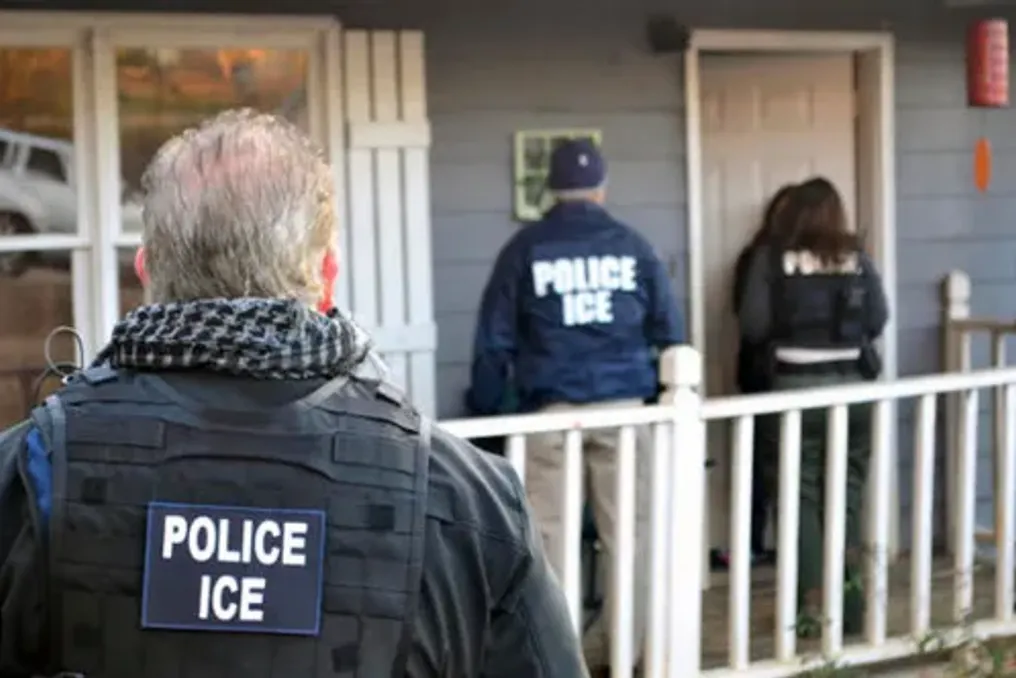
The recent detention of a pregnant woman from South Africa at Las Vegas airport has once again drawn attention to what happens when US immigration authorities arrest an individual accused of overstaying their permitted period of stay.
The recent detention of a pregnant woman from South Africa at Las Vegas airport has once again drawn attention to what happens when US immigration authorities arrest an individual accused of overstaying their permitted period of stay.
According to 8News Now, Nkobile Malangeni was detained on July 31st at Harry Reid International Airport while preparing to board a JetBlue flight to Connecticut. Malangeni resides in Connecticut with her fiancé, who previously served in the US armed forces. She arrived in Las Vegas as a tourist to celebrate her birthday on July 27th. Footage of her arrest by ICE agents was circulated among American media outlets.
The video shows Malangeni surrounded by ICE agents, who inform the pregnant woman that there is a final removal order against her due to exceeding the permitted period of stay. Malangeni is currently being held at the Henderson Detention Center in Nevada.
Malangeni is not the first South African citizen detained by ICE agents. In January, ICE agents arrested Jacobus Lodewicus Janse Van Rensburg, whom authorities claimed was in the US illegally. At that time, Van Rensburg was accused of several criminal offenses, including assault with a weapon, assault, and driving under the influence (DUI). Officials identified him as an undocumented immigrant at the time of his arrest. ICE agents detained Van Rensburg following his contact with local law enforcement.
If you are considering overstaying in the US, you should know about the process after being detained by ICE agents.
According to ICE regulations, after detention, the agency takes fingerprints, photographs, and personal belongings of the person. An intervention check is then conducted, which means checking the person's information in federal databases to assess their criminal and immigration history. After this, ICE deportation officers interview the person regarding their background, date of entry, and family ties.
After processing, the person may be transferred to a local county jail or a federal immigration detention center. Individuals held by ICE are not required to answer questions about birthplace or citizenship; however, it is crucial that they do not lie or present false documents. Every detainee has the right to call a lawyer; the US government does not provide free public defenders for civil immigration cases.
An ICE agent or immigration judge may set a financial bond, which allows the person to be released pending the outcome of the case.
The person may be issued a notice to appear. This document explains why the government believes the person should be deported and also indicates the first date in immigration court. The person will either defend their case before an immigration judge, attempt to obtain protection such as asylum or cancellation of removal, or face a final removal order, which will lead to deportation.
Under ICE rules, the government has a 90-day period to deport a person after the removal order becomes final. ICE must obtain valid travel documents or emergency passports from the embassy or consulate of the deportee's country of origin. The country of origin must officially agree to accept the citizen back. If the country refuses to cooperate or delays document processing, ICE cannot hold the person indefinitely and may be forced to release them under supervision.
The detained person may try to stop the process at the last minute by filing a motion to reopen the case or requesting a deportation deferral based on extreme humanitarian circumstances. If the deferral is not granted, the deportation process will continue. ICE agents will escort the person on a commercial or special charter flight for transport back to their country of origin.
According to ICE, the primary financial burden of deportation falls on the US taxpayer. Government funding comes directly from the federal budget allocated to the Department of Homeland Security. The total cost per person varies depending on the length of detention and the destination country. According to the American Immigration Council, only the costs of physical transportation and air travel average billions of dollars annually when carried out on a large scale. US taxpayers also pay daily operational costs for holding people in custody, which average hundreds of dollars per day per bed across all national facilities. In complex cases involving third-country agreements, the US government has paid millions of dollars in direct diplomatic aid to certain nations to encourage their acceptance of deportees.
Reports of harassment incidents during the performance of Egyptian pop singer Mohamed Ramadan on the North Coast were actively discussed online. Video materials circulated on social media captured crowding, fainting, instances of harassment, and general chaos at Ramadan's concert.
Shouts from women and girls could be heard among the crowd, and some media outlets reported cases of stalking. Security personnel attempted to move these individuals out of the crush, which provoked a wave of criticism. The situation escalated when Mohamed Ramadan stopped singing after noticing an elderly woman among the audience. He asked people and security to help her before resuming the performance.
It is worth noting that before the concert, Ramadan had appealed to the public, urging young men to respect women's safety. Nevertheless, scenes of pushing and crowding were observed at the event, sparking wide discussions regarding the organization and safety measures at the concert.
The Egyptian Ministry of Interior provided an official explanation regarding the videos and social media posts about harassment at Mohamed Ramadan's concert, stating that two young women were harassed at the concert, asserting that the widespread information was untrue. The Ministry clarified that on August 15, the El Alamein police station received a report from a university student and her sister residing in Giza Governorate concerning the news and videos on social media about alleged harassment at the concert in the tourist resort under the station's jurisdiction.
According to the Ministry's statement, both women confirmed that the published information contained false and defamatory statements. They explained that the incident at the concert was caused by overcrowding among visitors, not by harassment from anyone. The Ministry added that necessary legal measures have been taken regarding this incident.
Sandra Lavi Gojkovic gave up a luxurious life in Switzerland, a successful corporate career in Dubai, financial stability, and the freedom to travel. Her decision was prompted by the question: 'Why do I need so much when so many children have nothing?'
In 2011, she left her former lifestyle and traveled to India alone. Her work began by interacting with families on Sagar Island.
Through her work with The India School Project and her efforts in child protection, Sandra now supports nearly 20,000 children and families across 30 villages. She works to create a safer future and provide opportunities for needy children.
Sandra's activities go beyond simple education; they are aimed at protecting childhood itself, advocating for children's rights, and helping ensure they have the opportunity to grow, learn, and dream.