The Illusion Museum in Dubai has officially announced its closure, concluding its operations in the historic Al Seef district of Bur Dubai. The museum stated on social media that its 'chapter here [Al Seef] has come to an end.'
The Illusion Museum in Dubai has officially announced its closure, concluding its operations in the historic Al Seef district of Bur Dubai. The museum stated on social media that its 'chapter here [Al Seef] has come to an end.'
The museum began operating on September 12, 2018, and entertained visitors for nearly eight years. Located near the old Creek, it was part of an international franchise of the Illusion Museum, which first opened in Zagreb, Croatia, in 2015.
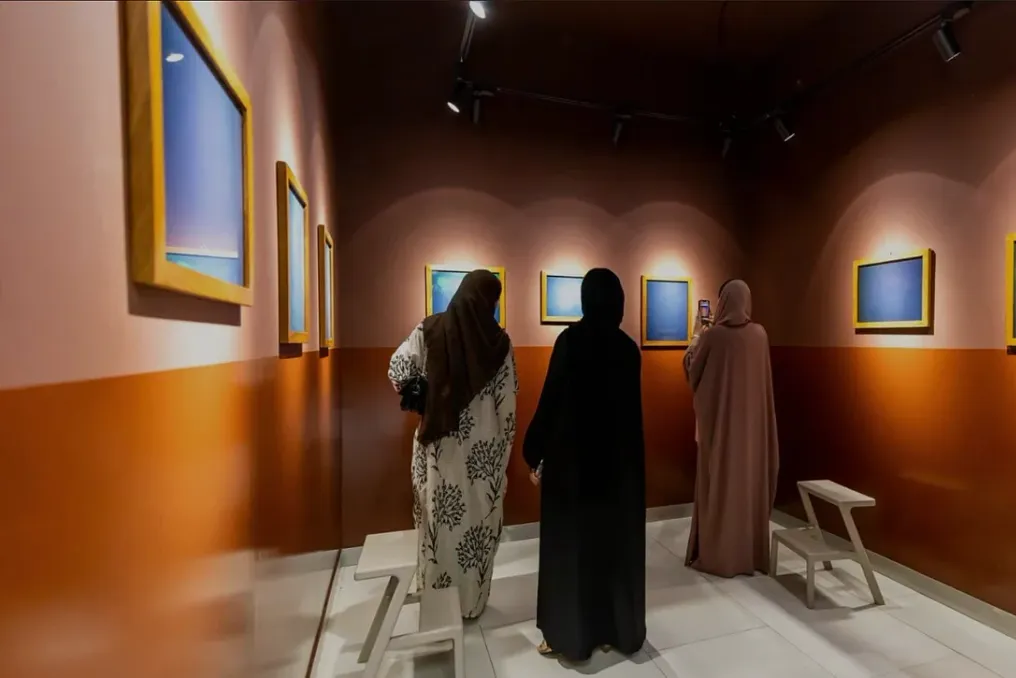
The museum's exhibition included over 60 visual and educational exhibits. These exhibits comprised holograms, stereograms, optical illusions, and immersive rooms designed to engage viewers of all ages.
During its operation, ticket prices ranged from 40 to 370 dirhams. For general visitors, the prices were: 65 dirhams for children (3–15 years), 90 dirhams for adults (16 years and older), 75 dirhams for seniors (60 years and older), 250 dirhams for a family (2 adults and 2 children), and 370 dirhams for a group of five. Tickets for people with special needs cost 40 dirhams.
Different tariffs applied for UAE residents: 55 dirhams for children (3–15 years), 80 dirhams for adults (16 years and older), 65 dirhams for seniors (60 years and older), 220 dirhams for a family (two adults and two children), and 40 dirhams for people with special needs.
The news of the closure quickly spread online, causing disappointment among local residents who expressed hope for a possible reopening in the future. Dubai resident Yassel H shared with Khaleej Times that this museum was one of the first places she visited after moving to the city.
She noted: 'I was struck by the whole atmosphere. It was an awakening for the mind. The fact that not everything you see is real made me think more about illusions and how the mind works. Among all the experiences at the museum, I liked the inverted pose and the deceptive mirrors the most. It is sad that this place is closing forever, as I believe it is quite different from the usual Dubai attractions for both children and adults.'
Social media users also reacted to the announcement. One user wrote: 'I visited it and I liked it... it's sad to see it closing.' Comments were full of wishes from parents for the museum to reopen in another branch so their children could enjoy this educational entertainment.
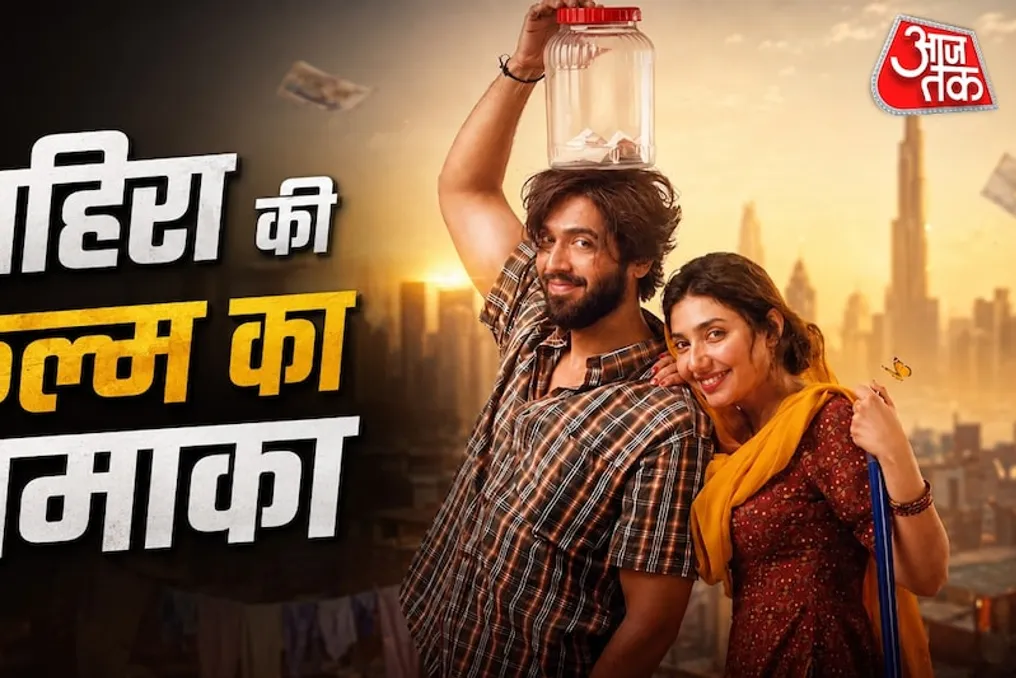
Pakistani cinema is experiencing success thanks to the film 'Aag Lage Basti Mein,' starring Mahira Khan and Fahad Mustafa. This movie is demonstrating record collections, surpassing the 100 million mark globally. Because of this film, it has become the second highest-grossing film in Pakistan.
Fahad and Mahira's film achieved significant success at the global box office, which is an important achievement for Pakistani cinema. It is worth noting that Mahira Khan previously played the lead role in the film 'The Legend of Maulana Jatt,' directed by Bilal Lashari. In this project, which also featured Fawad Khan, Hamza Ali Abbasi, and Humaima Malik, Mahira Khan was the lead actress. The film, released in 2022, became the highest-grossing Pakistani film and the most profitable Punjabi film worldwide, collecting around 400 million units.
The film 'Aag Lage Basti Mein' joined the club of films that have collected 100 million units, following 'The Legend of Maulana Jatt.' According to media reports, in its first week of release, Mahira and Fahad's film earned 16.2 million units. 'Aag Lage Basti Mein' is a crime-comedy drama directed by Bilal Atif Khan. The plot revolves around a married couple struggling for survival (Fahad and Mahira) who get involved in crime through Javed Sheikh. The film was released in Pakistani cinemas on the occasion of Eid al-Fitr and received positive reviews from critics, continuing to set collection records.
After participating in two major and successful projects, Mahira Khan is recognized as one of Pakistan's biggest stars. She has also previously demonstrated her talent in numerous hit shows. She also has a large fan base in India, where she debuted in Bollywood with the film 'Rais' alongside Shah Rukh Khan. However, there was previously a ban on Pakistani actors working in India.
Numerous winners were recognized at the 32nd South African Music Awards (SAMA32) ceremony, as covered by Homecoming. Gospel singer and songwriter HLE was among the main laureates of the evening.
HLE won the 'Lesedi FM Woman of the Year' and 'SAMPrA Album of the Year' awards for her work on the composition 'The Ground We’re On'. Additionally, she received an award at the Industrial Awards for Best Contemporary Faith Video.
Mzukulu also showed strong results, winning the 'Motsweding FM Man of the Year' and 'Maskandi uKhozi FM Best Album' awards for the track Ng’funa Intozami. It should be noted that the artist could not attend the ceremony as he was attending the funeral of Inkosi Yamagkokama.
Among other winners were Amadodana Ase Wesile, who were recognized as Duo/Group of the Year by Radio 2000 and received the Best Indigenous Faith Album award at the Industrial Awards. Nontokozo Mkhize received the SAMRO award for the highest listening level of the composition 'Esandleni'. Young talent Paras 'Sibalukhulu' Dlamini was named SABC 1 newcomer of the year, highlighting SAMAs' commitment to recognizing both established mastery and rising talents.
Bucy Radebe won the Best Traditional Faith Album award for 'Praise & Worship in the Wilderness, Pt. 1', followed by a moving performance that brought the audience into the church. Makhadzi Entertainment received the Best Traditional Music Album award for 'Sesi Ka Rose', and in her speech, she expressed gratitude to God for being alive to receive this award.
Will Linley was the winner in the Best Pop Album category for 'Don’t Cry Because It’s Over', while Brendan Peyper received the Beste Pop Album award for 'Troumateriaal'. Kabza De Small was recognized for Best Amapiano Album for 'Bab’Motha', but his absence from the event raised questions among his fans regarding his participation in future ceremonies.
The song 'Abantwana Bakho' by DJ Maphorisa and XDuppy featuring Thatohatsi, Young Stunna, and Nkosazana Daughter was recognized as the most streamed song of the year by CAPASSO, reflecting the continued dominance and development of South African music on streaming platforms.
The segment on lifetime achievements and international recognition was one of the most memorable moments of the evening. Legendary producer, DJ, and music entrepreneur Oskido received the Lifetime Achievement Award, and global superstar Tyla received the AfriPure International Achievement Award. Both icons used their moments on stage to celebrate the broader music community.
Both artists congratulated their nominated colleagues and urged musicians to remain dedicated to their craft and continue pursuing their dreams. Nhlanhla Sibisi, CEO of RiSA, stated that the second night of SAMA32 demonstrated the depth, diversity, and resilience of South African music.
He noted: 'SAMA32 has reminded us once again that South African music is built on generations of talent, creativity, and perseverance. Tonight we celebrated the artists shaping our country's sound while paying tribute to those whose contributions laid the foundation for future generations. From emerging voices to recognized icons—it is the story of a musical industry that continues to evolve, inspire, and reach audiences far beyond our borders.'
SAMA32 speaker, Unati Gwija, reported that the Homecoming edition fulfilled its promise to celebrate the entire spectrum of the country's music industry. He added: 'The beauty of SAMA32 is that every award tells a story. Tonight we celebrated excellence across all genres, generations, and musical traditions, while also recognizing the international influence of South African artists. The moments shared by Oskido and Tyla perfectly captured the spirit of these SAMAs—a celebration of where we came from, where we are now, and the limitless potential that South African music can offer in the future.'
Thanks to powerful partnerships, including MotsepeFoundation, the Department of Arts, Culture, Sport and Recreation of the North West Province, the Department of Economic Development, Environment, Nature Conservation and Tourism of the North West Province (DEDECT), SA Tourism, SABC, IOL, Great Africa Group, South African Music Performance Rights Association (SAMPRA), Southern African Music Rights Organisation (SAMRO), Composers, Authors and Publishers Association (CAPASSO), Recording Industry of South Africa (RiSA), RiSA Audio Visual (RAV), MNM Funerals, Settlers Media, and NX, SAMA32 became more than just South Africa's premier music awards. It became a dynamic platform for promoting tourism, positioning the North West Province internationally as a vibrant hub of culture, tourism, creativity, and investment.
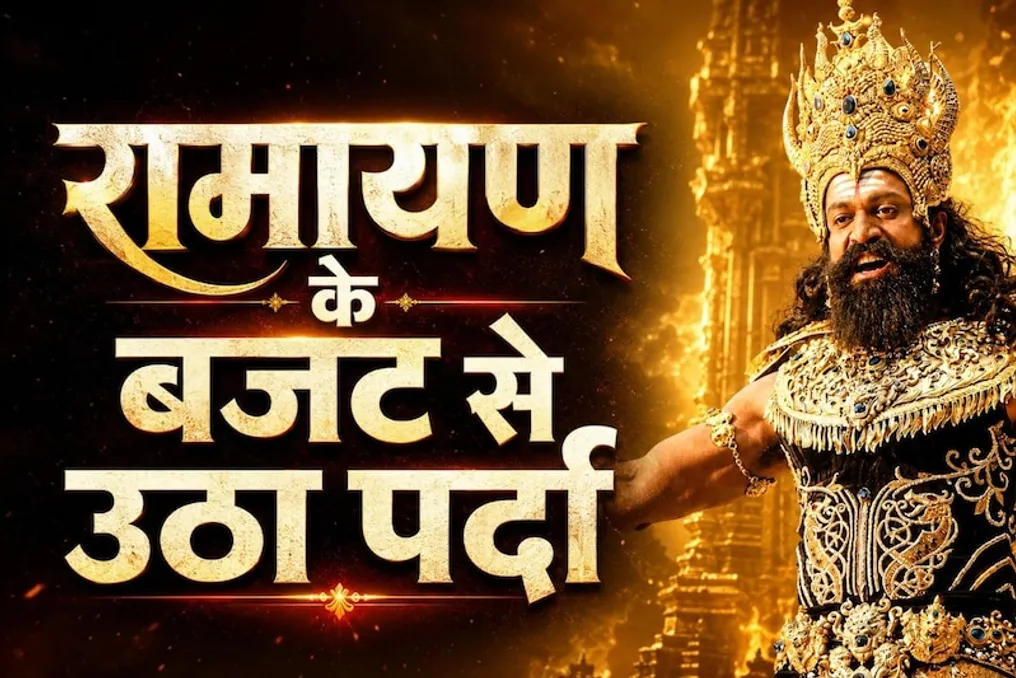
The film 'Ramayana' directed by Nitesh Tiwari is generating significant interest due to its large-scale production, and it is being called one of the most expensive Indian films to date. Previously, producer Namit Malhotra stated that the budget for this two-part film amounts to 4000 crore rupees.
To clarify the issue of the budget, Yash compared it to Hollywood films. Recently, Yash appeared on the program 'Aap Ki Adalat,' where the host asked him how the scale of 'Ramayana' differs from his previous projects, especially considering the stated budget of 4000 crore rupees.
Yash stated that there is a misunderstanding that he wants to clear up for all viewers. He specified that the sum of 4000 crore rupees refers to the budget of the two-part film, which includes costs for release and promotion. He noted that this aligns with Hollywood standards. His partner, Namit, quoted this figure after accounting for all these expenses. In such cases, promotional costs can be equal to or even exceed the budget itself, as it is a world-class film, and revenue is also expected globally.
The actor who played Ravana in the film emphasized that such a large budget was required to bring the picture to an international level. He added that cinema is a 'soft power,' and everyone must put in a lot of effort to develop it. He expressed confidence that they will succeed if they work hard, and noted that both 'Ramayana' and 'Toxic' are attempts to establish Indian cinema on the world stage.
A trailer for 'Ramayana' was recently released, in which Yash is depicted as Ravana. Sita and Rama were played by Ranbir Kapoor and Sai Pallavi, respectively. The project also features Ravi Dubey, Sani Deol, Lara Dutta, Rakul Preet Singh, Vivek Oberoi, and Kunal Kapoor. The film is planned for release in celebration of the Diwali festival this year.