As technology transforms product creation processes and customer service for millions of clients at Myntra, the company is focusing not only on hiring but also on building sustainable long-term career paths in the tech sector. The company creates opportunities for women at various stages of their professional journey by utilizing tools such as returnship programs, mentorship, and clear career ladders.
Govindraj MK, Myntra's Chief Human Resources Officer (CHRO), discusses how incorporating diverse perspectives and fostering strong communities can influence the future of innovation and technology. Myntra positions itself as a technology-driven organization where technology is a key business opportunity defining customer understanding, experience creation, ecosystem support, and operational scaling.
The implementation of Artificial Intelligence (AI) does not diminish the value of talent in the technology field; rather, it shifts the focus from routine task execution to problem-solving, product evaluation, and deep industry expertise. As AI takes on more functions, the importance of responsibly using it, assessing its outcomes, and transforming its capabilities into meaningful business and customer achievements increases.
The company's approach to talent management aims to help employees develop relevant skills and continuously navigate changing career paths. Through the Mynverse platform, employees gain access to training across technical, functional, behavioral, and leadership profiles. Furthermore, role-specific skills are supported through competency assessments, development plans, practical projects, and mentorship, realizing the company's value proposition: 'Expanding your possibilities to shape the future.'
Recognizing that women constitute nearly 40% of Myntra's total workforce, the company strives to translate this strong representation into a deeper presence within technology functions and senior leadership. The main focus is on strengthening the talent pipeline in engineering, product, data, and new AI-driven roles, as well as promoting more women into technical, product, and corporate leadership positions.
Long-term careers are built when employees understand how to grow, have access to experience expansion opportunities, and receive support during critical life and career stages. Therefore, Myntra views career growth as an integrated system, not a collection of isolated measures. The Ascend program supports associate director-level employees through mentorship, providing leadership exposure, and participation in real projects, while Ascend X helps women at the director level transition from functional to corporate leadership. Additionally, there is the 'Circle of Strength,' which unites women leaders and male allies for mutual support.
Support extends to various life stages, including assistance with motherhood, fatherhood, adoption, and surrogacy, as well as care during pregnancy and postpartum, availability of childcare, nursing rooms, and structured support for returning to work.
The returnship program for women, named Phoenix, has supported over 100 women, helping them relaunch their careers, with almost 60% transitioning to full-time employment. This program reinforced the company's belief that women returning after a break require a structured bridge back into the workforce, not just a standard hiring process. The six- or seven-month Phoenix program includes onboarding, training, mentorship, and hands-on work on real projects, allowing participants to reacquaint themselves with the work environment and demonstrate their potential in a supportive setting.
A key takeaway is that successful reintegration depends on a combination of upskilling with meaningful work, managerial support, and a clear path to sustained employment. The importance of recognizing the experience and potential brought by participants, rather than viewing career breaks as limitations, is also emphasized.
Mentorship, sponsorship, and access to successful leaders play complementary roles in advancing talent to senior technical and business roles. Mentors provide perspective, strengthen judgment, and readiness for larger tasks, while sponsors help increase visibility of strong work and open doors to opportunities of greater complexity and scale. At Myntra, this is supported through programs throughout the entire career lifecycle, ranging from early skill development and mentorship to cross-functional assignments and enterprise-level growth.
To measure the effectiveness of diversity and inclusion initiatives, Myntra assesses the breadth of opportunities created throughout the employee journey. Beyond representation, metrics tracked include skill development, participation in development programs, internal mobility, returnship program conversion rates, strength of the leadership pipeline, employee sentiment, and retention levels. For instance, the Phoenix program helped over 100 women return after a break, with about 60% finding permanent employment.
At the organizational level, approximately 25% of Myntra employees have been with the company for more than five years. According to the internal MyPulse 9.0 survey conducted in November 2025, nearly 80% of employees intend to remain at Myntra for the next two to three years. Furthermore, Generation Z constitutes about 40% of the workforce, and nearly 80% of this group also expressed an intention to stay.
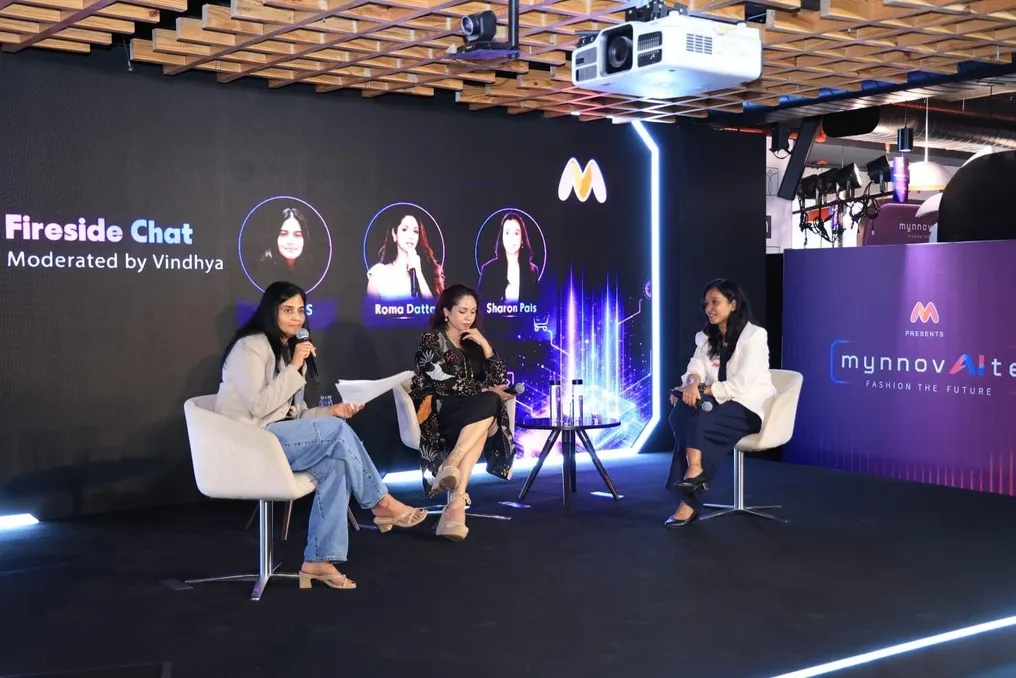
The Women in Tech platform was created to foster substantive dialogue about paradigm shifts and to unite leaders, AI specialists, and engineers for practical discussions on building, scaling, and managing technology in an AI-driven environment. The latest edition gathered participants from organizations such as Google India, NVIDIA, Thomson Reuters, and Anthropic, where topics like customer experience, product development, engineering, responsible innovation, and future leadership qualities were discussed.
The company's long-term goal is to build a stronger community of women technologists through collaborative learning, professional networking, and continuous industry knowledge exchange. The platform facilitates collaboration, expands access to knowledge, and creates more robust growth paths within the ecosystem, demonstrating a culture that values curiosity, continuous learning, and diverse thinking.