The Agricultural Research Council's (ARC) Plant Health Production Campus supports the future of South African agriculture through its 26-year-old plant virology collection. ARC staff, including Manana Mamabolo, Whitney Matli, Dr. Walter Shibu, and Marike van der Merwe, explain how this collection helps farmers detect viruses threatening crops in a timely manner and prevent devastating disease outbreaks.
Similar stories
Popular
ARC's national public goods assets hold immense value for South Africa's agricultural and ecological landscape. They provide crucial resources for conducting research, conserving biodiversity, and ensuring sustainable agriculture. These assets benefit not only direct stakeholders like farmers and researchers but also contribute to broader social goals, including food security, rural development, and environmental conservation.
The ARC-PHP campus is authorized to provide extensive and specialized knowledge about organisms that threaten plants and crops in their natural environment, thereby protecting arable land, water resources, natural biodiversity, and food security. Research on the campus utilizes various national public goods assets, and the campus is the custodian of several of these assets, including the 26-year-old plant virology collection.
This virology collection includes antisera (antibodies used to neutralize viruses) and the viruses themselves. Antisera and viruses play a key role in disease diagnosis and management, serving as reference materials and diagnostic tools. The collection enhances the accuracy of virus detection in cultures through ELISA, lateral flow devices, and other testing methods. The focus on virus identification and variant analysis is critical for protecting crop health.
Virology collections support food security, particularly regarding plant health. Their contribution includes crop protection through the development of diagnostic tools for virus-caused plant diseases. For example, viral diseases such as Tobacco Mosaic Virus (TMV) or Tomato Yellow Leaf Curl Virus (TYLCV) can drastically reduce yields.
Understanding these viruses and having antisera for their detection allows farmers to protect crops and ensure stable food production. Antisera derived from viral collections aid in early detection, outbreak prevention, and minimizing disease spread, thus guaranteeing crop health and production while preventing losses for farmers.
The primary users of this collection are ARC researchers, university students, seed companies such as Pannar, Starke Ayres, and Agricol, as well as diagnostic laboratories. Beneficiaries of the collection include the community of diagnosticians and researchers, farmers, and agribusinesses that avoid disease outbreaks.
The role of pest identification and crop protection recommendations directly impacts smallholder farmers and rural communities. By reducing crop losses associated with pests, farmers achieve improved yields, increasing household income by preserving existing agricultural productivity and reducing vulnerability to economic shocks.
Food security is significantly improved through sustainable pest control strategies. Identifying beneficial parasitism contributes to Integrated Pest Management (IPM), which ensures stable yields, reduces crop losses, and minimizes resource costs, making food more accessible and affordable.
Although the collection does not directly create large-scale employment, it fosters skill development and capacity building through training, knowledge transfer, and internships. By providing people with specialized expertise in virology, disease control, and biodiversity conservation, it indirectly contributes to employment in agriculture.
Reducing the use of chemical pesticides through biological methods benefits human health, animals, and the ecosystem directly. By minimizing exposure to harmful agrochemicals, the collection helps prevent pesticide-related illnesses, preserves soil and water quality, and supports biodiversity.
Furthermore, the collection enriches research by providing a valuable empirical basis for studying biodiversity and ecological research. However, achieving widespread impact requires broader outreach and integration of research findings and evidence into policy frameworks. Postgraduate training and practical experience with virology collections promote the academic and professional growth of students and researchers.
Virology collections, including antisera and viruses, play a vital role in broader efforts to secure food systems. Through disease prevention, early detection, and improved biosecurity, they help mitigate the impact of viral diseases on crops, ensuring the availability and sustainability of food sources.
The development of antisera and viral collections allows for faster identification of emerging pathogens that may threaten food security. This enables early intervention, potentially preventing the spread of a virus that could destroy crops. Antisera and viral collections are used in current plant population monitoring, providing early warnings of outbreaks.
Controlling that viruses are monitored and regulated helps virology collections support international agricultural trade. The use of antisera for detecting and controlling viral diseases ensures higher yields and lower losses, contributing to food security by reducing waste.
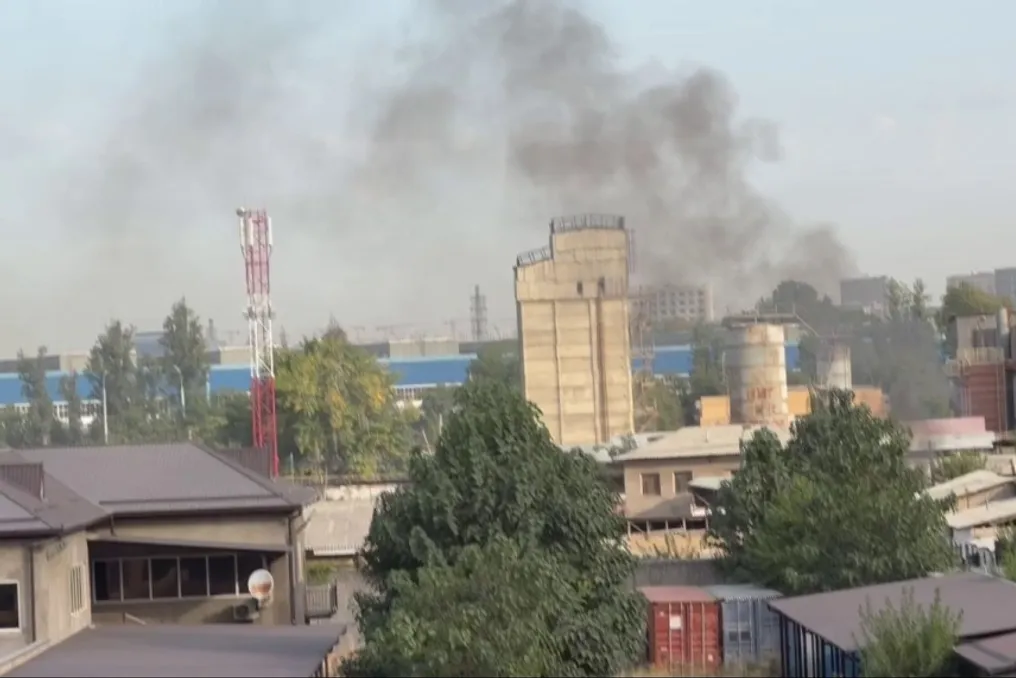
Residents of the Suvsos-1 housing estate in the Bektemir district of Tashkent reported the regular appearance of a sharp smell of burning rubber.
According to information circulated by the Telegram channel "Tashkent_Land," residents of the first quarter of the 'Chashma' mahalla note that various waste is burned on the territory almost daily. As a result, the pungent odor spreads throughout the district.
Local inhabitants have appealed to environmental authorities, as well as to the city and Bektemir district hokimiyats, asking them to investigate the causes of this problem and take necessary steps to eliminate it.
If the flame becomes weak when cooking on a gas stove, it not only increases cooking time but also leads to significant gas loss from the cylinder. Often, people try to clear the burner holes using sharp objects such as nails or knives, which can damage or deform the burner itself.
In reality, the clogging of burner holes occurs due to the accumulation of grease, lubricant, and burnt food residue. However, to solve this problem, there is no need to contact specialized workshops and spend money. It is enough to immerse the burner in water mixed with certain household ingredients, and all closed holes will open up, and the burner itself will become shiny.
To remove years of dirt and carbon deposits from a gas burner, the most effective solution is a mixture made from white vinegar and baking soda.
Required components:
Hot water: 1 to 2 cups
White vinegar: 1/2 cup
Baking soda: 2 tablespoons
Lemon juice: 1 tablespoon
Old toothbrush: 1
Steps:
First, turn off the gas cylinder valve and remove the cooled copper or iron burner from the stove.
Take a bowl or container with enough hot water for the burner to fit completely inside. Add half a cup of white vinegar, two tablespoons of baking soda, and one tablespoon of lemon juice to this water. When mixing the soda and vinegar, foam is formed, which helps lift settled dirt.
Immerse the gas burner in this solution and leave it for 15–20 minutes. The acid in the vinegar and baking soda will completely dissolve the grease, carbon, and dirt accumulated in the burner holes.
After 20 minutes, take the burner out of the solution and gently clean it with an old toothbrush, lightly applying dish soap or baking soda. You will see the blackness of the burner quickly disappear, and all the holes will open up.
After that, thoroughly rinse the burner with clean water and dry it with a clean cloth. Before placing it back on the stove, let it dry in the sun or in a draft for 5 minutes so that all remaining moisture evaporates.
Using this method will allow the stove to provide a strong and blue flame again, and dishes will not darken underneath.