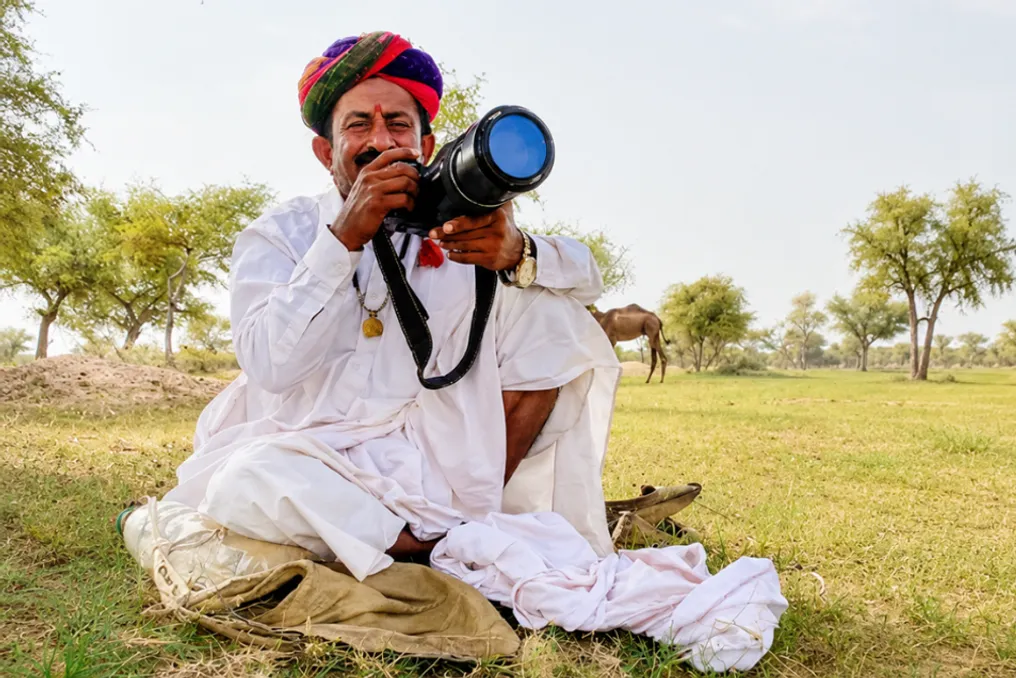
In the Thar desert of Rajasthan, which was often depicted on maps as a vast empty space, this land holds critical importance for traditional shepherd Sumar Singh Bati: it determines whether the camel will find enough food that day. Bati, a traditional camel herder from Jaisalmer, has deep knowledge of the Degrai Mata Oran ecosystem, including its grasses, water bodies, grazing routes, and dependent animals.
He emphasizes that the local grasses Sevan and Dhaman are extremely nutritious for camels, comparing them to ghee and milk. This simple connection between vegetation, animals, and the shepherd is at the heart of a much larger struggle to preserve this territory.
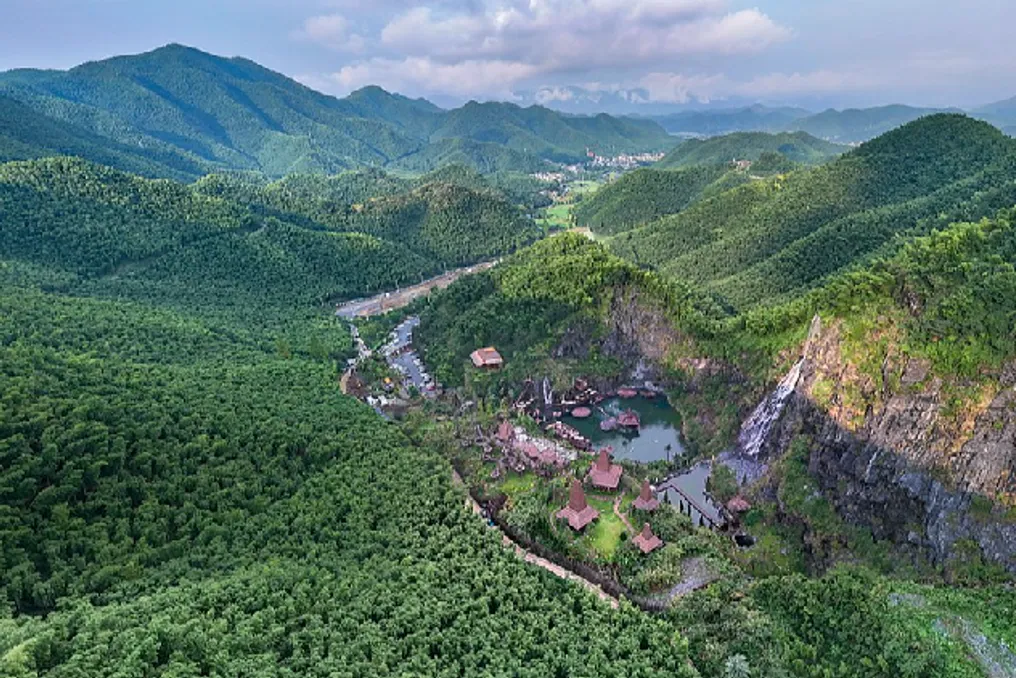
The Degrai Mata Oran area covers nearly 10,000 hectares, providing pasture for about 5,000 pastoral families and over 50,000 animals. This landscape is also home to wildlife, including the endangered Great Indian Bustard. However, parts of this land had a different status in official documents, making them vulnerable to other forms of land use.
For years, Bati tried to protect what was not recorded in official documents. He visited villages, helped mobilize about 20 communities, traveled hundreds of kilometers to bring their issues outside the desert, and opposed threats looming over these grasslands. Thanks to his work, local grasses have recovered, traditional water bodies have been revived, and pastures have begun to improve. His efforts earned him recognition with an award among the global laureates of the Rangeland Awards 2026.
However, Bati's driving concern has always been a problem much closer to home: what happens to the shepherd when the land that feeds his animals begins to disappear?
How a Childhood Memory Turned into a Lifelong Struggle
This anxiety is rooted in events that occurred long before marches, petitions, and awards. One of Bati's earliest memories dates back to the age of five, when he saw his father confronting a group of men to save a chinkara. Although he was too young to fully understand what was happening, this moment left an indelible mark.
Years later, the threat approached the land upon which his own community depended. In 2004, only 5,817 hectares of Degrai Mata Oran were registered under the temple trust, which worried Bati. These concerns intensified as solar and wind energy projects began to be built on parts of the sacred land.
By 2018, Bati and other community members began to organize more formally, spreading their message from village to village through information campaigns, processions, and parikrams around the threatened orans. At the center of it all was something seemingly simple: grass.
The Grasses That Sustain Thar
When Bati explains why this land is important, his answer starts with grass. He tells The Better India that the Sevan and Dhaman grasses are vital for the Indian bustard and camels. Sevan (Lasiurus sindicus) is an indigenous species of the sandy plains and dunes of western Rajasthan; its deep root system allows it to survive long periods without rain, making it adapted to the Thar, not introduced.
Dhaman (Cenchrus setigerus) is another native grass of the arid and semi-arid landscapes of Rajasthan. It provides fodder for livestock even when the summer heat deprives the landscape of green cover. For Bati, this is not nature conservation terminology, but daily reality: 'These grasses contain many nutrients for camels,' he says. 'Now, due to climate, this is decreasing and degrading.'
He adds that this cannot be allowed to happen because people also depend on this environment, as animals and camels inhabit it. For a person whose life has been shaped by camels and the land they graze on, it is impossible to separate these connections. Protecting the grasses means protecting the animals and people who depend on them, and this defined Bati's approach to Degrai Mata Oran.
Instead of trying to change the desert, the community worked with the landscape as it was. Community protection allowed the native vegetation to recover naturally. Seasonal water bodies were also restored, providing access to water for livestock and wildlife and supporting the grassland ecosystem. An earlier profile of Degrai Oran, prepared for the International Year of Grasslands and Pastoralists, notes that the landscape covers about 10,000 hectares, and community efforts helped create pastures and ponds while ensuring the ecological value of the land.
What is an Oran?
To understand why protecting Degrai required a broader campaign, one must know what an oran is. The word 'oran' comes from 'aranya', meaning forest, and in Rajasthan, it refers to community-protected landscapes associated with local deities. Some are only a few hectares, while others stretch for thousands.
From an ecological perspective, they can function as silvopastoral landscapes, providing feed and habitat, supporting local plants, wildlife, and livestock. Their traditional water structures, such as johads, talabs, nadis, and open wells, help communities and animals survive in conditions of water scarcity. Degrai Mata Oran is one such landscape.
For generations, its grasslands supported pastoral communities and their livestock. The problem is that the value people see on the ground does not always match how the land is represented in official records. In 2022, Bati told Down To Earth that although Degrai Oran covered about 10,000 hectares, only about 4,000 hectares were recognized as oran lands in revenue records. The rest was classified as barren land, making it vulnerable to allocation for other purposes.
A grassland might look like an open space on a map, but for local residents, it can mean pasture, water, feed, and survival. For wildlife, it is habitat. Bati understood that protecting an oran would require uniting the people who depend on it, so he started with the surrounding villages.
Leading the Fight From Village to Village
He began going door-to-door, telling people about the changes in the grasslands and why it matters. He discussed with residents how the grasslands were changing and what could be done to protect them. He says: 'I go door-to-door, advising residents not to use pesticides. In western Rajasthan, natural, local remedies such as cow dung and organic insecticides should be used.'
These conversations integrated nature conservation issues into the decisions made by people on their fields and in their villages. About 20 villages united in support of protecting the orans. However, Bati soon felt that the problems of these villages needed to go far beyond their borders.
Why He Traveled 700 km for the Grasslands
Bati's most notable campaign was the Oran Bachao Padayatra, an 85-day trek spanning about 700 km from the Tanot Mata temple in Jaisalmer district to Jaipur. It began on January 21, 2026, and reached the state capital on April 16, with over 100 farmers and herders participating. The choice of a foot march was deliberate. He explains: 'When the movement started, our main slogan was to tell people: