During train travel, passengers often have questions related to alcohol. Among these are the possibility of carrying bottles of alcohol, the permissible quantity, the permissibility of carrying hermetically sealed bottles, and the consequences if a passenger is caught violating the rules.
It is important to distinguish between the rules for transporting alcohol and the rules for consuming alcohol on a train. In some regions, it is permitted to carry alcohol in a specified quantity and under certain conditions, whereas in other states there are strict prohibitions on storing and transporting alcohol. Therefore, one cannot rely solely on the fact that a bottle is sealed to freely transport it anywhere.
It is necessary to consider which state the train departs from, which state it is heading to, and through which states the route passes.
There is no single amount of alcohol applicable to all passengers across the country; the limit may vary depending on the beverage laws of each state. What is legal in one state regarding the storage or transport of a certain amount of alcohol may be considered illegal in another. Therefore, before traveling with alcohol, it is crucial to familiarize yourself with local rules. Special caution should be exercised when traveling between different states, as the wine laws of the destination state may apply upon arrival.
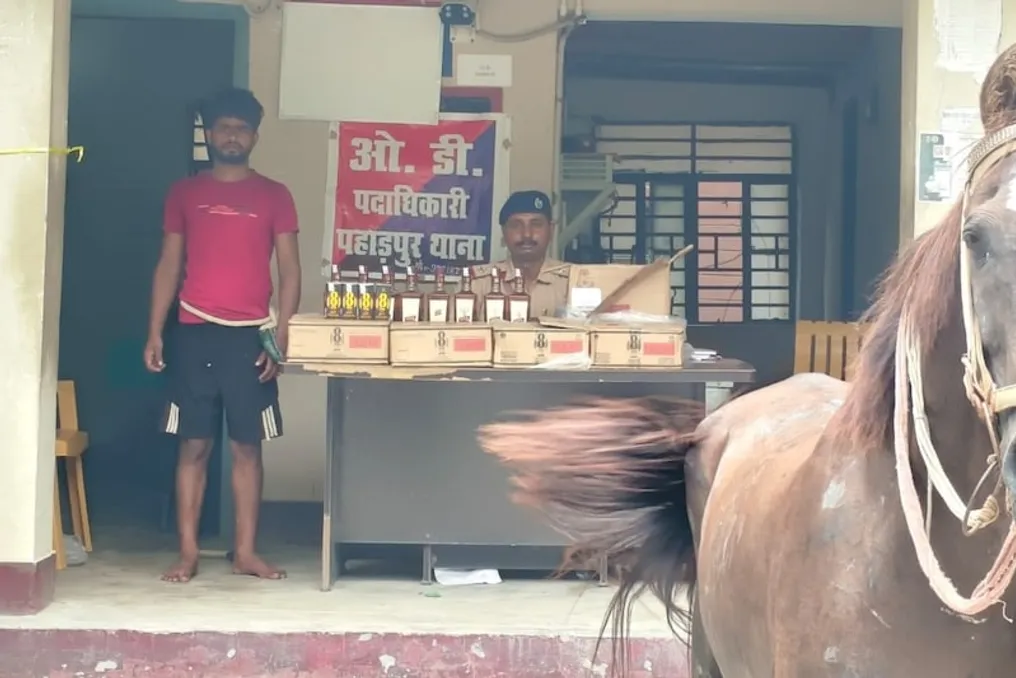
Yes, this is possible under certain circumstances. The airtightness of a bottle does not guarantee its legality for storage or transport in all states. For example, in states with alcohol sales bans, such as Bihar and Gujarat, very strict rules apply to alcohol. If you arrive in such a state by train with alcohol, measures may be taken in accordance with the state's wine laws, which could result in fines and other legal consequences. Therefore, one should not be careless if your train is headed to a state where alcohol is prohibited.
The situation regarding alcohol consumption differs from the situation regarding its transportation. Behavior while intoxicated that causes disorder, rude treatment, or distress to other passengers on the train or railway complex can be grounds for action under the Railway Act. Section 145 of the Railway Act of 1989 contains provisions regarding intoxication and disorder. If a person behaves improperly while intoxicated in a railway complex or on a train, causing inconvenience to other passengers, action may be taken against them, which provides for up to six months in prison and a fine of up to 500 rupees. Thus, much more serious problems can arise when a passenger starts causing a disturbance on the train after consuming alcohol than just transporting alcohol.
If a passenger has an open bottle of alcohol, the situation becomes even more sensitive, especially if they are drinking on the train or behaving inappropriately due to intoxication. Railway police or RPF may take action depending on the situation. If a passenger disturbs others or spoils the atmosphere on the train, steps may be taken against them in accordance with railway legislation. Therefore, under no circumstances should one drink alcohol on a train or travel with an open bottle.
This is the most important point. Suppose you board a train in a state where alcohol storage is legal and start the journey with a sealed bottle. As soon as you arrive in a state with different or stricter rules regarding alcohol, local legislation may cause you problems. This is especially true in states with alcohol sales bans. Therefore, during inter-state train journeys, one should not only look at the rules of the state of departure; one must also study the rules of the state of destination.
Here it is important to consider the example of the Delhi Metro, as people often confuse train and metro rules. The Delhi Metro Rail Corporation (DMRC) allowed passengers to carry two sealed bottles of alcohol in 2023, but even for this there are conditions. That is, when traveling on the Delhi Metro, two sealed bottles can be carried according to established rules. However, this does not mean that the same rules apply to Indian Railways trains. The rules of the Delhi Metro and Indian Railways are different.
If you are traveling only within the Delhi Metro, Delhi rules apply. But when the journey extends beyond Delhi and goes to Gurugram, i.e., Haryana, the wine laws of Haryana also become relevant. That is, it cannot be assumed that two bottles can easily be taken when traveling from Delhi to Gurugram based on the permission in the Delhi Metro. State laws regarding beverages may apply when crossing a state border. Therefore, it is best to study the rules for such a trip in advance.
Regarding alcohol, not only the quantity of bottles matters, but also the legal age limit. Having a sealed bottle does not mean that a person can purchase or store alcohol at any age. The minimum age for purchasing and storing alcohol may differ in various states. Therefore, issues related to alcohol...