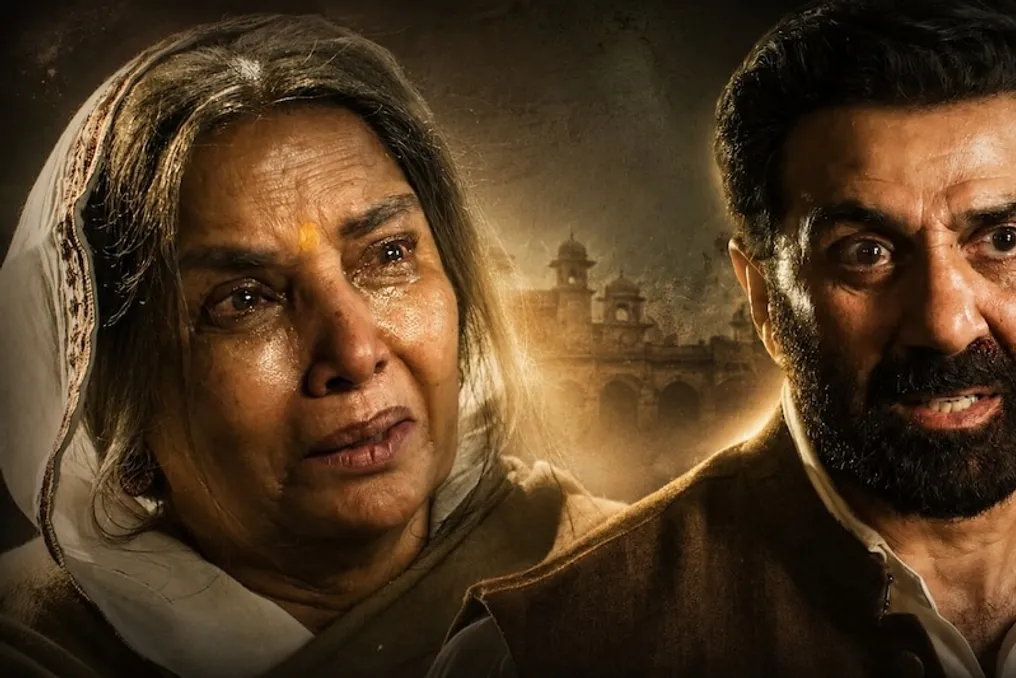
Actor Sani Singh from the film 'Gader' played Siknder Mirza in the film 'Bantwara,' defending an Indian woman in Pakistan. Critics do not accept this story because there was no reconciliation on that side during the 1947 partition. Promoting his film, Sunny quotes his father Dharman, saying: 'India is the mother, and Pakistan is the aunt.'
There should be connections between neighboring countries, but presenting this through the memory of the cruelest events of the past seems unfair. It is wrong to dig up old wounds for healing. The film 'Bantwara' is based on a play by Pakistani writer Asghar Wajid, written in 1989 titled 'Jis Lahore Nahi Vekhya, Oh Jamyay Nahi' (He who has not seen Lahore is not born). This play was banned in Pakistan because it was claimed that it ignored harsh realities in favor of romanticizing humanity.
Earlier, Diljit Dosanjh's film 'Main Wapas Aunga' was discussed, which also touched upon the theme of partition. Its message was that people on both sides suffered during the partition. Undoubtedly, this is true. However, when it was stated that people on both sides were subjected to equal violence, debates began.
People often talk about 'digging up a corpse' that starts to rise. Some events and tragedies in history are like these 'dug-up corpses' that surface when mentioned. Memories of the partition are precisely those whose pain cannot be shared with anyone. A three-hour film or a four-minute song cannot approach this horror; there is no drama in the stories of the partition, and background music and songs are entirely absent.
Professor Emeritus from Stockholm University in Sweden and renowned historian Professor Ishtiaq Ahmed presented a candid and impartial overview of the 1947 partition in his historical book 'The Punjab Bloodied, Partitioned and Cleansed,' which sends shivers down the spine. Ishtiaq Ahmed wrote this book using secret British government reports, contemporary newspapers, and most importantly, interviews with eyewitnesses, victims, and even attackers living in both countries.
What happened in Punjab from March to December 1947 was not just the partition of India—it was the most terrible 'ethnic cleansing' in human history. Five of the most painful incidents selected from this book are enough to understand that the wound of the partition is deeper and will never heal than what is shown on screen.
1. The Horrific Night of the Well in Toha Khalsa: Women Jumping into Wells to Preserve Honour
In March 1947, before the official dates of independence and partition were determined, horrific violence erupted against Sikhs and Hindus in the rural areas of Rawalpindi (West Punjab). Toha Khalsa is a small picturesque village in the district of Rawalpindi. According to testimonies recorded in Ishtiaq Ahmed's book, an armed mob surrounded the village from all sides during the second week of March. The men of the village did not have special weapons. The attackers made a demand: either they must change their religion or hand over their sisters and daughters to them.