Expert Eric Solheim noted that more than ten years ago he felt strong concern about the smog in Beijing, which prevented him from exercising outdoors. However, now, having returned to the city, the former executive director of the UN Environment Programme finds time for morning runs. Solheim observed that most cars on the roads have become new energy-efficient vehicles that are quiet, non-polluting, and cost-effective, demonstrating the results of China's approach to green development.
Behind these obvious changes lies a broader commitment to promoting environmental progress. On Saturday, China's landmark Ecological and Environmental Protection Code came into force, further strengthening the legal framework for the harmonious coexistence of humanity and nature. This legislative act, being the second formal statutory code after the Civil Code, enshrines Xi Jinping's concept of ecological civilization in law for the first time.
As President Xi Jinping stated, 'Harmony between humanity and nature is a defining feature of Chinese modernization. China acts as a firm player and a major participant in promoting global green development.'
The philosophy driving real change
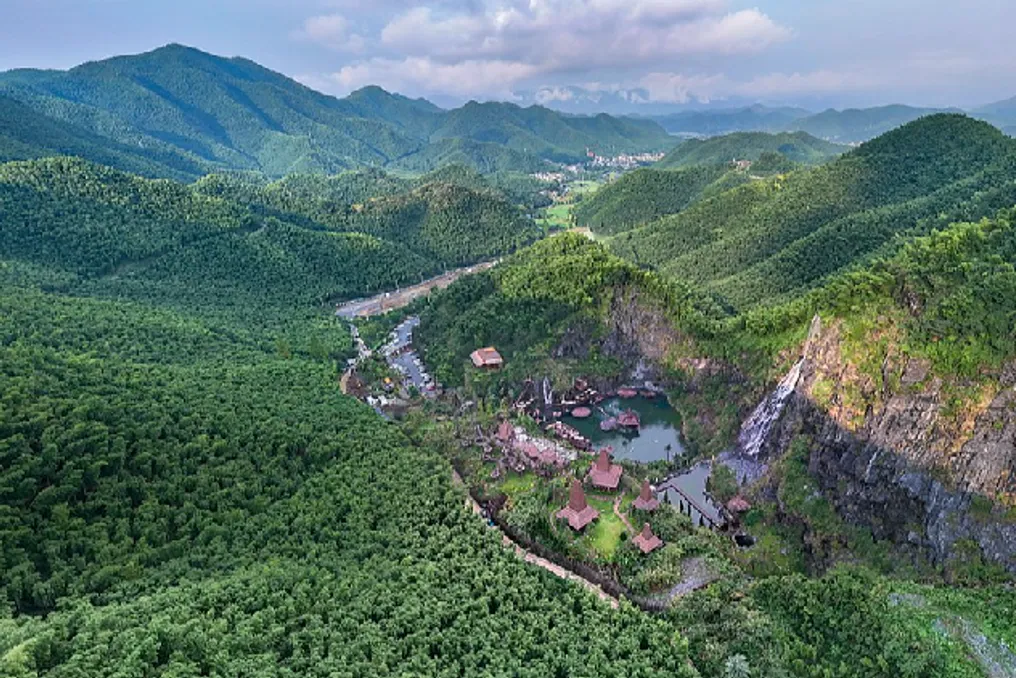
The concept of 'clear waters and lush mountains,' first put forward in 2005 during Xi's visit to Yucun village in Zhejiang province, has transformed from a local slogan into a cornerstone of China's national strategy. This concept means that 'clear waters and lush mountains are invaluable assets.'
China currently holds a leading position globally in the implementation of renewable energy sources. In 2025, the added capacity of new renewable energy sources reached a record level, accounting for over 60% of the global increase. According to the National Energy Administration, about 300 million kilowatts of new wind and solar capacity this year made renewable energy the main driver of the transition to green, low-carbon energy.
Clifford Cobb, a leading environmental economist from the United States, closely monitors China's environmental path. He believes this idea represents a new model of development. Cobb noted: 'In the last 20 years, China has proven that it is possible to protect nature while generating economic value. This vision of mutually beneficial cooperation can be learned from by the whole world.'
Salah Hagar, an Egyptian architect and sustainable development expert, believes that the ecological values championed by Xi's thought have universal significance. He stated: 'Respect for nature, adaptation to it, and its protection are necessary for human development everywhere.'
Xi emphasized that the strictest institutions and legislation must exist to ensure environmental progress in China. Over the past decade, China has intensified its environmental legislative base, strengthened control, and achieved significant success in implementing environmental protection standards.
The country has enshrined ecological civilization in its Constitution, adopted an environmental protection law described as 'the strictest in the country's history,' addressed pressing environmental problems related to air and water pollution, noise, and has strengthened the protection of key areas and fragile ecosystems, including the Yangtze River, Yellow River, Qinghai-Tibet Plateau, and China's chernozem region.
Another strict mechanism is China's central environmental supervision system, which has increased the accountability of local environmental protection authorities and helped solve long-standing problems in various regions. These improvements in the environmental sector have brought tangible benefits to the local population, making environmental quality part of daily life.
The Ecological and Environmental Protection Code, which came into force on China's National Ecology Day, consolidates years of achievements in legislative and regulatory fields, strengthening the legal basis for ecological preservation. This code, consisting of 1242 articles divided into five chapters, covers areas such as pollution control, environmental protection, and green, low-carbon development. It was developed through the systematic integration, compilation, revision, and refinement of over 30 environmental and environmental protection laws, more than 100 administrative regulations, and over 1000 local laws and rules.
The Code also emphasizes that a healthy ecological environment is the most universal form of public well-being. Specifically, pollution prevention provisions cover not only traditional issues like air and water pollution but also new pollutants and modern environmental risks, including light pollution and electromagnetic radiation.
Green approach stimulating global cooperation
China's green development strategy promotes global cooperation. A vivid example of this can be seen in the vast steppes of the Akmola region in northern Kazakhstan, where renewable energy is transforming the local economy. Engineer Hasabay Kinlosan participates in this transformation, daily servicing over 40 wind turbines as part of a major cooperation project under the Belt and Road Initiative between China and Kazakhstan. These turbines annually generate over 800 million kilowatt-hours of clean electricity, reducing carbon emissions by 650,000 tons.
As the Belt and Road Initiative moves to a new stage of high-quality development, China's philosophy of ecological and environmental management resonates worldwide. Almas Chukin, a renowned Kazakh economist, stated: 'China has become a leader in solar and wind energy and is solving global problems such as climate change through actions, not just words.'
This commitment to a common green future extends far beyond Central Asia. It has supported low-carbon development and the enhancement of ecological potential in more than 100 developing countries, especially small island states and African nations. Through multilateral platforms such as the South-South Climate Cooperation Initiative and the Green Development Partnership within the Belt and Road, China exports not only technologies but also development models and sustainable development experience.
China's contribution to global biodiversity is also significant. In 2022, China hosted the Conference of the Parties (COP15) of the Convention on Biological Diversity and helped agree on the historic Kunming-Montreal Global Biodiversity Framework. UN officials noted that the success of the agreement is largely due to China's long-standing emphasis on the 'universal participation' approach to environmental governance.
Eliason Kaganga, a scientist from Tanzania specializing in Lake Victoria conservation, noted: 'Xi's concept of ecological civilization has great theoretical value and has proven highly effective in practice. China's solutions, especially those that expand the rights of local populations, bring long-term benefits to African countries and communities.'