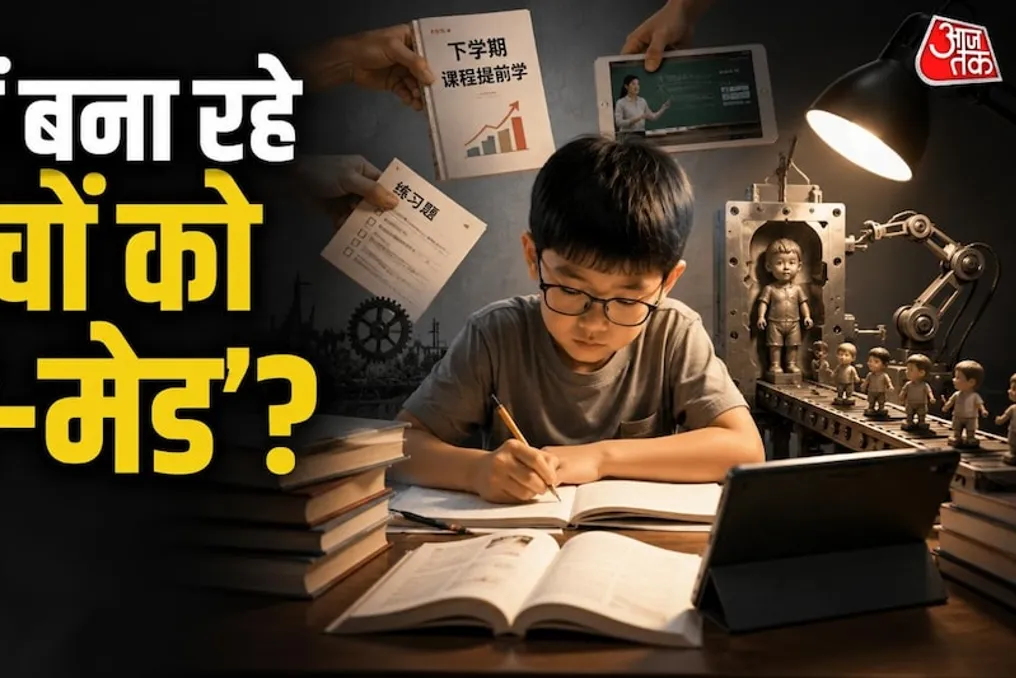
Traditionally, summer holidays allow children to rest, spend time with friends, and engage in entertainment. However, in China, for some children, the holidays have turned into a period of preparation for the next academic year. Parents are actively engaging in teaching their children subjects from the new semester even before classes officially begin. This phenomenon has been dubbed 'pre-made children' and has drawn public attention.
The term is used because some parents strive to give their children knowledge from the upcoming curriculum during vacation. Their belief is that preliminary study of material will help the child better absorb lessons at school and get ahead of their peers.
According to one report, a mother from Jiangsu province is preparing her fourth-grade son specifically during the summer break. She requires him to memorize Chinese poems, learn English vocabulary, and take online math lessons. Notably, many of these topics were supposed to be covered in class in the following academic year. Thus, the child was studying material that his classmates would receive later.
The mother notes that she and her husband dedicate time to the child's studies even after returning from work, making the holiday period very intense for all participants. Nevertheless, parents worry that if they do not start learning in advance, their child might fall behind others.
The main reason cited for this phenomenon is the growing academic competition among children. Many parents want their child to achieve high results in exams and surpass others academically. It is due to this mindset that some parents begin teaching parts of the curriculum before classes start. They believe that when teachers begin teaching these topics at school, it will be easier for the child to understand them.
However, another problem arises: if every family starts preparing its child in advance, the competition may intensify. As a result, parents might conclude that their child can only succeed by starting earlier than others.
The word 'pre-made' is usually applied to products manufactured beforehand. In China, this term has become associated with education on social media. This name can be seen as a kind of irony towards children who are constantly being prepared for the next semester during vacation. It also raises the question of whether the constant pursuit of achievement and study diminishes normal childhood experiences.
A small amount of study during the holidays is not inherently wrong. Children can use this time to review previously learned material or learn something new of their own choice. But if most of the holidays are dedicated exclusively to studying, lessons, and homework, the time for the child's rest and recreation may be reduced. It is important that besides studying, children have time for play, socializing with family, and participating in hobbies.
Thanks to this term, the public has begun discussing the issue. Some believe that in an education system oriented towards competition, parents simply have no other choice but to prepare their children in advance. Others question why they constantly put children in a race for success. Overall, the 'pre-made children' trend in China touches upon not only the issue of studying during vacation but also the problem of finding a balance between education, parental anxiety, and increased competition. The question arises: is it truly necessary to prepare children for the next grade during every holiday, or should they be allowed some time to live without constant studying?