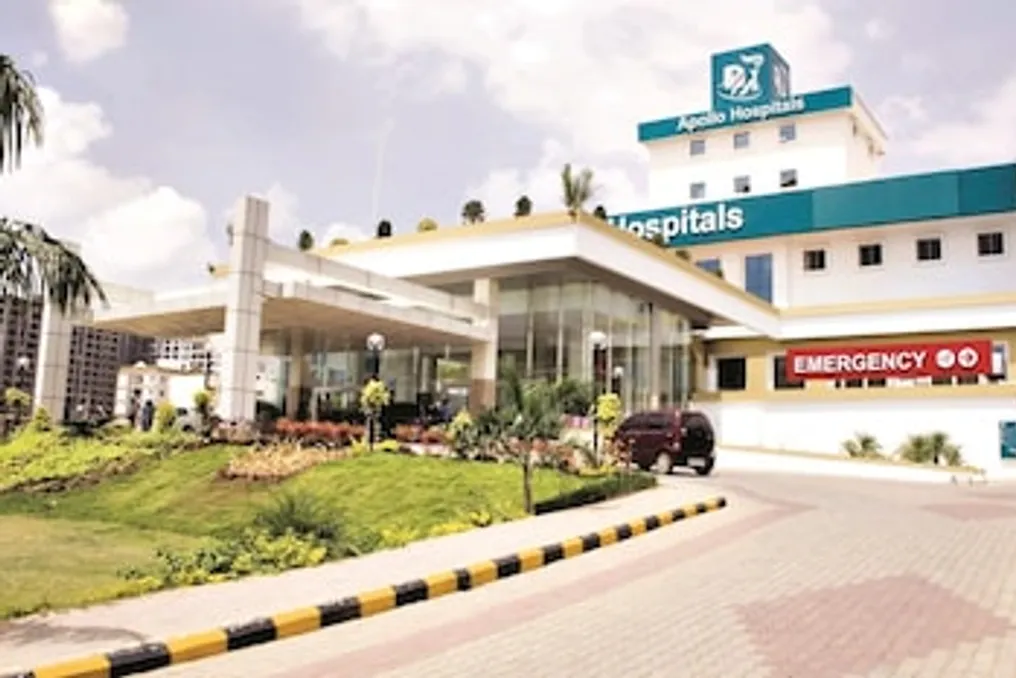
Apollo Hospitals and Max Healthcare, the country's largest publicly listed hospital networks by market capitalization, demonstrated results exceeding expectations for the June quarter. Although Max Healthcare's revenue recovered after two quarters of slow growth, Apollo maintained an upward sales trend in its hospital business for the fourth consecutive quarter.
The operational performance of both hospital networks was better than forecasted, but Apollo's operational metrics were more outstanding. In the future, the separation of the pharmaceutical business will bring value to Apollo Hospitals, while increased occupancy and improved operational efficiency may enhance Max Healthcare's prospects.
Regarding profitability, Apollo is the clear leader, showing an increase of about 10 percent over the last year, whereas Max faced a decline of 17.5 percent. During this same period, the Nifty50 index remained stable.
Apollo's Financial Performance
Thanks to its hospital segment, Apollo reported consolidated sales growth of 21 percent year-on-year. The hospital segment itself grew by 22 percent, with hospitals operating for more than five years increasing their revenue by 18 percent. Growth in the hospital segment was driven by an 11 percent increase in acute therapies volume, a 4 percent rise in prices, and a 3 percent increase in the share of patient and payer-paid cases. Income from insurance and self-payments accounted for 25 percent and 16 percent, respectively, compared to the previous year.
Overall occupancy improved by 500 basis points year-on-year compared to 65 percent in the previous quarter. Average Revenue Per Patient (ARPP) increased by 8 percent year-on-year, reaching just under 186,600 rupees, attributed to a better clinical mix of cases. The company expects that growing clinical complexity will remain an important factor in ARPP growth. Average length of stay also rose from 3.09 to 3.14 days year-on-year.
HealthCo, which includes pharmaceutical and digital operations (Apollo 24/7), showed a 20 percent year-on-year revenue growth. Apollo forecasts overall hospital revenue growth of 18-20 percent during the financial year 27, with long-standing hospitals growing by 13-14 percent over the next two years, and new hospitals contributing an additional 7 percent in revenue. Losses from new hospitals may temporarily increase by 20 crore rupees per quarter, and the new hospital cluster is expected to achieve overall break-even by the third or fourth quarter of the financial year 28.
Max Healthcare Results
Max reported a revenue growth of 15.3 percent in the first quarter of financial year 27, achieved through increased volumes and improved realization. This growth was supported by an increase in patients at existing hospitals and the addition of 630 beds over the last year. The revenue growth was healthy despite the impact of oncology drugs following regulatory changes concerning expensive cancer medications.
Occupancy remains high at 75 percent, despite a 13 percent year-on-year increase in bed count over the last 12 months. Although occupancy remains strong, the hospital network is expanding through acquisitions, renovations, and new construction. The current expansion is expected to increase its capacity by 2,800 beds over the next two years, doubling the current bed capacity. These additions will require capital expenditure of 6,100 crore rupees.
The operational efficiency of the two major healthcare players was good, although Apollo had the advantage. Apollo's operating profit margin increased by 92 basis points year-on-year to 15.5 percent, driven by a reduction in digital cash losses to 9.7 crore rupees compared to 48.7 crore rupees in the first quarter of financial year 26. Apollo's hospitals showed a margin of 25.9 percent, while new hospitals reported an initial operational loss of 38 crore rupees upon launch.
Max reported a 15 percent year-on-year growth in operating profit and a 2.9 percent quarter-on-quarter increase. The margin remained unchanged year-on-year but decreased by 206 basis points quarter-on-quarter to 24.6 percent due to the expansion of renovation capacities and the acquisition of Kalinga Hospital.
Analyst Forecasts
Analysts view both companies positively. JM Financial Research believes that both key areas—hospital and pharmaceutical—will support growth at 18-20 percent over the year. Furthermore, analysts anticipate that the separation of the pharmaceutical business will be completed by the fourth quarter of financial year 27 and unlock value. The brokerage firm maintained a 'buy' recommendation with a target price of 10,446 rupees.
Choice Institutional Equities asserts that the growth in occupancy and Average Revenue Per Occupied Bed (ARPOB) in new facilities will gradually release operating leverage and operating profit growth. The recovery of Kalinga, potential medical education with a return on capital of 25 percent, and the scaling of Max@Home and Max Lab also support the company's growth, note Deepika Murarka and Stuti Bagadia from the brokerage firm. They forecast revenue and profit growth of 24-27 percent over the next three years and assigned the company a 'buy' rating with a target price of 1,160 rupees.