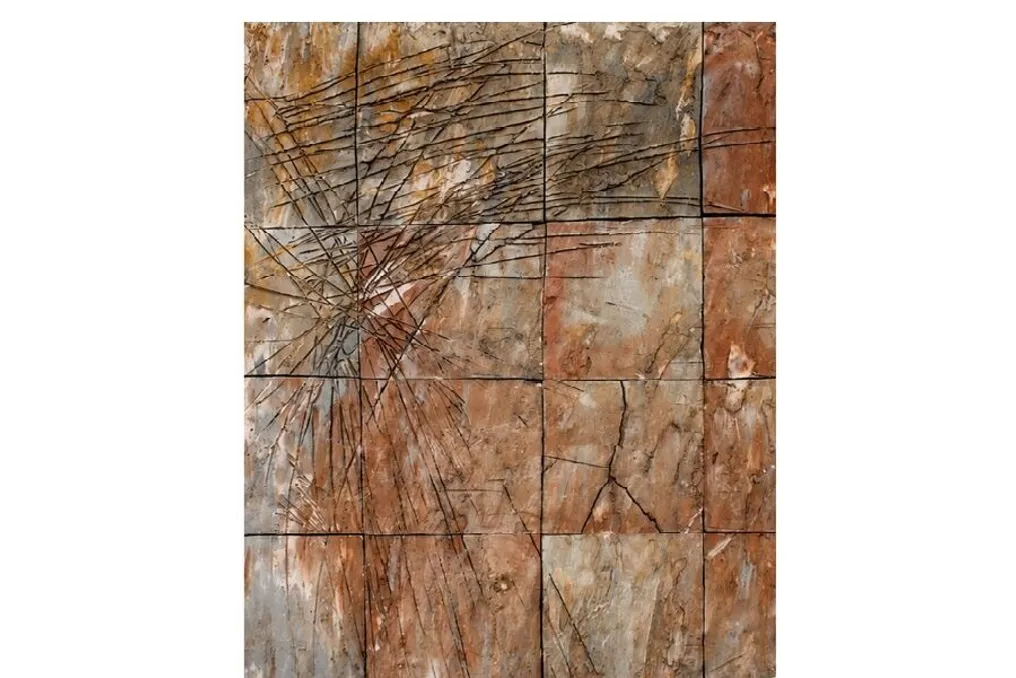
A solo exhibition of Bita Faiyazi's works is being held at the Plus 2 Gallery (Deh Vanak) in Tehran. The exhibition, titled 'What Remains,' features a series of collages, paintings, and drawings on paper created using various techniques such as pastel, watercolor, ink, acrylic, and colored pencil. The exposition also includes a group of small ceramic sculptures.
Bita Faiyazi, 64, is an Iranian visual artist and a pioneer in Iranian public art projects. She is known for her theatrical, large-scale works. The artist lives and teaches in a private studio in Tehran.
However, following the recent war between the US and Israel against Iran and its related consequences, she suspended the creation of sculptures for several months. During this period, she visited her studio only to maintain order, and a small room in her house became a space for drawing and painting.
Instead of working due to sudden inspiration, she continued her creative activity through discipline, insisting on documenting events daily in some form. Since the internet was completely shut down (approximately three months earlier this year), the continuous stream of images broadcast on television became her only connection to the outside world. These frames entered her daily life, becoming both an object of observation and a means of documenting her lived experience.
At the center of the exhibition, about 50 ceramic sculptures created before the recent events are displayed on a long pedestal. In them, color and form prevail over representation. At first glance, the sculptures appear as brightly colored organic forms; however, upon closer inspection, they reveal themselves to be a sleeping cat, a rider on a horse, or a woman with an eagle's head.
Two-dimensional works emerge through a similar process. As continuous brushstrokes and dense hatching unfold on the surface, the forms of a dog, a human figure, or even a blossoming branch gradually become visible. The series continues to evolve, remaining an archive of memory, encounters, and the resilience of artistic practice amidst crisis.
In the exhibition hall, Faiyazi presents the installation 'What Remains,' assembled from discarded cardboard boxes. A stop-motion animation that reinterprets the same structure in a state suspended between presence and absence is projected onto the wall in front of this installation.
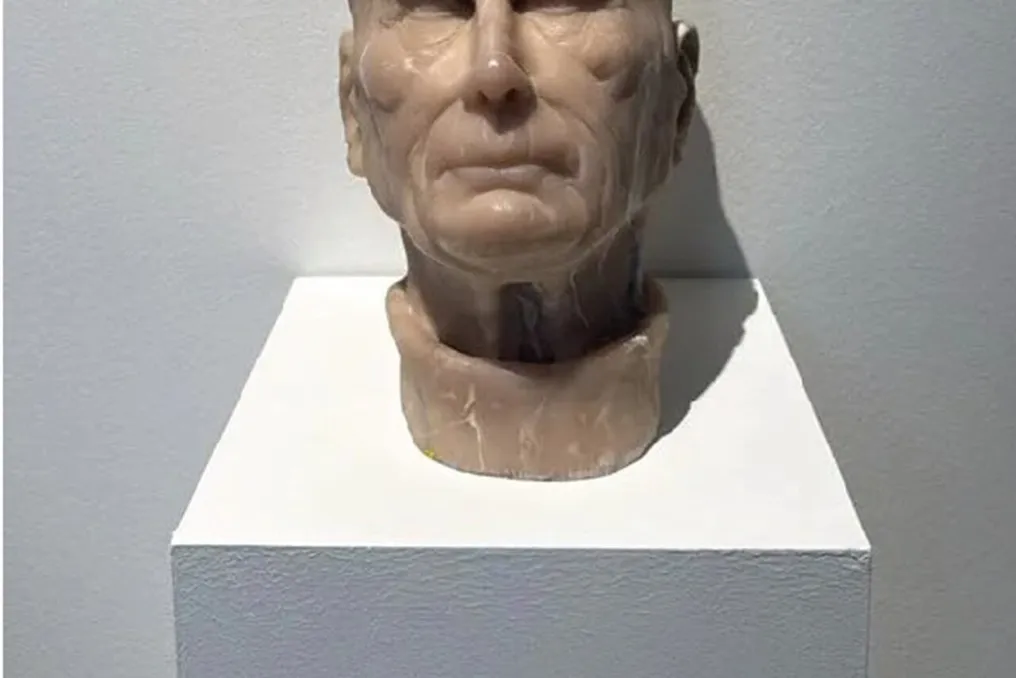
The exhibition also features a portrait of Bahman Mohassess, executed by Mehdi Vishkaee (1921–2006), which belongs to Faiyazi's private collection. It is displayed next to two collages by this artist, depicting portraits of Samuel Beckett (1906–1989) and Louise Bourgeois (1911–2010). Together, these works pay tribute to figures whose ideas and artistic approaches have had a long-term influence on Faiyazi's intellectual development and creative practice.
Faiyazi has over fifteen years of experience in ceramics and sculpture, with much of her work classified as 'dark ceramics' due to its themes. She lived in England for seven years and returned to Iran in 1980. She participated in the Iranian pavilion at the 51st Venice Biennale in 2005, and has exhibited, among others, at Espace Louis Vuitton, Paris (2008 and 2010), the Museum of Modern Art in Freiburg (2007), and the Pergamon Museum in Berlin (2008).
The artist participated in two group exhibitions at Thaddaeus Ropac Gallery, Paris, specifically in the project Be Crowned with Laurel in Oblivion (2010) with Ramin and Rokni Harizadeh, and the Stock Exchange of Visions project in 2007. The exhibition 'What Remains' will run until August 14th at the Plus 2 Gallery, located at No. 40, Seoul Street, Vanak Street.