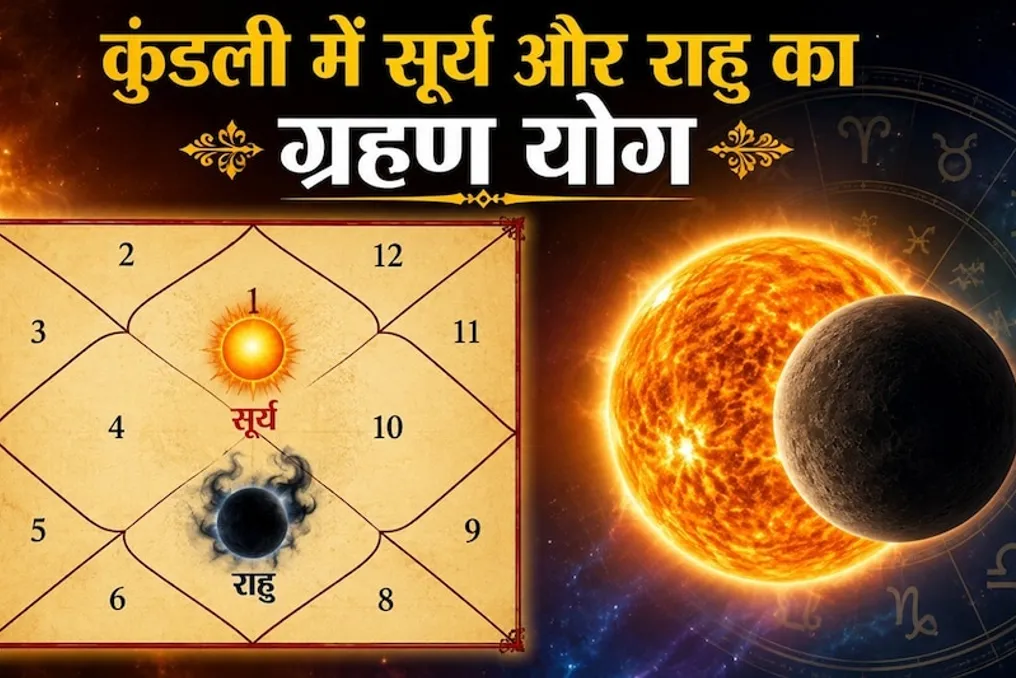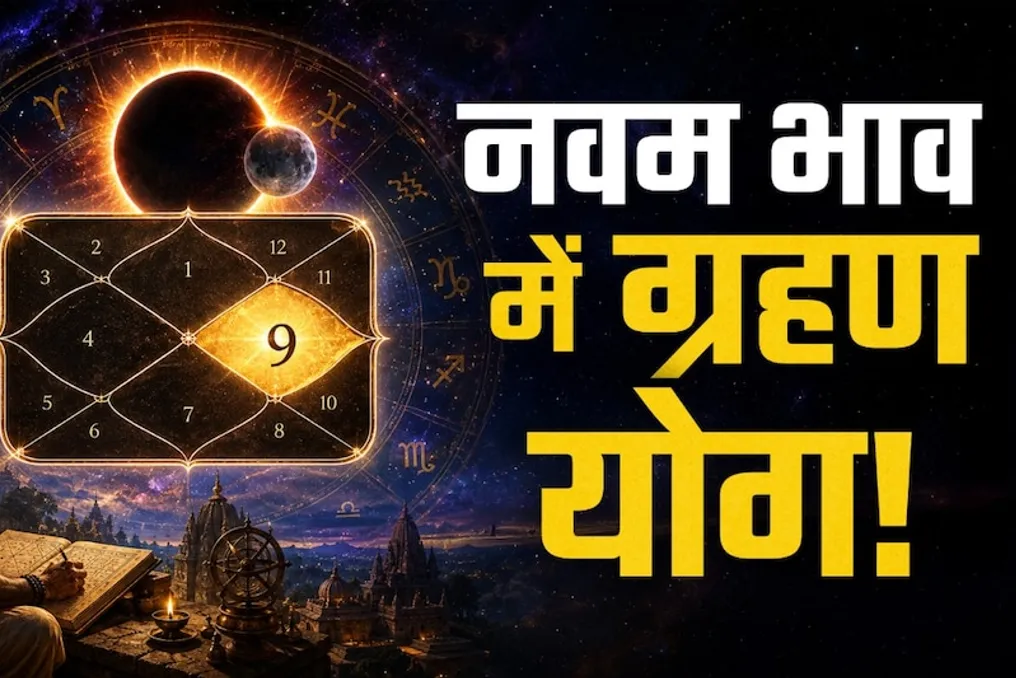
The ninth house is traditionally considered an important aspect associated with religion, destiny, father, teacher, higher education, pilgrimages, cultural traditions, and spiritual reflection. The Sun is a key planetary factor in the ninth house, but its natural favorable influence can weaken when Rahu appears. In such a case, a person may appear connected to religion and spirituality, but there is a possibility that pretense, ritualism, or the pursuit of recognition will dominate their behavior.
Nevertheless, the final outcome of this astrological combination cannot be determined solely based on this factor; it is also necessary to consider the sign, the position of the Sun and Rahu, the aspects of other planets, as well as the current Dasha and Antardasha periods.
When the Sun and Rahu are placed together in the ninth house of the natal chart, a Grahana Yoga situation arises due to their conjunction. The Sun represents self-confidence, the father, respect, leadership, and life values, while Rahu is associated with illusions, unconventional thinking, ambition, deception, and material desire. Their joint placement can cause internal conflict regarding religion and prestige. A person may be active in religious events, but at the same time deviate from the true purpose of these practices.
Since the ninth house governs the father and the teacher, such a configuration can lead to ideological disagreements with the father, distancing, or problems in the father's life. Often, the person does not receive the expected guidance from the father. Similarly, concerning the teacher, a person may face delays in finding a suitable mentor or fail to value the advice of a good teacher. Another problem may be the inability to correctly apply acquired religious knowledge in daily life.
A direct aspect of the Sun from the ninth house to the third house can enhance courage, self-confidence, and the ability to follow one's own decisions. However, under the influence of Rahu, this determination can sometimes transform into stubbornness or sharpness. Conflicts in views or estrangement in relationships with younger siblings are also possible.
The main difficulty of this combination lies in understanding the difference between religion and outward appearance. A person may actively participate in religious events, rituals, or activities related to public prestige, but if the goal is merely to gain praise rather than spiritual development, their inner satisfaction may decrease. Sometimes a person may appear materially successful but experience spiritual dissatisfaction internally. Ups and downs in the sphere of destiny are also possible: delays in achieving results after hard work, confusion in decisions due to bad advice, or excessive trust in someone can create problems.
The most important step with this combination is to abandon pretense and integrate religion into daily life. Worship practices should be performed not for display, but by incorporating service, virtue, and self-discipline into one's life. Respect for the father and teacher is particularly important. It is recommended to offer water to the Sun from a copper vessel every morning from Monday to Thursday. It will be useful to regularly engage in meditation, mantra repetition, or self-study under the guidance of a qualified teacher or spiritual mentor. Prioritizing service over pretense in religious matters is the best way to balance the negative effects of this combination.