Former boxer Richard Colón has died at the age of 33. His death occurred eleven years after he suffered severe brain injuries during a bout.
Former boxer Richard Colón has died at the age of 33. His death occurred eleven years after he suffered severe brain injuries during a bout.
The Puerto Rican athlete was an rising star in boxing until after his fight with American boxer Terrell Williams in 2015, when he fell into a coma for 221 days. Williams won the super heavyweight division in October 2015 by judge's decision due to disqualification in the ninth round, as Colón's team took his gloves, citing dizziness.
During this match, Richard Colón claimed that Williams repeatedly hit him on the back of the head using a technique banned in boxing, known as 'rabbit punches.' Following a complaint about one of Williams' punches, the match referee awarded Colón one point as a penalty.
Richard Colón collapsed upon returning to the locker room, was diagnosed with a subdural hematoma, and underwent emergency brain surgery, after which he fell into a coma. Upon waking from the coma, it became clear that the full extent of Colón's neurological damage required round-the-clock care for the rest of his life.
His father, Richard Colón, confirmed his son's death late Thursday evening on Facebook, writing: 'I am sad to announce the passing of my son Richard from this earthly world. He is now living in a better world.'
Richard Colón, who passed away at home in Florida surrounded by family, had an undefeated boxing record of 16 fights, 13 of which ended in a knockout, before facing Williams. This match in Fairfax, Virginia, long raised concerns about the safety of the sport.
Williams, who was a star at the time with a record of 15-0 and 12 knockouts, fought again in 2017 and 2019, but stated that the events following the fight with Colón affected his life and career. Immediately after the fight, Williams, then 31 years old, told The Los Angeles Times: 'My heart and stomach dropped. I pray for him several times a day to fully recover. I cannot enjoy this victory. I worry about Richard.'
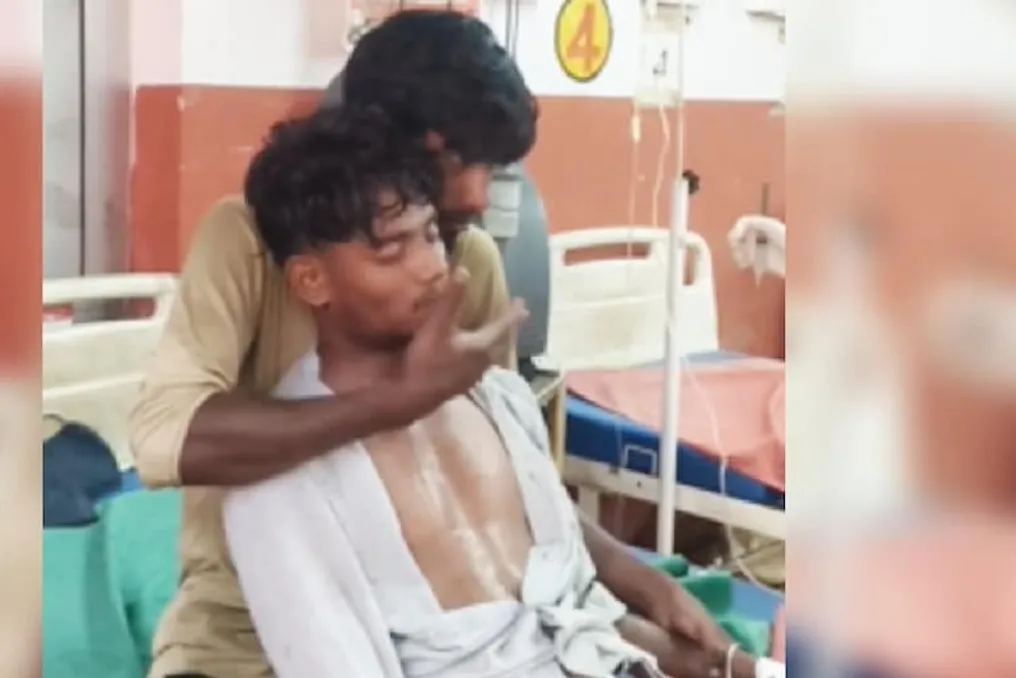
In the Joti Nagar area of Hardoi district, Uttar Pradesh state, a young man miraculously avoided death after being bitten by a venomous snake thanks to timely treatment. In the hospital, his elder brother kept him conscious by administering over 150 slaps.
Following doctors' advice, after a snakebite, the victim needed to be constantly woken up while unconscious. Therefore, using water splashes and continuous slaps on the cheeks, the brother prevented the victim from falling asleep.
Within two hours at the hospital, the young man's life was saved after 15 doses of antivenom were administered.
According to the article, on Saturday afternoon, Arun (21 years old), a resident of Joti Nagar in Kotavali district, was walking through a field with water. When he was lifting a sack of grass, he was bitten by a snake hidden there. Hearing the scream, his brother Akash rushed to the scene and led him toward the road. At that moment, an ambulance and police were called.
Arun's condition continued to worsen. At this point, Shivam Sharma, the owner of a medical store from Pragyati Nagar, passed by. Seeing the seriousness of the situation, he transported both brothers to the medical college on his motorcycle.
In the hospital emergency department, the EMO team, under the direction of Dr. Shera Singh, immediately began providing assistance. The doctor advised relatives not to let the patient sleep. Subsequently, the elder brother Akash kept Arun awake using water splashes and about 150 slaps, while also monitoring his condition.
According to Dr. Shera Singh, typically five injections of antivenom are given for a snakebite, but due to the severe impact of the venom on Arun's body, he received 15 doses of antivenom within two hours.
The doctor noted that loss of consciousness or drowsiness in such cases can create a critical situation. Thanks to the promptness of Shivam Sharma, who brought the patient to the hospital in time, and the readiness of the medical team, Arun's condition improved. The relatives expressed their gratitude to the doctors and helper Shivam.
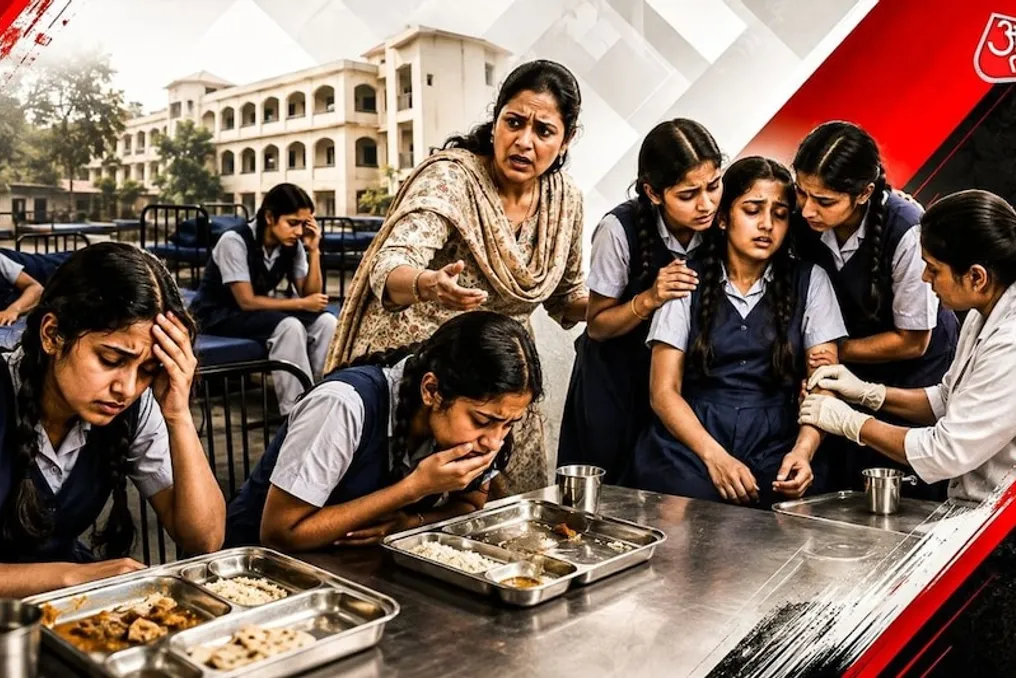
At the residential girls' educational institution Jai Prakash Narayan Sarvodaya in Samrer, Badau, the condition of seven students suddenly deteriorated after eating. All sick girls were taken to the public medical center for treatment. After receiving assistance, some students were picked up by their families with a statement about further treatment in a private clinic, while doctors referred other students to the district hospital, considering the condition of some of them.
According to doctors, initially, the situation appeared to be an exacerbation of the children's health due to the heat. Nevertheless, there is a possibility of food problems, which requires checking. The school principal stated that only three students fell ill due to the heat, whereas the hospital register recorded the admission of seven children.
According to the information, panic began at Jai Prakash Narayan Sarvodaya in Samrer after lunch due to the deterioration of the students' condition. Seven girls were urgently taken to the public medical center for first aid. The police reported that the students were brought to the Samrer Public Health Center late on Saturday evening, around 12:30. After primary treatment, the parents of five students took them home, stating that they would undergo further treatment in a private hospital. A medical worker at CHC Samrer, Likima Ram, noted that it initially seems the students fell ill due to the heat. He added that the administration will take food samples for analysis to determine if the food was spoiled.
The District Magistrate (DM) Avanish Kumar Rai ordered the formation of a commission consisting of the deputy district magistrate and the technical officer to investigate this incident. The commission's report is expected to be ready by this evening. The DM emphasized that the investigation is ongoing, and the strictest possible decision will be made against any culprit.
Questions arose regarding the school administration's statements after the incident. The principal stated that only three students felt unwell, whereas the hospital register lists the admission of seven students.
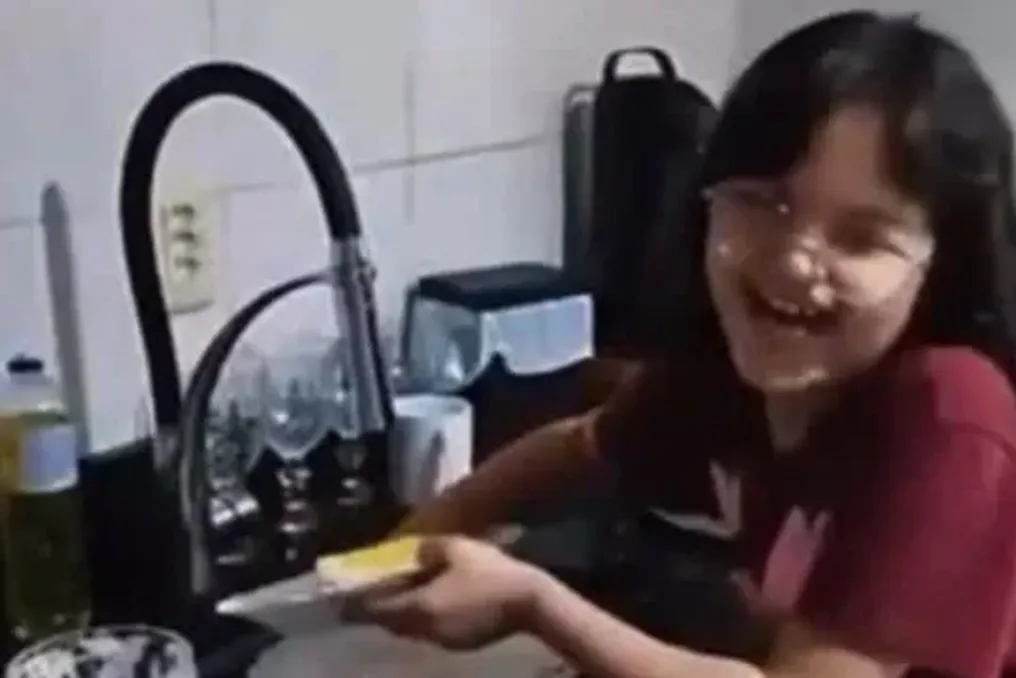
A nine-year-old girl from Brazil, residing in the metropolis of Belo Horizonte, experienced an episode of uncontrollable laughter that lasted for more than three hours. Concerned about her daughter's condition, the mother took her to the hospital, where a very unexpected situation was discovered.
According to information published by the Brazilian publication Metrópoles, it all started during playtime at home. Eduarda Barbosa, whom relatives call Duda, was at home with her mother Aline Barbosa, who is a photographer and nursing student, as well as her sisters. At some point, Duda began laughing uncontrollably. Aline and her sisters also laughed, but the girl could not stop, even when everyone around her fell silent.
Duda remained conscious and responded with gestures, but she could not control her laughter or speak. Noticing the dilation of her daughter's pupils and changes in her gaze, Aline decided to take her to the Municipal Hospital Contagem.
The medical team providing assistance initially considered this case to be isolated. Duda was not diagnosed with epilepsy, as previously suspected. Instead, she was diagnosed with 'gelastic seizure'—a rare 'epileptic manifestation characterized by involuntary episodes of laughter.'
Before realizing it might be a medical problem, Aline thought her daughter was just 'joking.' She recalled: 'I asked if she had gotten dirty or if she had drawn a clown on my face, and she kept laughing.' However, she now knows it was much more serious.
After a series of examinations, the pediatrician treating Duda explained that this episode was 'isolated' and 'caused by anxiety or stress, because as a child, she could not express her feelings or explain what was happening.'
In an interview with the Brazilian website, neurologist and clinical neurophysiologist Victor Hugo Castro de Sá explained that 'gelastic seizure is a rare type of epileptic seizure. This condition manifests as involuntary episodes of laughter. The person laughs without feeling joy, as the laughter is triggered by an abnormal electrical discharge in the brain associated with a benign lesion called hypothalamic hamartoma.'
He emphasized: 'Among possible causes is hypothalamic hamartoma, a benign, non-cancerous lesion located in the hypothalamus. This is a classic link to gelastic seizures in childhood,' he noted.
According to the doctor, in such cases, 'the laughter is purely mechanical and neurogenic (caused by an abnormal electrical discharge in the brain), without the patient actually experiencing joy.'
One of the main signs of a 'gelastic seizure' is the absence of a situation that could justify the laughter. The attack can start suddenly, without a joke, a comedic stimulus, or an apparent reason. The doctor also pointed out that the laughter may look different than usual—it might seem forced, artificial, or even robotic, without the emotional expression usually associated with fun.
Typically, the 'seizure' is brief, lasting from a few seconds to less than a minute. Another important feature is the inability to stop the episode independently. In addition to laughter, according to the specialist, other signs may be observed, such as slight changes in consciousness, a fixed gaze, facial redness, rapid heartbeat, and automatic movements, such as lip tapping. Other brain changes may also be related to this condition: benign or malignant tumors, cortical dysplasias, and vascular malformations localized in the temporal or frontal lobes.
In a case like Duda's, it is recommended to focus on the 'person's safety,' 'remain calm and place them in a safe environment, such as on a soft chair or on the floor, removing nearby objects that could cause injury.' One should not try to restrain the person or forcibly stop the laughter. It is also important not to put fingers or any objects in their mouth. Time the seizure, record changes, loss of consciousness, etc. If possible, record a video to show the doctors. After the seizure ends, Victor Hugo Castro de Sá reminded that the person may feel confused, tired, or embarrassed. At this moment, one should 'offer calmness and support.'