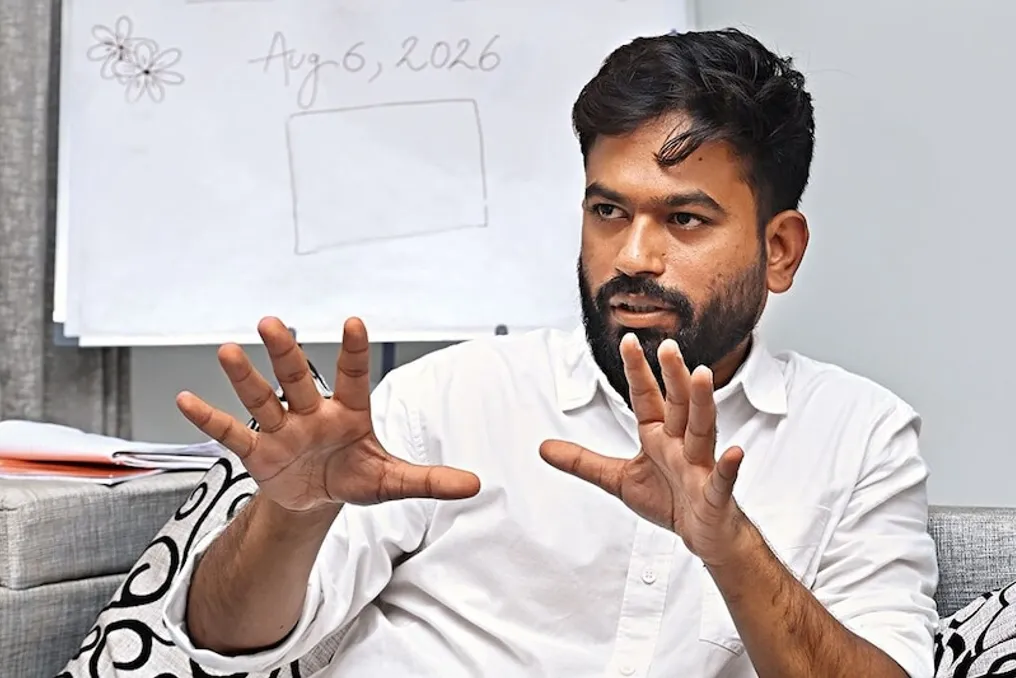
On the occasion of Independence Day, Abhijit Dipke, founder of the Kokroch Janata Party (CJP), arrived in his native village of Santuk Pimri and inspected the local school board. He noted that the school toilet was supplied with water, but discovered that many windows were broken and the number of desks was insufficient compared to the number of students.
Commenting on the dilapidated state of the school, Dipke stated that if basic amenities are still missing in public educational institutions, it is impossible to talk about the country's development. He also accused that the school toilet had been cleaned before his arrival.
In this regard, Abhijit Dipke launched the 'Repair the School' campaign in Hingoli, Maharashtra, on Saturday. He announced his intention to check the conditions in government schools and demand accountability from the government.
Dipke categorically stated that more than 94 thousand government schools have been closed in the country over the last ten years. He questioned why government schools are being closed when the country needs educational institutions the most.
He argues that children from poor and rural families suffer due to the lack of facilities in government schools. Dipke believes that if government schools provide quality education and necessary facilities, children will not have to be forced to switch to expensive private institutions.
Raising the issue of education, Dipke insisted that there should be a ceiling on tuition fees in private schools. He noted that many families spend between 1 to 1.5 lakh rupees annually on their children's education, which hinders good education for the poor segments of the population.
After completing the 'Repair the School' campaign, the CJP plans to launch a similar campaign concerning the condition of government hospitals. Dipke mentioned instances where patients in government hospitals are forced to sleep on the floor, as well as waiting a long time for appointments and surgeries. He emphasized that youth from rural areas will now question the government and demand accountability for the use of government programs and budgets. In his opinion, the participation of rural youth in politics should increase alongside the participation of urban residents. Dipke concluded that changes in the system will only begin when people directly approach the government regarding issues such as education and healthcare.