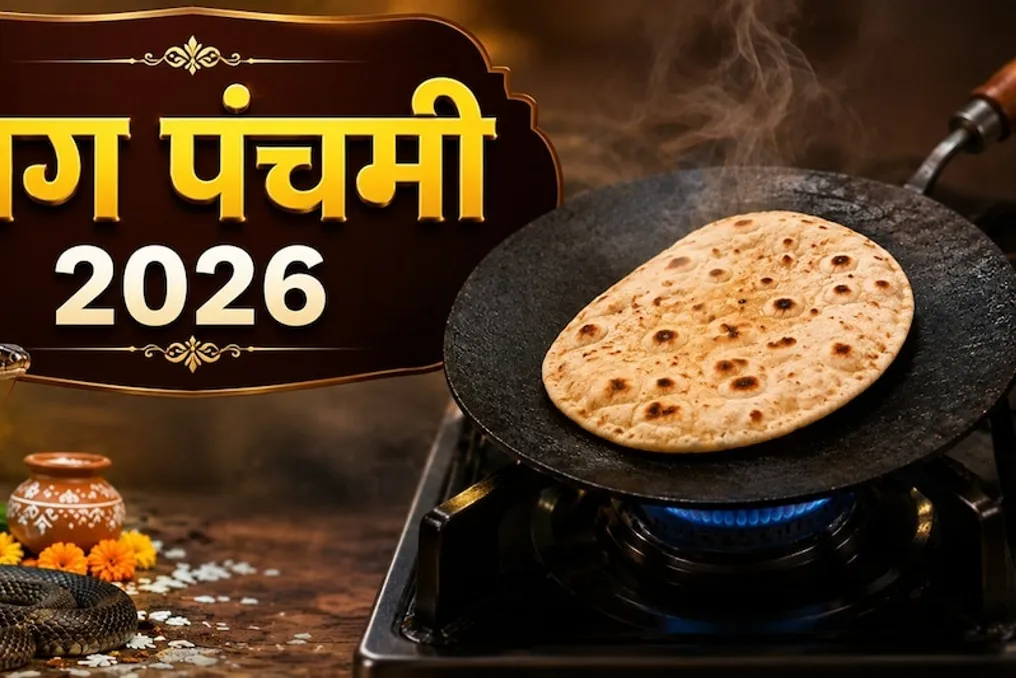
The festival of Nag Panchami is celebrated on Savan Shukla Panchami tithi. This year, the festival will take place on August 17. This day is considered special for worshipping the deity Naga, and its significance is emphasized not only in religious but also in astrological and Vastu-oriented aspects.
There is a belief that worshipping Naga Devi on this day helps reduce the harmful effects of Rahu-Ketu and Dosha Kalasarp. However, there is another rule: it is forbidden to use frying pans and stoves in the kitchen on this day.
In many homes, bread is not cooked on a pan during Nag Panchami, and some people do not touch a pan at all on this day. This practice has a long history. According to astrology, a cast iron pan is considered a symbol of Rahu, and fire in the kitchen is associated with Mars. It is believed that heating a cast iron pan over a fire on Nag Panchami is inauspicious. Furthermore, using pots is also considered prohibited on this day.
For this reason, in many families, food is not cooked during Nag Panchami, and pre-prepared dishes are consumed. In some places, sour or cold dishes are preferred, which avoids the use of a pan and intense heat in the kitchen.
According to astrological beliefs, Rahu is associated with snakes. Therefore, on Nag Panchami, which is the day of Rahu symbolized by cast iron items, they are not heated. It is believed that such an action can lead to increased stress, arguments, and problems in the house, so caution is advised.
In Jyotish science, a pan in the kitchen represents Rahu and is linked to the head of the snake (Rahu). This is why, on the most important day for snakes, Nag Panchami, people avoid using cast iron pans for cooking. Instead, clay, copper, or brass utensils can be used on this day. It is also considered auspicious to offer a pair of silver or copper snake goddesses or release them into running water.