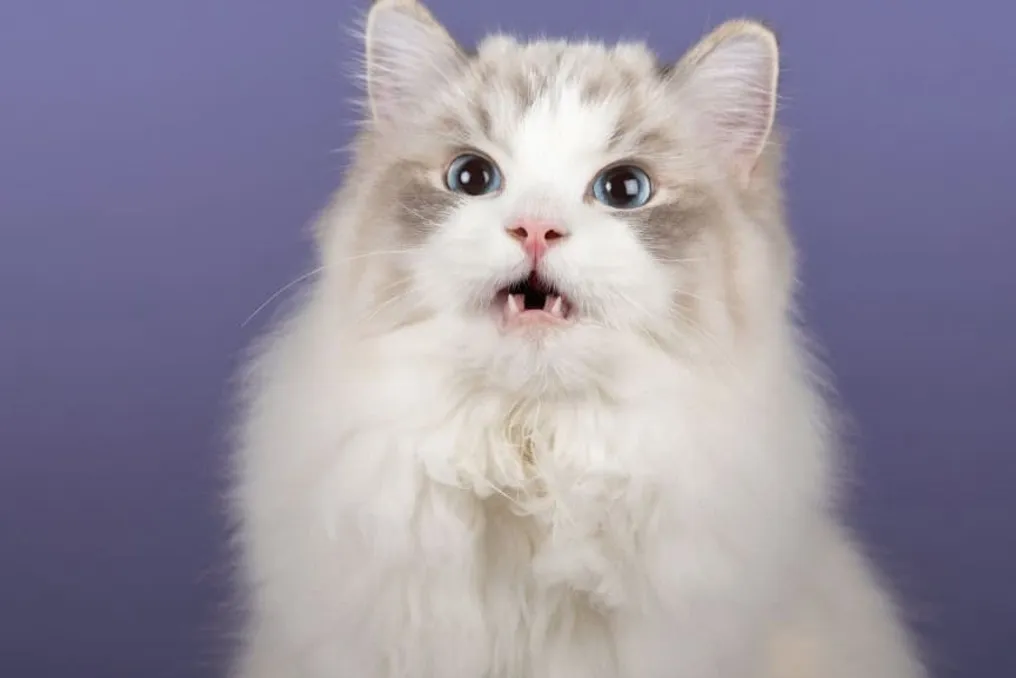
Those who live with cats may notice the animal stopping an activity, lifting its lips, and keeping its mouth slightly open for a few moments after detecting a specific odor. Although it may appear to be an expression of disgust, this reaction does not necessarily indicate repulsion, even if the cat has smelled items such as sweaty socks or used underwear inside the house.
This behavior is called the Flehmen response and is intrinsically linked to the feline sensory system. Through the vomeronasal organ, also known as the Jacobson's organ, the animal is able to process chemical information contained in the smells that catch its attention.
Detailed analysis of odors
According to Valeska Rodrigues, a professor at the Veterinary Medicine course at the University of Franca (Unifran), this mechanism allows for a more detailed perception of aromas. This reaction can be triggered by odors emitted by other animals, by substances found on objects, or even by environmental stimuli.
The Flehmen response occurs when the cat directs certain odor particles towards the vomeronasal organ, which is located on the palate. This system functions as a complement to the sense of smell, allowing the feline to obtain precise chemical data.
The Unifran specialist clarifies that the mouth opening is part of this sensory process. She states that, although it may seem unusual to humans, this reflex constitutes a more refined way of identifying odors.
Among the information captured by this mechanism are pheromones. These substances play a role in communication between felines, potentially signaling, for example, the presence of a female in heat or indicating signs related to territorial demarcation.
For this reason, the behavior may occur after the cat finds another animal's urine, comes into contact with the smells of other felines, sniffs the owners' clothes, or perceives something different in its territory. Clothes, shoes, and odors coming through the window can also provoke the same response.
Additionally, the system helps the animal interpret changes in the environment. In Valeska's assessment, the ability to recognize specific smells contributes to the cat monitoring its surroundings. She describes this as 'a very useful communication and monitoring tool for the species.'
Difference between reflex and health problems
Although it is a natural response, it is crucial not to confuse this behavior with respiratory changes. In the case of the Flehmen response, the mouth remains slightly open for a brief period, and the cat generally resumes its normal activities without interruption.
Signs of health problems or intense stress can manifest in other ways, such as rapid breathing, agitation, excessive saliva production, and visible effort to breathe. The veterinarian emphasizes this distinction, pointing out that 'in the Flehmen response, the slightly open mouth lasts only a few seconds, and the feline soon returns to its routine activities calmly.'
The relevance of odors to cats is also linked to how these animals interact. Pheromones can be associated with urine, head, and claws, participating in actions such as recognition and territorial marking.
Close contact with the owner also involves olfactory information. When the cat approaches to sniff a person's face or nose, this behavior is presented as a way to better understand that aroma and is linked to the trust established with the owner.
The same principle helps explain the great interest of felines in domestic odors. For them, identifying what has changed in the environment is an essential part of their perception of the space where they live. Therefore, there is no need to worry: it is likely that your cat is just analyzing smells and not showing disgust.