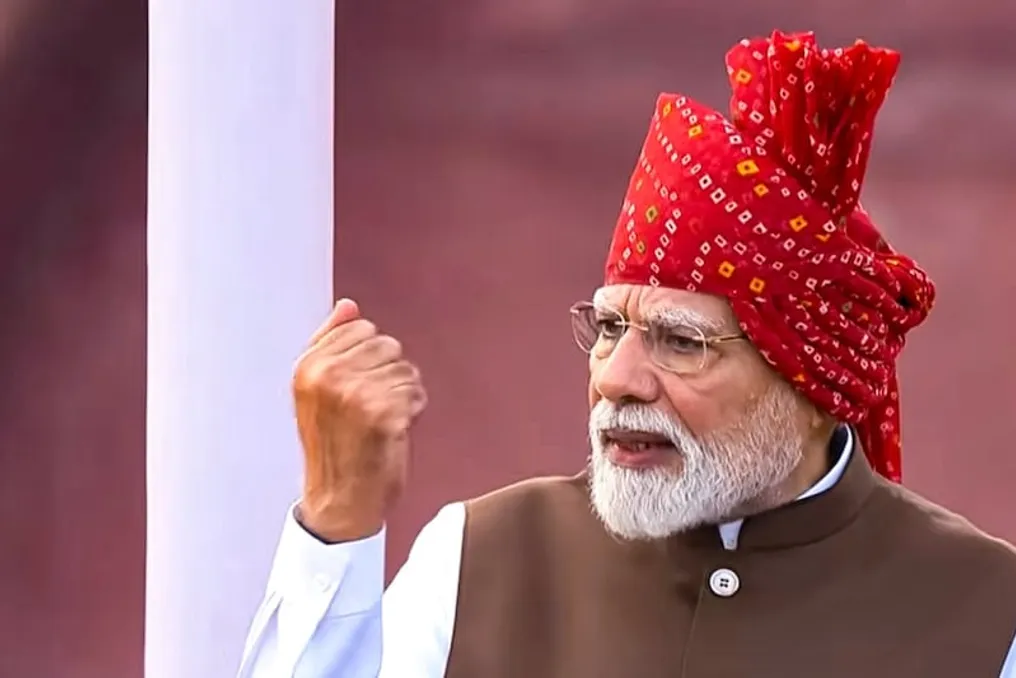
Prime Minister Narendra Modi announced during his Independence Day speech the creation of a network of free educational centers for youth preparing for entrance examinations. This initiative is aimed at reducing the financial burden associated with private tutoring in centers for low and middle-income families.
Modi stated that thanks to this program, families will be able to save thousands of rupees in expenses, and their sons will be able to receive education for free. He specified that the digital public infrastructure, talented specialists, and teachers will be used to create this network.
The Prime Minister noted that the competition for spots in tutoring classes has become a serious burden for middle-class families, as many parents believe that not attending such classes puts the family in an unfavorable position.
This announcement came against the backdrop of the growing role of the private sector in preparing for exams such as entrance exams to engineering and medical universities, as well as state competitions. The government is also actively promoting the use of digital platforms and online resources to expand access to learning and skill acquisition.
Furthermore, the announcement followed student protests triggered by the cancellation of the NEET-UG exam this year. Experts and politicians point to the ecosystem of tutoring centers as one of the factors contributing to the leakage of examination materials and the overall pressure associated with highly competitive tests.
In his speech, Modi also emphasized the development of higher education infrastructure as another measure of support for middle-class families. He reported that the number of universities in India increased from less than 350 between 2004 and 2014 to nearly 1000, aided by the establishment of about 650 new universities over the subsequent 10–12 years.
It was also noted that the number of medical seats increased from approximately 400 to 850, as well as the appearance of foreign university campuses within India.
Modi also mentioned that the National Education Policy (NEP), introduced in 2020 after a 35-year hiatus, has benefited the middle class. This policy replaced the 1986 education policy and provides for the reform of school and higher education through the introduction of interdisciplinary learning, vocational education, and greater flexibility in undergraduate studies.
He also referred to the expansion of Atal Tinkering Labs, stating that over 10,000 such labs have been provided to children to stimulate interest in technology and innovation. The launch of the free education program is likely to have a significant impact on students preparing for important exams, where private tuition has become an integral part of the preparation system and a major household expense.