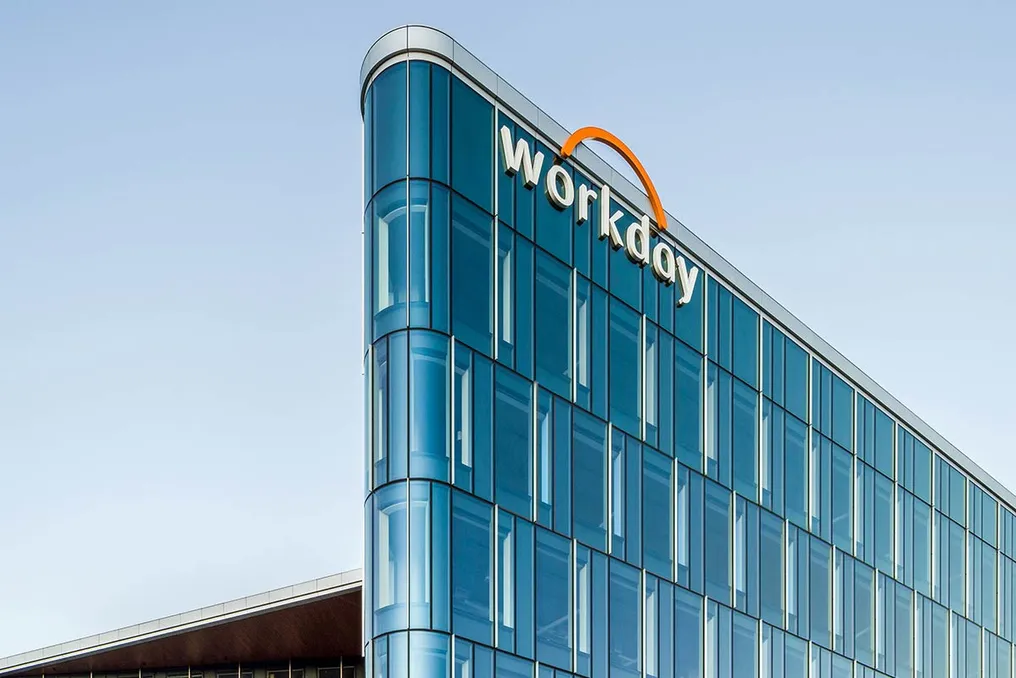
According to insiders, private equity firm Silver Lake is in talks to acquire Workday. This potential deal could be among the largest software acquisitions in industry history.
According to insiders, private equity firm Silver Lake is in talks to acquire Workday. This potential deal could be among the largest software acquisitions in industry history.
The news of the start of negotiations caused a sharp rise in Workday's shares by almost 18% on Thursday. Sources reported that Silver Lake and the company specializing in human resources and financial management software have been discussing a possible agreement for the past few months. These negotiations are ongoing, and sources emphasized that there are no guarantees of a deal closing, as the discussions are confidential.
Before the publication of the Reuters report, which announced the negotiations, the market value of the company, based in Pleasanton, California, was about $43 billion. After this news, the company's shares soared, and on Thursday they closed at $206.45, giving Workday a market capitalization of about $51.1 billion. On Friday, the price slightly decreased by 3.8%.
One insider noted that Silver Lake may attract additional investors to finance this deal. Previously, this private investment firm collaborated with the Saudi Public Investment Fund and Affinity Partners when completing the acquisition of video game developer Electronic Arts for approximately $55 billion last year.
Neither Silver Lake nor Workday provided immediate comments in response to inquiries about the situation.
Before the news broke on Thursday, Workday's shares had fallen by about 15% this year as investors began to question the sustainability of traditional software in the era of rapidly developing artificial intelligence. The stock price has dropped more than 40% compared to its 2024 peak.
Private equity firms have generally refrained from large software acquisitions this year due to concerns related to AI, which makes it difficult to assess the future growth and value of companies using traditional software. This has contributed to a shortage of large software buyout deals this year. For example, Hg Capital agreed in January to acquire financial software company OneStream for approximately $6.4 billion—one of the largest software acquisition deals announced this year.
The potential takeover of Workday would be significantly larger, making it one of the most serious tests of private equity appetite for traditional software business models amid the industry's transformation influenced by AI. The deal would also follow Thoma Bravo's agreement to acquire payroll software provider Dayforce in a transaction worth about $12.3 billion.
Silver Lake has experience investing in technology and software companies, including computer manufacturer Dell Technologies, cloud software provider VMware, and experience management software developer Qualtrics.
Workday was founded in 2005 by former PeopleSoft executives Anil Bhusri and David Duffield, and went public in 2012. The company provides cloud software for human resources, payroll, finance, expenses, and planning. It serves over 11,500 customers worldwide and has offices in South Africa. Bhusri returned to the CEO position at Workday in February, replacing Carl Eisenbach, as the company grapples with growing pressure from AI on traditional business software.
Etihad Rail, a landmark transport project for the country, has opened up new opportunities for travelers, allowing them to replace long hours of driving in traffic with a scenic train journey.
The first route connecting Fujairah and Abu Dhabi launched on June 30th. As more residents of the UAE choose this mode of transport, and more stations are set to open soon, it is crucial to know what items are permitted on Etihad Rail and which items are prohibited.
Prohibited items include explosives, such as fireworks and ammunition. Flammable and hazardous substances, such as gasoline, paint thinners, compressed gases (including pressurized cylinders and aerosol cans), and other similar materials, are also banned.
Weapons—firearms, knives, and other weaponry—are forbidden to be transported unless they are with authorized personnel (such as law enforcement). Additionally, illegal drugs, chemical, and biological hazards are prohibited.
Large and bulky items of any kind are also banned: luggage exceeding dimensions or items that do not fit in the baggage area or obstruct aisles and exits. This includes large luggage, boxes, musical instruments, and sports equipment (including surfboards, oars, skis, snowboards, golf clubs, and other bulky sporting gear or bags).
Unsecured items are prohibited—any items that cannot be safely stored or secured in designated areas of the train, including plants. Commercial goods whose quantity and/or packaging indicate the need for specialized professional transportation, as well as items prohibited by customs authorities, are also banned.
Carrying any type of alcoholic beverages is strictly forbidden, regardless of whether they are hermetically sealed or legally purchased. Smoking devices, including electronic hookahs, vaping devices, e-cigarettes, and any other electronic smoking apparatus, are also prohibited.
Furthermore, offensive items capable of causing discomfort or offense to other passengers, such as those emitting strong odors, as well as any other items that may create danger, disruption, or undue concern, are prohibited.
Bicycles, scooters (including electric scooters), and personal means of transport are also banned, regardless of whether they can be folded or disassembled.
There are items that are restricted on Etihad Rail journeys but are allowed under certain conditions. Passengers cannot carry more than the permitted amount of luggage. Regardless of ticket type, each traveler can bring up to two pieces of luggage free of charge.
Wheelchairs are allowed if the passenger has pre-booked a space for a wheelchair. Only electric chairs with integrated batteries installed by the manufacturer are permitted.
Prams or baby strollers are allowed if the passenger is traveling with a child using such a stroller, and the stroller folds easily or can be disassembled. One such item per child is accepted free of charge. It is recommended to use protective wrapping.
Medical equipment (such as oxygen tanks or other mobility aids) is permitted provided the passenger has booked a space for a wheelchair and the equipment fits in the designated area.
Personal belongings, such as a handbag or laptop bag, must fit under the seat. The maximum dimensions for hand luggage are 55 cm (H) x 40 cm (W) x 23 cm (D), and these items must be stored on overhead luggage racks.
In addition to the two allowed items, extra luggage must be requested through the app, website, Contact Center, or at the station.
Pets, including dogs and falcons, are allowed in an approved carrier with maximum dimensions of 55 cm x 40 cm x 23 cm. The pet carrier replaces the standard hand luggage allowance; passengers cannot travel with a pet carrier and a separate piece of hand luggage simultaneously. Pets must always remain inside the carrier and under the passenger's control.
Trained and certified guide dogs are allowed, and they must be pre-booked through the Contact Center.
For many software specialists, career growth implies promotion, moving to a larger company, and an increase in salary. However, one Reddit user's story demonstrates that achieving success sometimes requires quitting, starting over, and taking certain risks that do not always pay off.
Speaking about his professional journey, the specialist noted that his first salary in 2015 was 37,000 rupees per month. Although the company where he worked was service and consulting-based, he emphasized that the company's technical culture significantly helped strengthen his basic skills and experience.
After receiving a promotion four years later, his salary increased to approximately 1.1 lakh rupees monthly. Then, in 2019, he moved to a FAANG company, where his annual package grew to 44 lakh rupees, which was a significant jump compared to his previous job.
However, the situation changed in 2020 with the start of the COVID pandemic. Increased workload led to significant pressure on him, negatively affecting his mental health. In mid-2020, he decided to resign. After that, he started working at an American startup, where he earned 50 lakh rupees. Approximately eight months later, his salary increased from 50 to 65 lakh rupees, and by 2021, this package reached 70 lakh rupees.
Next came the biggest risk in his career. In May 2022, he decided to stop working for anyone else and joined his own fintech startup as CTO. The startup initially showed good results, but licensing issues became a serious problem. By March 2024, the situation was becoming increasingly uncertain. After one of the co-founders left, he eventually admitted that moving forward would be difficult and started looking for a job in August 2024. In October, he was offered a position at an Indian startup with an annual package of 1.2 crore rupees. Nevertheless, this job did not last long; he resigned after only three months because the atmosphere there proved to be too toxic.
In February 2025, he returned to a FAANG company with a package of 1.5 crore rupees. In March 2026, after a raise and compensation increase in the form of stocks, his current package approached 2.2 crore rupees. He specified that this package includes about 1.2 crore rupees in annual stock compensation, while the remainder is formed by base salary, bonuses, and employer pension contributions.
He also stressed that for him, a career is not limited only to salary. He noted that achieving a salary level comparable to graduates of prestigious institutions, despite not coming from a wealthy family and not graduating from a prestigious university, holds special significance for him.