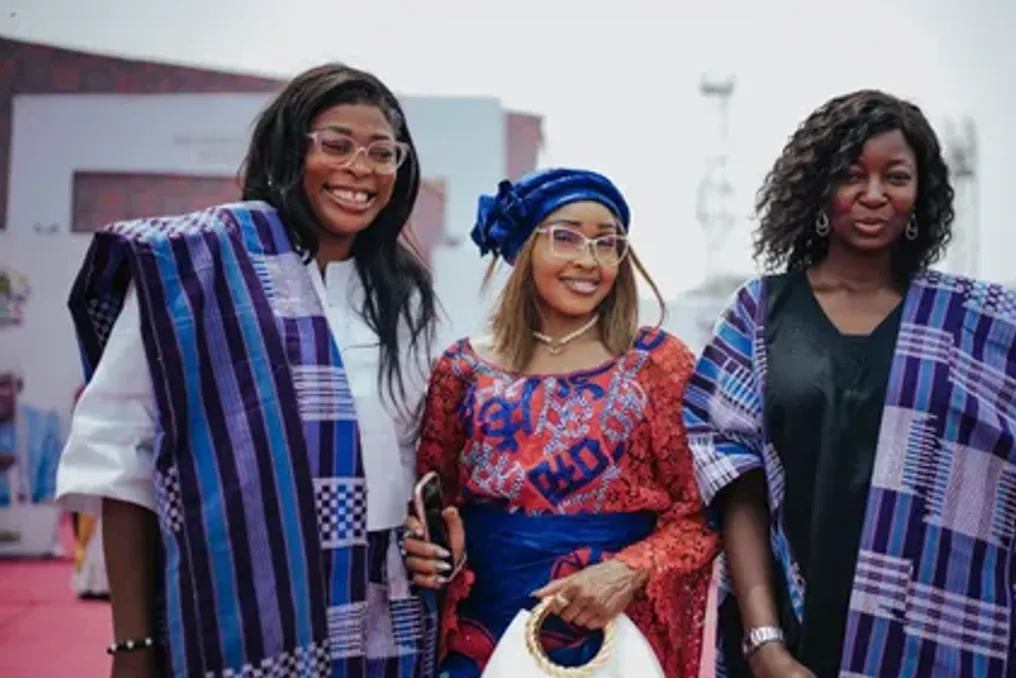
South Africa is marking 70 years of the struggle for women's equality, and data analysis demonstrates both significant changes and areas where progress has not yet been achieved. Currently, women constitute 65.4% of university graduates, with the number of female graduates exceeding that of men in almost all qualification types, except for doctoral degrees.
More than 20,000 women marched to the Union Buildings on August 9, 1956, to protest the expansion of pass laws for women. This march was organized by the Federation of South African Women and included women of various races. The leaders of the procession were Lillian Ngoyi, Helen Joseph, Rahima Musa, and Sophia Williams-De Bruyn, who presented a petition to the government of Prime Minister J. G. Strijdom.
The women's demands went beyond pass laws. Previously, they appealed to the Congress of the People for childcare, housing, education, equal pay, and equal rights regarding property, marriage, and child custody. On the day of the demonstration, the women stood silently for 30 minutes, performing the anthem Nkosi Sikelel’ iAfrika and the protest song Wathint’ abafazi, Strijdom!
The current government press secretary, Nomonde Mnquka, noted that along with countless ordinary women, they realized that political freedom would remain incomplete until women had equal opportunities to participate in the nation's economic, social, and political life.
Education: A Fundamental Achievement
One of the most obvious changes has been the development of the education sector. Women now make up 65.4% of university graduates, surpassing men in the number of graduates in almost all fields of study, with the exception of doctorates.
The Chairperson of the National Assembly, Thoko Didiza, emphasized that women hold 43% of legislative seats in Parliament and 45% of ministerial positions, and they also lead several key constitutional institutions. According to her, the successes since 1994 are reflected in the growing participation of women in politics, the judicial system, business, academia, and leadership.
Gender studies from Stats SA have also shown a long-term increase in women's participation in the labor market. The female labor force participation rate increased from 50.9% in 2014 to 55.8% in 2024, although it remains below the male rate. Furthermore, women's labor force participation is uneven.
Financial Independence
Progress in education and labor market participation is reflected in the growing financial autonomy of women. Anchor Capital reported that women have moved beyond simply inheriting wealth to actively creating it through careers, entrepreneurship, investments, and property ownership.
An investment manager noted that women have become 'central architects of family well-being,' with many prioritizing financial independence, long-term security, and the transfer of capital to future generations. The property market also indicates an increase in women's prosperity. BetterBond Home Loans reported that in 2024 and 2025, over 43,000 women applied for mortgages, more than half of whom were first-time buyers.
Home Ownership
The proportion of women applying as primary borrowers increased by 18% between 2024 and 2025; these women spent an average of R1.3 million on housing. Women buying as spouses spent R1.9 million. Mary Lindemann, COO of BetterBond, explained that this growth reflects greater financial self-sufficiency. She stated: 'As more women assert their financial independence and utilize their purchasing power, we are seeing strong activity in this market segment.'
Lindemann also noted that more women under 35 are purchasing homes independently. 'Women marry later, if at all, and many postpone starting a family. They do not wait for a ring or a spouse to buy property.'
Stats SA data showed that the median age of women in civil unions increased from 31 in 2014 to 34 in 2023.
Households
The shift in women's financial roles coincided with significant transformations in household structure. Stats SA census data showed a substantial long-term increase in the proportion of female-headed households, which approached half of all households.
The proportion of women aged 15 and older who have never been married rose from 44.7% in 1996 to 57.1% in 2022, while the proportion of married women decreased from 38.8% to 25.6%. This has changed the financial responsibilities of many women, as they increasingly make decisions about housing, household expenses, and dependents independently.
Corporate Governance
The growing presence of women in education and the economy has also led to increased representation in corporate leadership, although figures decrease higher up the career ladder. In 2025, women held 38% of board seats and 27.4% of executive positions in the top 40 JSE companies, which is higher than 35% and 25% respectively in 2023. Nine companies from the JSE top 40 achieved or exceeded gender parity on their boards, including Bidvest with 64%, British American Tobacco with 56%, and Impala Platinum with 54%.
The situation was significantly different at the CEO level. Only three companies from the JSE top 40 had a woman as CEO—Bidvest, Clicks, and FirstRand—while six had a woman on the board. BDO stated: 'South African women make up 46% of the country's economically active population but remain consistently underrepresented in leadership and underpaid compared to their male counterparts.'
The World Economic Forum's 2025 Global Gender Gap Report found that women outperform men in higher education globally, but they account for only 29.5% of senior managers with higher education.
Labor Market Gap
Recent Quarterly Labour Force Survey data showed that the progress made has not translated into equal employment outcomes. In the second quarter of 2026, women accounted for 50.3% of the 42.3 million working-age population, but their official unemployment rate was 37.5% compared to 30.3% for men. The female labor force participation rate reached 54.9% versus 64.4% for men, and the absorption rate—the proportion of the working-age population actually employed—was 34.3% for women and 44.9% for men.
Young women were also more likely than young men to be Not in Education, Employment, or Training (NEET), with a rate of 38.2% compared to 34.6% for young men. Women were less likely than men to hold managerial positions—managers comprised 7.1% of female employment compared to 10% of male employment—and were more likely to work in clerical and domestic sectors.
Fayaz Mohammed, head of BDO's International Offshore Centre, advised a young woman starting her career: 'Raise your hand more often. Do not assume the answer will be no before you ask the question.' Mohammed added that 'confidence is often built after you take the step, not before it. And when you reach the next level, don't climb alone. Help someone else rise.'
Pay Gap
The increasing participation of women in education, property ownership, and leadership has also not eliminated income disparities. BDO estimates the average gender pay gap in South Africa at approximately 30%, while Stats SA's long-term gender analysis showed that the median income of women in 2022 matched 80% of the median income of men.
In a country celebrating 70 years since marches by thousands of women demanding equal treatment, statistics have shown significant changes but have also revealed unequal economic conditions for women. Nomonde Mnquka stressed that the true measure of democracy will not only be the rights guaranteed by the Constitution but also the opportunities created by society.
Mnquka concluded: 'When every girl has access to quality education, every woman can realize her ambitions without discrimination or fear, every entrepreneur can compete on equal terms, and every citizen contributes to advancing gender equality, South Africa will honor the legacy of Charlotte Maxeke, Lillian Ngoyi, Albertina Sisulu, Winnie Madikizela-Mandela, and the women of 1956.'