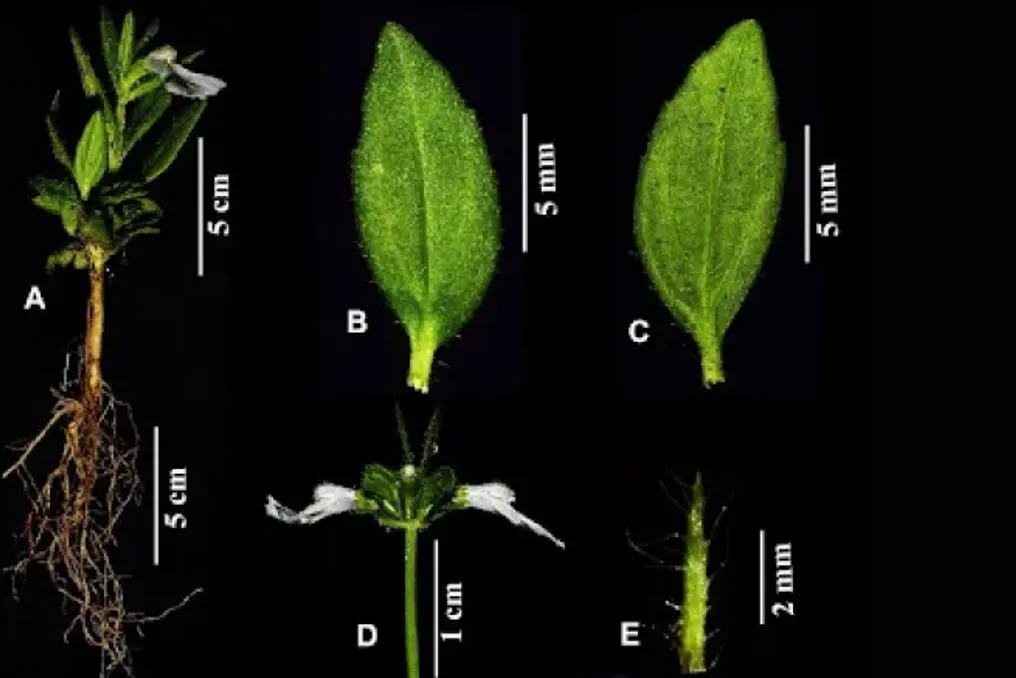
Researchers have discovered a previously unknown plant species growing on the sandy shores of the Coromandel Coast. This new species, a small herbaceous shrub named Leucas droupadiae, was identified by a scientific group from Anna University and Siddha Government Medical College while surveying coastal dunes in the Kudalur district, Tamil Nadu.
The discovery occurred when scientists encountered an unusual plant thriving in nutrient-poor sandy conditions. After collecting samples and conducting a year-long study of its life cycle, the team compared the specimen with existing plants in renowned collections, including the Natural History Museum in London and the Royal Botanic Gardens, Kew. Their analysis confirmed that the plant's physical characteristics did not match any of the 155 known species of the genus Leucas, marking it as a completely new scientific finding.
Leucas droupadiae is distinguished from its closest relatives by its unique solitary growth habit and striking seeds. While most similar plants in this family grow as creeping vines or branched shrubs with deep taproots, this new species stands upright as a single, unbranched stem, reaching only about 15 centimeters in height. It anchors itself in the sand with a shallow network of fibrous roots rather than a single thick root. The most distinctive feature is that the plant produces oval fruits, known as nuts, which are bright golden-yellow and covered with irregular dark brown spots—a trait absent in its relatives.
The scientists named the plant after Smata Droupadi Murmu, the 15th President of India. The researchers chose this name to acknowledge her historical role as the first person from a tribal community to hold the highest office in the country, as well as her dedication to public service. By naming the species after her, the team aims to recognize the representation of marginalized communities at the national level.
Despite this being a joyful victory for biodiversity, the plant's future remains uncertain. Currently, it is known that Leucas droupadiae exists only in one specific location. Researchers noted that its habitat is threatened by local livestock grazing and the expansion of eucalyptus plantations, which can deplete necessary soil resources. Due to its limited range, the species has been preliminarily classified as 'Data Deficient,' and experts are calling for further research to ensure this coastal survivor does not disappear before it can be fully studied.