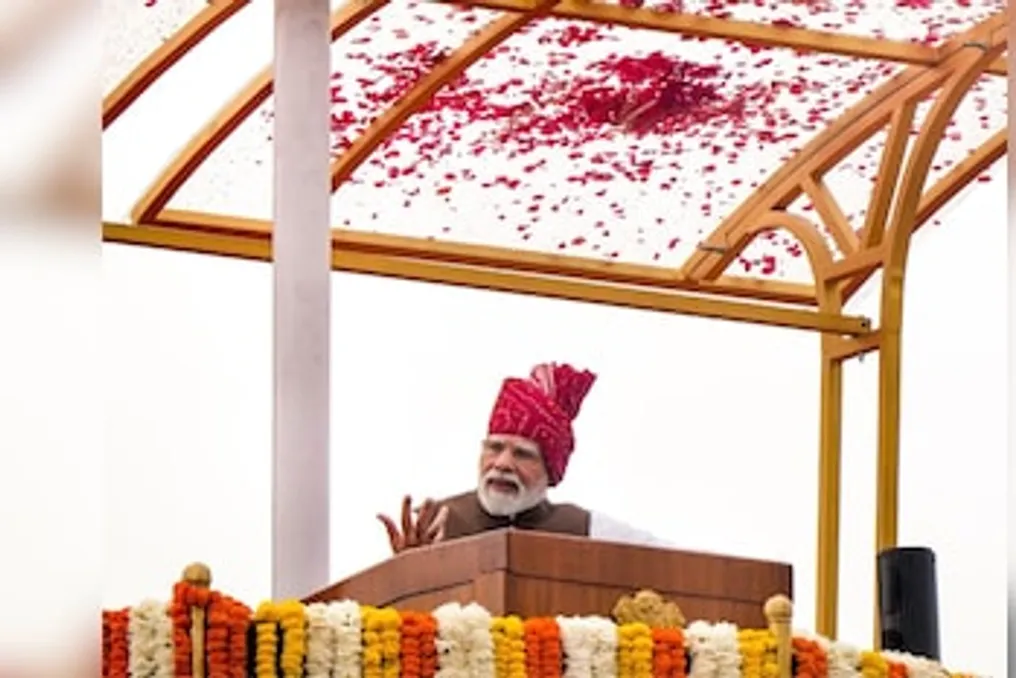
During his Independence Day speech, Prime Minister Narendra Modi emphasized the necessity of utilizing technology and fostering entrepreneurship to ensure the country's future growth. He also urged the youth of India to master new technologies, including artificial intelligence (AI).
As part of efforts to achieve self-sufficiency in various sectors, the Prime Minister announced that India plans to commission another five to eight semiconductor manufacturing facilities over the next seven to eight years. He noted that three large semiconductor plants are currently operating in the country, whose products will be exported. However, details of these projects were not disclosed.
Modi pointed out that India has discussed the topic of semiconductors for many years but lacked large-scale manufacturing facilities. He stressed the critical importance of chips in the modern digital world and technological era, stating that they are indispensable in all fields—from electronics and medical equipment to transport systems—and without them, the entire world could come to a standstill.
India's focus on semiconductors was initiated by the central government's launch of the India Semiconductor Mission in 2021. The first version of this mission was supported by an incentive scheme worth 76,000 crore rupees, which provided fiscal support of up to 50 percent for silicon fabs, semiconductor enterprises, assembly and testing units, and chip design. Earlier this year, the government announced the India Semiconductor Mission 2.0 with allocations of 1.27 trillion rupees. To date, 12 manufacturing units have been approved under the first Mission.
Furthermore, the Prime Minister highlighted the need to adopt technologies such as AI. In his Red Fort address, he stated that the government would train one crore (ten million) young people in AI skills over the next year.