In honor of India's 80th anniversary of independence, celebrated on August 15, 2026, the fascinating transformation of Indian sports over the last eight decades is being examined. Once, the nation's sporting identity was focused almost exclusively on hockey. However, cricket then caused a real boom, becoming the country's biggest sporting force. But in the last two and a half decades, the picture has changed again: shooting, badminton, wrestling, boxing, tennis, athletics, and para-sports have added many colors to India's sporting map.
The journey began with Jadhav's medal in 1952, continued with Niraj's gold medal in 2021, and reached the team that won the T20 Cup in 2026. This is not just a series of achievements, but a narrative of a changing India and its evolving sporting dreams.
1952: Jadhav Proved That the Olympic Podium Was Not So Far Away
Five years after gaining independence, at the Helsinki Olympics, Hashaba Dadasaheb Jadhav from Maharashtra won a bronze medal in wrestling, making history. He became the first individual Olympic medalist for independent India. This achievement was particularly significant for India in the early stages of independence. Although India had already demonstrated its strength in hockey, Jadhav showed that Indian talent was not limited to team sports.
Meanwhile, hockey remained the main sporting identity of India.
After gaining independence, India won its first Olympic gold in hockey at the London Summer Games in 1948 as a sovereign state. Following this, the Indian team became champions in Helsinki in 1952 and Melbourne in 1956. In 1964, India won gold again in Tokyo, and in 1980, it solidified its dominance in hockey by winning another gold medal at the Moscow Olympics. In the Dhanchand era, hockey's dominance continued after independence. The world knew India through hockey. The artistry and victories of Indian hockey were the primary source of national sporting pride. However, a period followed that changed the entire economy, culture, and passion of Indian sports.
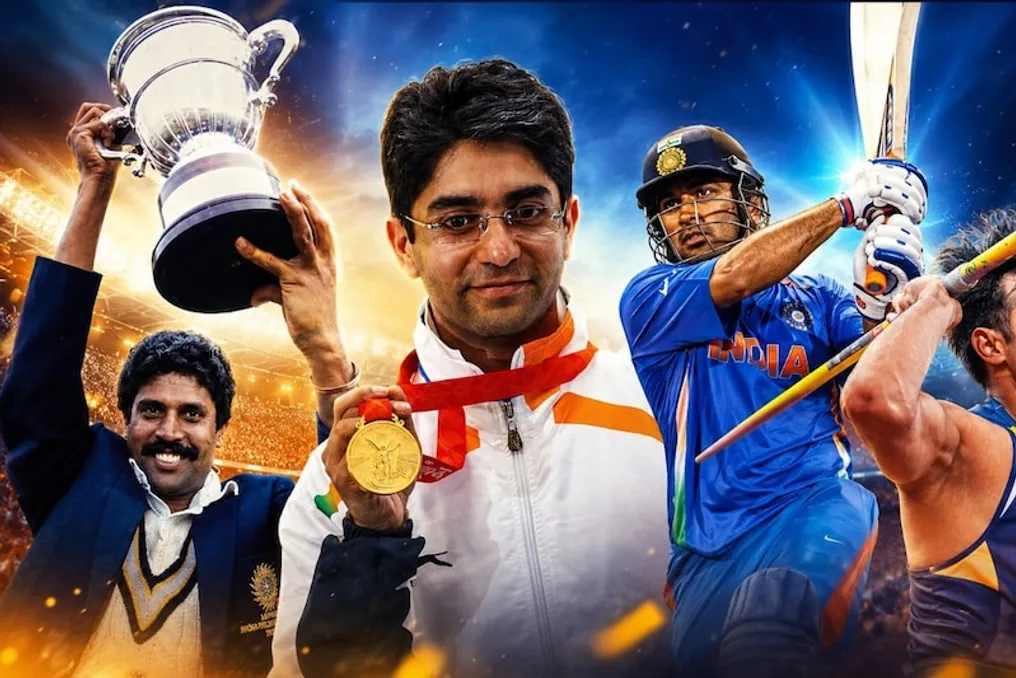
On June 25, 1983, at Lord's, the Indian team led by Kapil Dev defeated the two-time World Champion West Indies, winning the One Day International World Cup. This was not just a victory in a match or tournament; it was a turning point in Indian sporting culture. Although cricket was popular before 1983, the World Cup victory turned it into a passion that lived in every home. For coming generations, stars like Gavaskar, Kapil, then Sachin, Ganguly, Dravid, and later Dhoni-Kohli, became not just players, but part of the dreams of millions of Indians. The center of Indian sport gradually shifted from hockey to cricket.
At the Atlanta Olympics, Leander Paes won a bronze medal in men's singles tennis. This was India's first individual Olympic medal in 44 years since Jadhav's award in 1952. Paes's achievement showed a new possibility: India could reach world level not only in cricket. Subsequently, Karnam Malleswari won a bronze medal in weightlifting at the Sydney Olympics in 2000, laying a strong foundation for India's female sporting prowess. Thereafter, Indian female athletes took on the greatest hopes of the nation on the Olympic stage.
At the Beijing Olympics, Abhinav Bindra won a gold medal in 10-meter air rifle, making history. He became the first individual Olympic champion of independent India. Bindra's gold played a major role in changing the mentality of Indian sports. The goal was no longer just to qualify for the Olympics or win a medal; the question was: when would the gold come? After this, India won six medals in London in 2012, raising the level of expectation for Olympic success in Indian sports even higher.
During the World Cup final against Sri Lanka in Wankhede in Mumbai, when the target was 275 runs and the pressure was maximum, came that very sixth wicket by Dhoni, which ended a 28-year wait. India became the World ODI Champions for the second time. The International Cricket Council (ICC) also links this victory to Dhoni's decisive 91 runs and his winning six. If 1983 started the revolution in Indian cricket, then 2011 brought this revolution to the second generation. After 1983, cricket popularity grew, and in 2008, the IPL transformed it into a new business and entertainment model. The 2011 World Cup victory gave this cricket culture another powerful symbol. Today, India's strength in cricket is also assessed by the fact that in 2026, India won the T20 Cup against New Zealand.