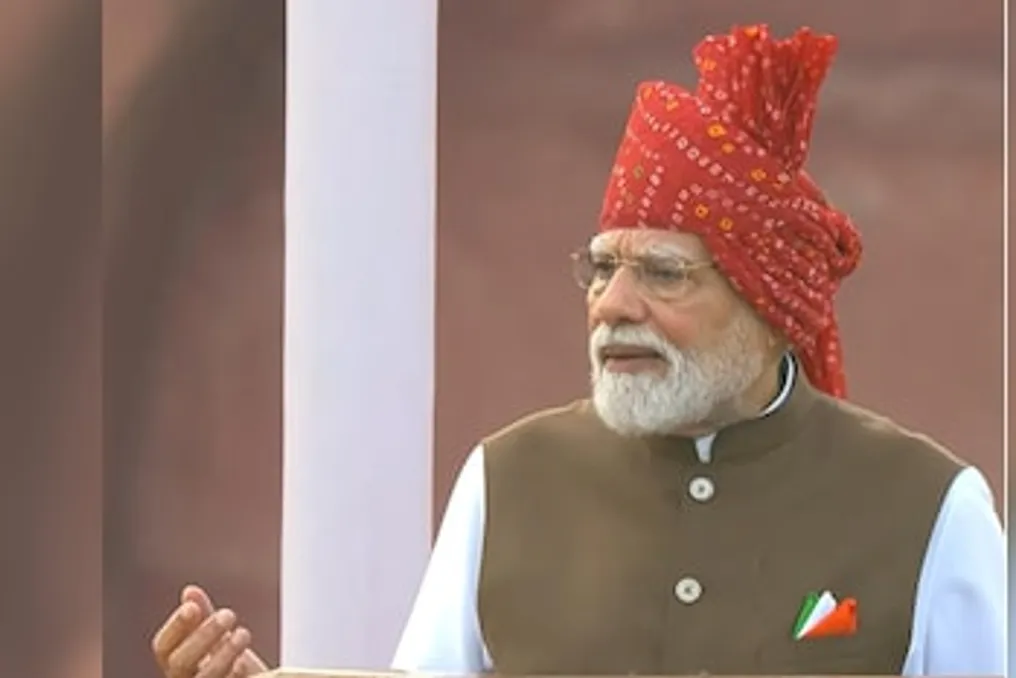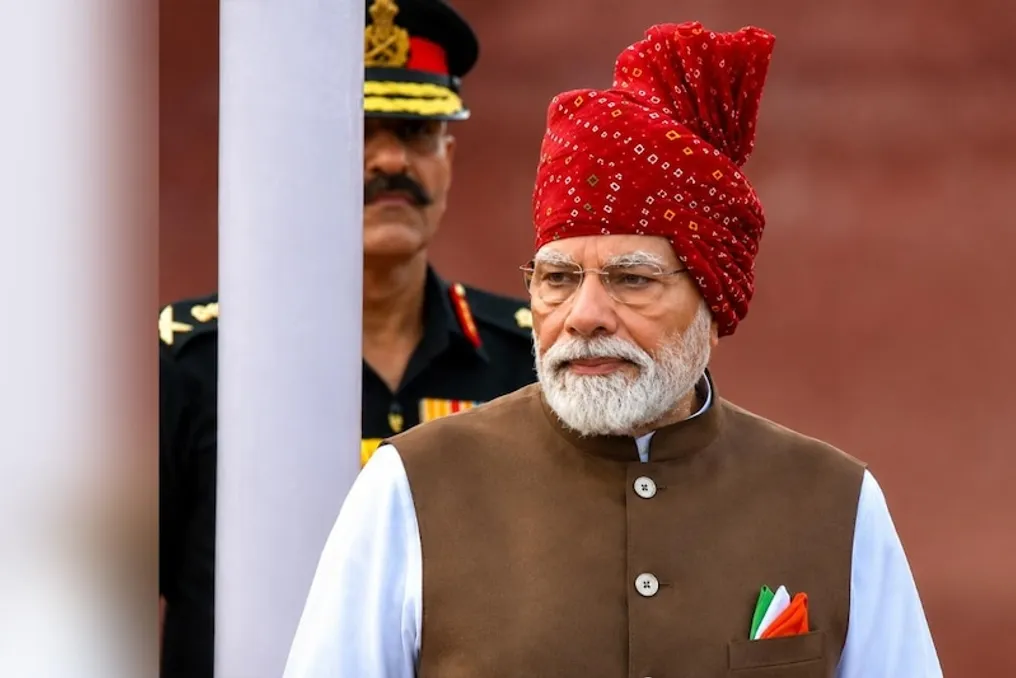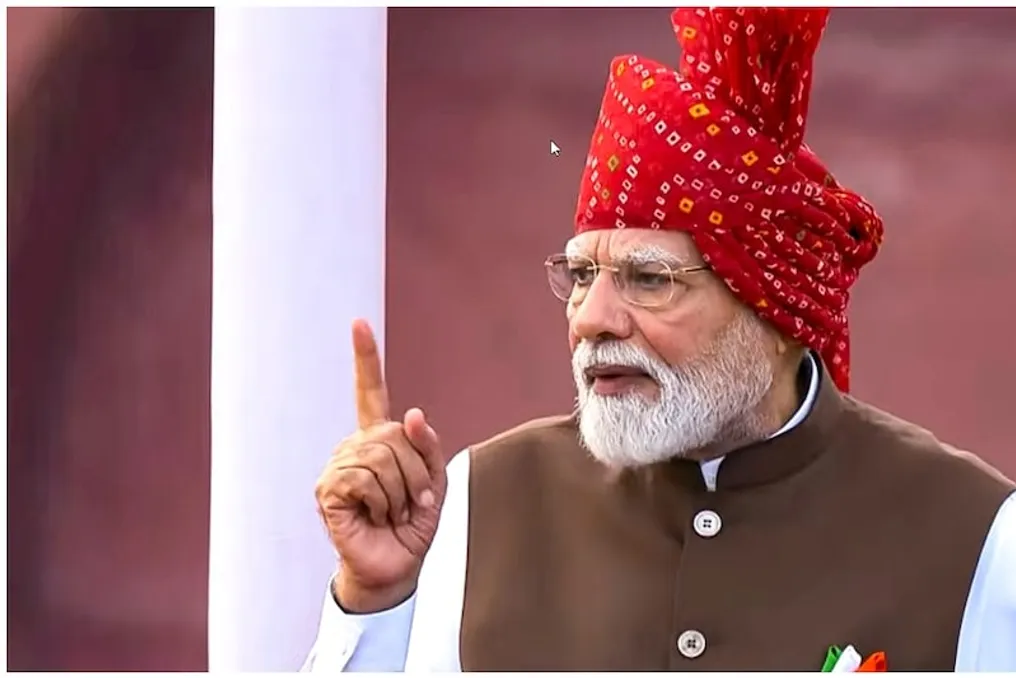
During his address from the Red Fort on the occasion of the country's 80th anniversary of independence, Prime Minister Narendra Modi emphasized that energy security and self-sufficiency are key foundations for India's development. He also raised the issue of how some nations use resources as weapons amidst the global crisis.
Modi noted that despite global uncertainty, essential commodities such as gas, petrol, and urea remain accessible in the country. He stated that India is relying on its own capabilities and continues to progress.
The Prime Minister stressed that during times of crisis, some parties engage in manipulation, turning resources into weapons. He mentioned that petrol, diesel, medicines, and even territories are subjected to this 'weaponization.' Modi pointed out that without adhering to the principle of self-reliance, the country could not have managed such challenges. He also addressed MSMEs, noting that trade agreements present a huge opportunity, and urged them to offer goods that are better and cheaper than what is available on the world market.
Referring to the COVID-19 pandemic and Middle East crises, Modi indicated that during moments of turmoil, some attempted to create an atmosphere of fear and anxiety in the country. Without naming names, he pointed to the opposition, asserting that some derived pleasure from spreading fear and fake news. He reminded that during the pandemic, the entire world was anxious, and all systems were affected. Subsequently, wars and conflicts began in different parts of the world, whether in Ukraine or the Middle East.
The Prime Minister added that in such a climate, some tried to frighten people with various predictions. He recalled statements claiming that vaccines would not be available and that people would not survive the coronavirus. Similarly, during the Middle East crisis, fears spread about shortages of petrol at gas stations, scarcity of gas and diesel, and the inability of farmers to obtain fertilizers. Nevertheless, Modi highlighted that thanks to India's preparedness and capabilities, it managed to maintain necessary reserves.
He concluded that the current global conditions once again demonstrate the critical importance of self-sufficiency for India. Strengthening domestic capacities in energy, fertilizers, agriculture, and other essential goods will form the basis for overcoming future crises.
Modi reported that although India did not anticipate such a crisis, preliminary preparations helped the country cope with the circumstances that arose. He acknowledged that many countries worldwide suffered from global crises, and India was not exempt. However, the government prevented farmers from bearing the full burden of expensive fertilizers. Citing the example of urea, he noted that while the price for a bag of urea reached about 3000 rupees on the world market, Indian farmers receive it for only 300 rupees.
He clarified that the government covers the difference in this price so that farmers do not face inflation. Furthermore, he mentioned DAP fertilizer. Modi stated that if the price of DAP on the world market is around 5000 rupees, it is available to Indian farmers for 1350 rupees.
The Prime Minister emphasized that during a global crisis, the government's priority is to assist farmers.
In his speech, the Prime Minister once again focused on the importance of self-reliance. He mentioned that when he first spoke about the concept of 'Self-Reliant India,' some questioned whether it would harm globalization. However, Modi noted that global realities have changed significantly over the last decade, and discussions about globalization are not as frequent as before. He explained that for India, self-sufficiency does not mean isolation from the world, but rather strengthening the ability to meet its own needs. It is critically important that the country's production capacity and supply chain are resilient amid global upheavals.
The Prime Minister also pointed out that India's dependence on other countries for crude oil is a result not only of resource scarcity but also of long-standing limitations in thinking. He reported that the government is changing this paradigm and actively utilizing the potential within the country. Modi mentioned that previously, about 99 percent of coastal areas were considered 'no-go zones' for searching for underwater oil and gas reserves. These areas have now been converted into 'promotion zones,' and active search operations are underway to discover new underwater reserves. He called this necessary for ensuring India's energy security.
He concluded by mentioning that India is working towards self-sufficiency in the energy sector in several directions. The government has set a target of achieving 200 gigawatts of nuclear power and is building five new nuclear reactors. Additionally, Prime Minister Modi mentioned the expansion of the natural gas pipeline network, noting that the network covered about 70 cities before 2014.