The company has created a specialized large language model for the Chinese market, which serves as an alternative to 'Apple'. This project was implemented in collaboration with the 'Alibaba' project.
The company has created a specialized large language model for the Chinese market, which serves as an alternative to 'Apple'. This project was implemented in collaboration with the 'Alibaba' project.
This new model differs from plans for launching artificial intelligence services in China because it is based on local characteristics and styles.
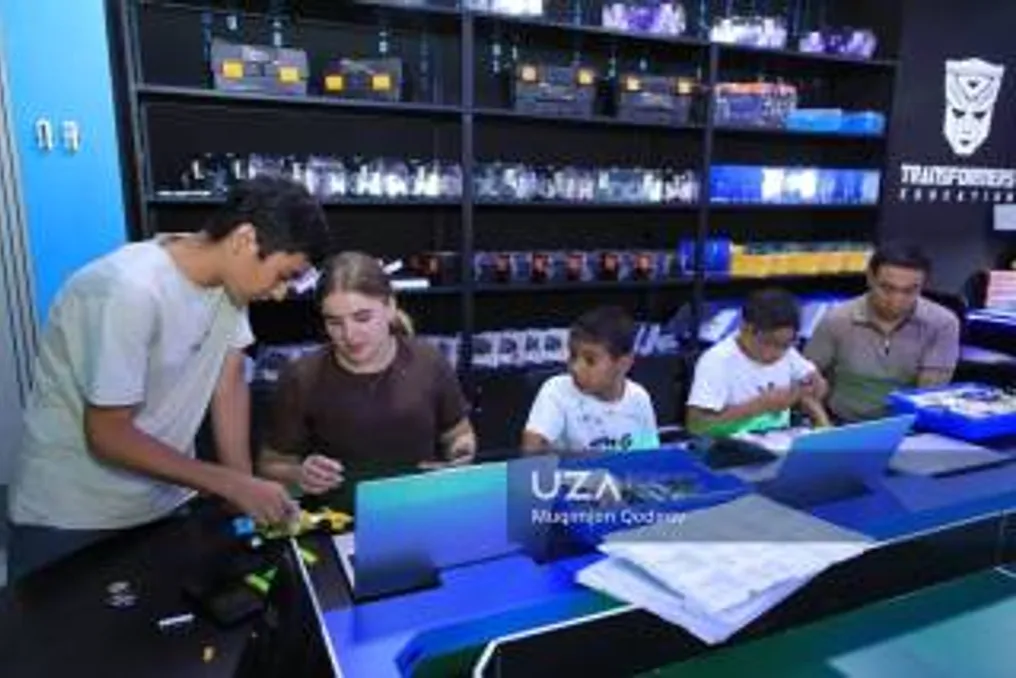
Innovative concepts of young people are being transformed into real projects. A mechatronics and robotics laboratory was created at the 27 general education school in the city of Kokkon, located in the Fergana region.
This laboratory is designed to increase students' interest in engineering sciences and innovative technologies.
The significance of science today is not limited to the walls of research institutes. Its true value is determined by how deeply new ideas penetrate classrooms, how effectively they manifest in the activities of teachers, and most importantly, how they lead to practical results in student learning. The prestige of a modern higher educational institution is assessed precisely by its scientific potential, innovative approaches, and the practical significance of its developments.
In this regard, the scientific activity implemented during the 2025–2026 academic year at Guliston State Pedagogical Institute deserves attention not only for its statistical indicators but also for concrete results aimed at developing the education system.
The fact that almost all 138 professors and lecturers working at the institute engage in scientific research, and the level of scientific competence has reached 43.7%, is not coincidental. This indicator reflects a consistent policy aimed at the systematic organization of scientific work, support for young researchers, and aligning science with practice.
Moreover, the scientific research at the institute is not limited to narrow fields. Although each faculty conducts research within its scientific areas, they are united by a common goal—improving the quality of education, developing modern pedagogical approaches, and effectively implementing them in practice.
Currently, relevant areas of the institute's scientific research include digital pedagogy, artificial intelligence technologies, STEAM education, inclusive education, modern methodologies, and innovative teaching methods.
The effectiveness of scientific activity is demonstrated not only in published articles but also in defended dissertations and obtained academic degrees. In the first six months of the current year, 12 professors and lecturers successfully defended doctoral dissertations. Furthermore, 11 researchers received PhD diplomas from the Higher Attestation Commission, 9 teachers were awarded the title of associate professor, and 4 were awarded the title of professor.
It is expected that another 8 PhD and 4 DSc dissertations will be successfully defended by the end of the year. This indicates the strengthening of the research environment and the formation of independent scientific schools within the institute.
However, the true value of science is determined not by the number of defended dissertations, but by how they are applied in practice and what benefit they bring to society. In this regard, it is particularly important that the research conducted by the institute's scientists is tested in kindergartens and general education schools.
Seminars, master classes, and methodological recommendations organized at the departmental branch levels contribute significantly to improving the professional skills of educators. Thus, science does not remain in laboratories but is directly integrated into the educational process.
The innovative developments created at the institute also point to the transition of scientific activity to a new stage. A prime example is the digital platform 'Sirdaryo ta’limi.uz', attracted by 583 million sums. This project promotes strengthening cooperation between educational institutions, teachers, and parents based on modern information technologies, increasing the transparency and efficiency of the educational process.
The project 'MedMapp' by institute postgraduate Mehruza Sultanova received funding of 20 thousand US dollars in an international grant competition. This success is another practical proof that the scientific ideas of young researchers are recognized not only in our country but also internationally.
Indicators of scientific activity effectiveness also deserve attention. During the reporting period, the institute's scientists published 17 textbooks, 45 educational and methodological guides, 12 monographs, 120 international scientific articles, 24 of which were published in the Scopus international database, as well as 180 local scientific articles and over 250 conference materials.
A system for supporting young scientists has also been established in accordance with modern requirements. The 'Council of Young Scientists', startup incubation center, modern laboratories, technological training workshops, and regular scientific seminars provide young researchers with a reliable scientific platform. More than 30 scientific projects were submitted to grant competitions this year, and 13 seminars and webinars dedicated to startup development were organized, demonstrating a systemic approach to this work.
Another important area of the institute's scientific activity is the wide implementation of artificial intelligence and digital technologies. Today, training future educators based on digital competencies is one of the priority tasks. Within the framework of the 'Five Million AI Leaders' project, 980 students received international certificates, which was an important step in forming the skills of future teachers in using digital technologies effectively.
Furthermore, under the Erasmus+ program, four major international projects totaling over 820 thousand US dollars were developed in the fields of digital pedagogy, artificial intelligence, inclusive, and 'green' education. Cooperation with the international agency KOICA is also actively continuing towards creating a STEAM Digital Lab worth nearly 980 thousand US dollars. These initiatives clearly show that the institute's innovative development strategy is being implemented consistently.
Special attention is paid to expanding international cooperation. Scientific and academic ties are currently being actively developed with authoritative higher education institutions in China, Kazakhstan, and Europe. Work on teacher internships in foreign universities and attracting foreign scientists within the Fulbright program contributes to harmonizing the institute's scientific potential with world experience.
Significant results have been achieved in applying scientific developments to economic sectors and their commercialization. Over the reporting period, 124 commercial contracts were signed, attracting more than 317 million sums. This shows that the scientific ideas created at the institute have not only theoretical but also practical, economic significance.
Within the framework of international cooperation, relations with the People's Republic of China have also reached a new level. Specifically, within the partnership with the Wenzhou Fan Institute of Technology, student and teacher exchange programs were successfully implemented. Under this program, 10 professors and postgraduates participated in one-month advanced training courses, studying modern educational technologies, methods of organizing scientific research, and advanced international experience, which significantly improved their professional skills and contributed to the application of modern approaches in the educational process.
In addition, the institute's cooperation with the China National Research Institute of Food and Fermentation Industries is also developing effectively. Within this partnership, advanced training programs were organized for 20 professors and students. They had the opportunity to study advanced foreign experience in food technology, innovative approaches, and modern scientific research methods.
It is noteworthy that in June-July 2026, an exchange of about 30 professors and students took place within the framework of international academic cooperation programs, indicating the growing prestige of the institute on the international stage and its active integration into the global educational and scientific space.
Today, science at Guliston State Pedagogical Institute has ceased to be just a statistical indicator, becoming the main criterion for the quality of education, innovation, and practical results. Scientific developments created here are applied in the activities of educational institutions, young scientists attract international grants, and teachers assimilate advanced world experience and effectively implement it into the national education system.
Most importantly, the institute is becoming a powerful force responding to societal needs, contributing to improving the quality of education, and educating a new generation of educators based on modern knowledge and innovative thinking.
Because every step taken in science today is a solid foundation for tomorrow's progress, and every innovation introduced into education is a reliable investment in the country's future.
Taxpayers can now receive answers to complex tax questions from artificial intelligence, eliminating the need for them to study numerous sources of information independently.
The 'AI SOLIQ' platform, which operates on artificial intelligence, provides entrepreneurs, accountants, and enterprise managers with the ability to quickly obtain simple and practical clarifications on tax issues.
During a press conference held on the 'Uzbekistan' television channel with the participation of the leadership and specialists of the Tax Commission of the Republic of Uzbekistan, the topic 'AI SOLIQ — a new generation digital platform based on artificial intelligence' was discussed. The possibilities of the 'AI SOLIQ' portal, created for taxpayers, the application of artificial intelligence technologies in the activities of tax authorities, the legal aspects of using these technologies, as well as providing quick recommendations for lawful business activities were reviewed.
The ai.soliq.uz portal was launched by the Tax Commission. It unites new generations of tax services created using artificial intelligence technologies on a single digital platform. Initially, the platform is intended for entrepreneurs, accountants, and company managers. Users can conduct an intellectual analysis of their organization's activities in a short time, identify the reasons why electronic invoices are categorized as 'red', and receive necessary explanations regarding tax rating, tax benefits, and tax reporting.
The services on the platform function in a dialogue format, that is, a chat. This allows for receiving information on complex tax issues in a simple, understandable, and practice-oriented manner. The importance of 'AI SOLIQ' is not limited only to providing services to taxpayers. The portal also contains the main works of the Tax Commission in the field of artificial intelligence. In addition to implemented digital solutions, it presents the technological foundations being developed for the digital transformation of the tax administration. These include solutions based on the national language model 'Soliq LLM', speech and text generation technologies, computer vision, and machine learning for big data processing.
These technologies play an important role in processing and analyzing data in the tax sphere, automating routine processes that require human labor, and improving decision-making processes. Today, artificial intelligence technologies are used not only in the services provided to entrepreneurs and taxpayers but also in all links of the tax authorities' activities.
In the system, ranging from local employees to the leadership of the Tax Commission, methods of using artificial intelligence for data analysis, automation of repetitive processes, improvement of the quality of management decisions, and increase in employee efficiency are being implemented. This approach contributes to the gradual elimination of processes in the tax administration that are overly dependent on the human factor, and the development of a data-driven management system.
The creation and development of the artificial intelligence ecosystem in the tax sphere is also related to the activities of the Artificial Intelligence Laboratory, established at the initiative of the President at the beginning of the current year. This laboratory functions as a single center responsible for developing, implementing, and developing AI-based solutions aimed at improving the tax administration and creating modern digital services for citizens and business representatives. The solutions developed by the laboratory are aimed at both digitizing existing processes in tax authorities and improving the quality of taxpayer service.
The wide implementation of artificial intelligence in the tax sphere should primarily contribute to simplifying the interaction between citizens and entrepreneurs with tax authorities. The easier it is for an entrepreneur to obtain necessary information, understand tax reports, learn about the conditions for using benefits, or identify the reason for a specific problem, the more opportunities they have to voluntarily and legally fulfill their tax obligations. From this point of view, 'AI SOLIQ' should be seen not just as a digital service, but as a technological solution that moves the interaction between the taxpayer and the state to a new level.
The Tax Commission plans to expand the use of modern artificial intelligence technologies and increase the range of intelligent services for taxpayers in the future. The main goal of this process is to reduce excessive time and bureaucratic obstacles in tax matters for businesses and citizens, make interaction with tax authorities simpler and more convenient, and bring the quality of tax services to a new level.