The international film tour and event promoting Chinese cinema, titled 'Reel China,' has opened in Bishkek. On Wednesday, the film tour presented to the audience of Bishkek a diverse collection of Chinese films.
The international film tour and event promoting Chinese cinema, titled 'Reel China,' has opened in Bishkek. On Wednesday, the film tour presented to the audience of Bishkek a diverse collection of Chinese films.
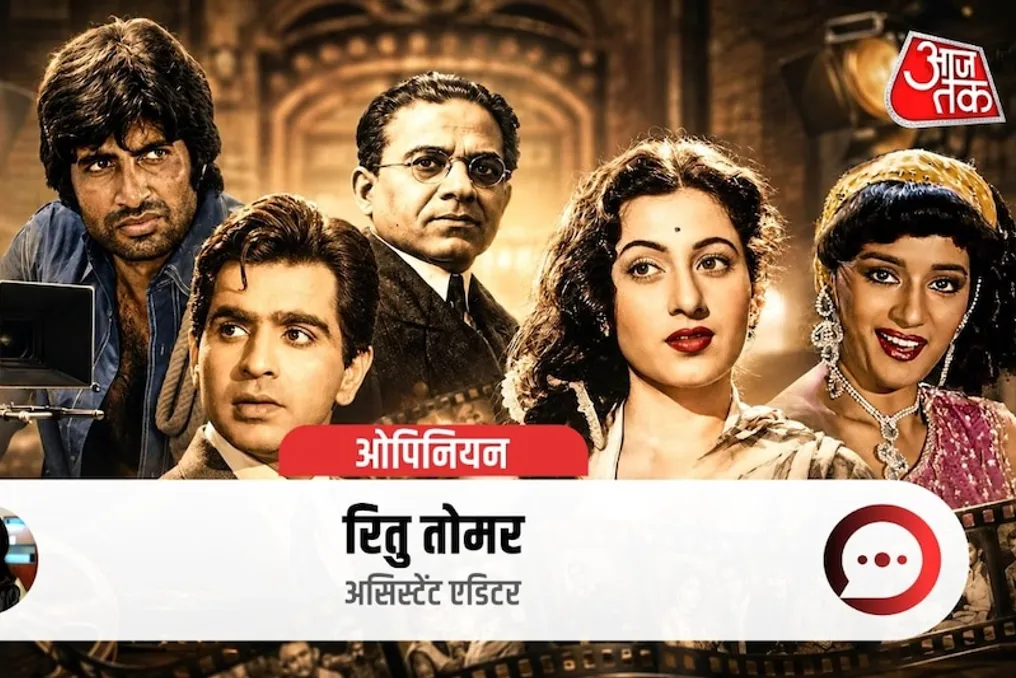
As India transformed, so did its cinema. This period, marking the 80th anniversary of the independent state, requires not only an overview of the country's political journey but also an understanding of the cultural development in which Indian cinema constantly shaped itself alongside the nation. Cinema served as the voice of the country's dreams, a reflection of its anxieties, a primary form of entertainment, and sometimes even a voice questioning issues of power, society, caste, class, and gender.
However, the history of Indian cinema began long before August 15, 1947. Even before gaining independence, a world was emerging in colonial India that would later become part of the perceptions, feelings, and dreams of millions. India first experienced the magic of moving images on July 7, 1896. Representatives of the French Lumière brothers, Marius Cestie, arrived at the Watson Hotel in Mumbai with a machine capable of showing moving pictures. India was introduced to the medium that would become an integral part of its culture, imagination, and collective memory in the coming decades.
Then came 1913, when Dadasaheb Phalke created the film 'Raja Harishchandra'. He is considered India's first feature-length artistic film. Phalke faced numerous difficulties: the absence of a developed film industry, a ready structure and tradition of filmmaking, as well as technical problems, lack of funds, and social restrictions. Nevertheless, he laid the foundations of Indian filmmaking almost from scratch. 'Raja Harishchandra' was not just a film; it served as proof that India could tell its own stories on screen.
The difficulties of that time were significant. Society did not allow women to participate in acting, so male actors played female roles. In 'Raja Harishchandra', Anna Salunke played the role of Queen Taramati. Thus, the beginning of cinema was in an era when a woman appearing on screen was considered a social exception, whereas today actresses are a powerful force in box office success.
The first paradox of Indian cinema was that the medium, which later documented the deepest societal changes, began in a highly conservative society. After Phalke, cinema gradually shifted from experimentation to commercialism. By the 1920s, filmmaking became a growing industry. Mythological plots, historical events, and folk tales began appearing on screen. This was partly because these stories featured a world familiar to Indian audiences. Although cinema was a foreign technology, the stories were indigenous.
Then, in 1931, 'Alam Ara' gave a voice to Indian cinema. The silent film era ended, and the age of sound cinema began. Now, the screen featured not only faces but also dialogues, songs, and voices. Music became an integral part of the DNA of Indian cinema from this moment on. After this, cinema began to change rapidly: studios appeared, stars emerged, and films turned into a major commercial industry. But the country was also changing. The movement for independence intensified, and the struggle against colonial rule grew. At such a time, cinema could not remain merely entertainment. The anxiety, hope, and vision of the nation present in the stories told on screen became an integral part of the era. Films like 'Achhut Kanya' and 'Aurat' brought social issues to the screen that were suppressed in daily life. K. L. Saigal was one of the first stars of Indian cinema to define a new concept of stardom by combining acting and singing. He is often called the first great singing star of Indian cinema.
When the country gained independence in 1947, Indian cinema found itself at a new stage. The question was not only what the films would be like but also how independent India wanted to see itself on screen. In the 1950s and 1960s, cinema convincingly answered this question. The country struggled with poverty, unemployment, migration, and inequality, yet at the same time, there was a dream of building a new nation. It was during this period that filmmakers like Raj Kapoor, Guru Dutt, Bimal Roy, and Maqbool Khan centered their stories on the common person, poverty, the city, the village, love, and social inequality. Films such as 'Do Bigha Zamin', 'Mother India', 'Shree 420', 'Pyaasa', 'Awara', 'Kagaz Ke Phool', 'Naya Daur', and 'Sujata' depicted poverty, class stratification, peasantry, workers, moral dilemmas, and the changing face of India. Cinema stopped just telling stories on screen; it asked the country: for whom and what does freedom mean? The hero of the film at that time was rarely a millionaire or a superhero; it was a rickshaw driver, a worker, a farmer, an unemployed youth, or an ordinary person fighting the system.
During this same period, another branch of Indian cinema presented itself to the world. In the fifties, Satyajit Ray's film 'Pather Panchali' gave Indian cinema international recognition. Later, the films of Ritwik Ghatak, Bimal Roy, and other filmmakers proved that Indian cinema could be not only a medium for music and entertainment but also a serious art form. It was from here that the foundation of parallel or art cinema was strengthened.
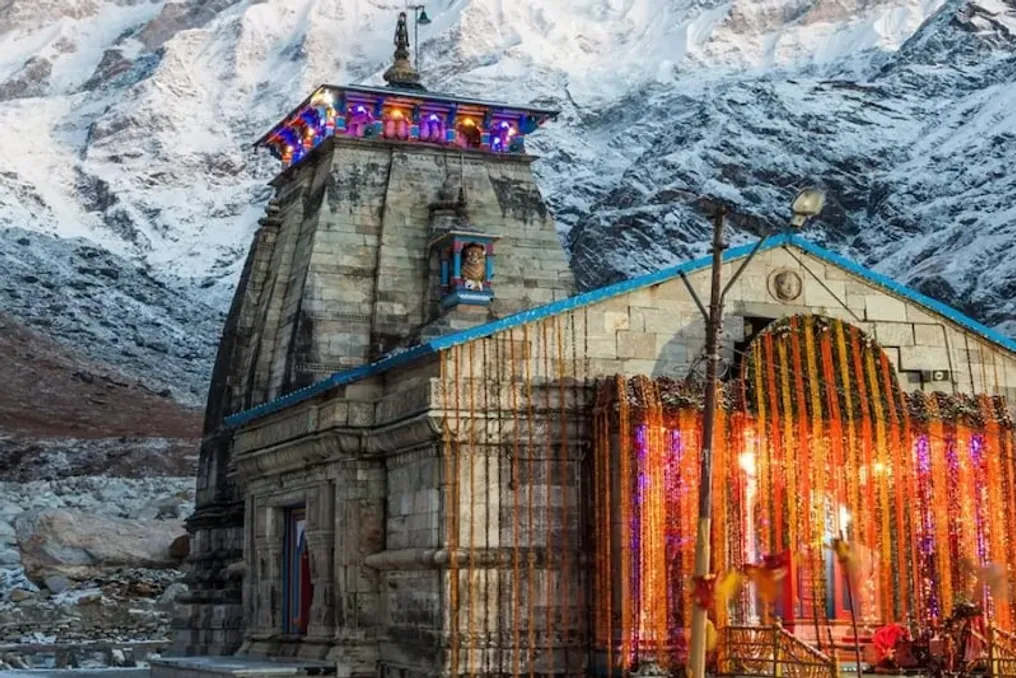
For most people, Kedarnath is simply a picturesque pilgrimage site, visited for photographs. However, this temple, located deep in the Himalayas, is not only a center of faith but also the greatest mystery at the intersection of history and science. It is a place where human understanding ends and miracles begin. One must wonder: how were such massive stones transported to an altitude of over 11,755 feet above sea level without cranes, cars, cement, or modern technology? Which master carved this grandiose structure? And most importantly, how has this temple withstood the destructive power of nature?
Situated in the lap of the Himalayas, at an altitude of about 11,755 feet above sea level, amidst snow, rocks, and silence, Kedarnath is no ordinary temple. It bears witness to times when humans lacked modern technology but possessed building knowledge that still amazes people. Every stone of the Kedarnath temple seems to ask a question, and the answer is not easy to find. Millions of people arrive here every year—some with the hope of having their wishes granted, others seeking peace of mind, and a third waiting for changes in their lives after visiting this place.
However, few know that the temple before which they bow is not only a symbol of faith. It is also an amazing example of harmony between ancient Indian architectural traditions and the nature of the Himalayas. So, what is the history of this temple? Let's find out.
The history of the Kedarnath temple begins with a striking mystery: the image of the god Shiva worshipped there. Usually, lingams are depicted in oval or cylindrical shapes, but in Kedarnath, the worship of Lord Shiva takes place in a special form called the form of Shiva's back. This is supported by a mythological legend directly related to the Pandavas after the Mahabharata war.
It is said that even after winning the Mahabharata war, the Pandavas could not find peace. The weight of killing their own relatives, teachers, and brothers weighed heavily on their souls. When they asked Lord Krishna how to rid themselves of this sin, they were advised to turn to Lord Shiva. This is where the Pandavas' journey begins, leading them from the plains to the difficult heights of the Himalayas. But Lord Shiva did not want to be with them. According to belief, to avoid the Pandavas, he took the form of Nandi, the bull, and hid in the cattle herd. Nevertheless, Bhima recognized him. Bhima assumed his enormous form and spread his legs on both sides of the Kedar pair so that no one could pass through them. Then Bhima realized that it was not an ordinary bull, but Lord Shiva himself. When Bhima tried to grab him, Lord Shiva began to sink into the ground. Bhima managed to hold onto his rear end. According to tradition, this very image of Lord Shiva later became revered in Kedarnath. It is said that Lord Shiva was pleased with the devotion of the Pandavas, granted them a vision, and blessed them with freedom from sins. This is why the belief in worshipping Lord Shiva in the form of the back exists in Kedarnath. This legend is also connected to the Panch Kedar tradition, which includes Kedarnath, Tungnath, Rudranath, Madhyameshwara, and Kalpeshwar, with Kedarnath holding a special significance among them.
For the 80th anniversary of India's Independence Day, Google released a special Doodle that demonstrates 22 different regional textile and craft traditions of the country through digital patchwork. This artwork highlights India's rich textile heritage, as well as the collective contribution of weavers, dyers, farmers, and block printing artisans whose efforts sustain centuries-old textile traditions in the nation.
Initially, this Doodle was created by graphic designer and artist Namrata Kumar from New Delhi in 2023 to celebrate the 77th anniversary of India's Independence Day. This year, Google has presented this digital work again. In this digital composition, created by Namrata Kumar, a former student of the Srishti School of Art, Design and Technology, traditional weaving, embroidery, and block printing from various parts of the country are gathered.
Prominent textile traditions featured in the Google Doodle include Jamdani, Ikat, Ajrakh, and Banarasi brocade silk. Jamdani is renowned for its geometric and floral patterns on very fine muslin. In Ikat, threads are dyed first and then used for weaving, while Ajrakh features geometric block prints made using natural mineral and plant dyes. Banarasi brocade silk is known for being embroidered with metallic threads of gold and silver onto silk fabric.
The first row of the Doodle includes Kutch embroidery from Gujarat, Patta weaving from Himachal Pradesh, Jamdani from West Bengal, Pashmina Kani textiles from Jammu and Kashmir, Banarasi weaving from Uttar Pradesh, and Kunbi textiles from Goa.
The second row presents fine Ikat from Odisha, Paithani from Maharashtra, Kantha embroidery from West Bengal, Naga weaving from Nagaland, Ajrakh block printing from Kutch, Apatani weaving from Arunachal Pradesh, Phulkari from Punjab, and Kasavu weaving from Kerala.
The third row displays Kanjivaram weaving from Tamil Nadu, Kalamkari from Andhra Pradesh, Bandhani and Leheriya from Gujarat and Rajasthan, Ilkal handloom from Karnataka, Mekhela Chadar from Assam, and Sujani embroidery from Bihar.
This year, during the Independence Day celebrations across the country, the 150th anniversary of 'Vande Mataram' is also being observed. This year's Independence Day theme was related to 'The Significance of Youth in Developed India by 2047'. This Google Doodle annually presents diverse cultural heritage of India in a digital format. In honor of Independence Day this year, Google's Doodle paid tribute to artisans from different parts of the country and the art passed down through generations, showcasing 22 regional textile traditions of India together.
The question arises: was the Kedarnath temple built during the time the Pandavas arrived? There is no single definitive historical answer to this question. The history of Kedarnath is linked both to religious beliefs and to history.
According to one tradition, the temple was erected by the Pandavas. Another religious tradition is associated with the form of Narayana of Lord Vishnu. According to belief, Rishi Narayana performed severe ascetic worship in this region. Pleased by his asceticism, Lord Shiva granted him the blessing to reside here in the form of Jyotirlinga. After this, the name Adi Shankaracharya appears in history. There is a belief that in the 8th century, Adi Shankaracharya played an important role in organizing and structuring the main holy sites of India. He is also linked to the revival of Kedarnath. Today, the tomb of Adi Shankaracharya is located behind the Kedarnath temple. Although historians disagree on the construction of the Kedarnath temple, some historical sources link the construction or expansion of the temple to subsequent rulers. Therefore, it is more accurate to consider that the Kedarnath temple is not the heritage of a single period, but a religious and architectural heritage that has evolved over centuries.
Now let us move to the question where faith meets science. The Kedarnath temple is built from giant stones. Looking at its structure, the first question arises: how were such heavy stones transported to such a height and such a sturdy building constructed? Many methods were used in ancient Indian architecture to firmly join stones together. In the structure of the Kedarnath temple, large stones were also arranged in such a way...