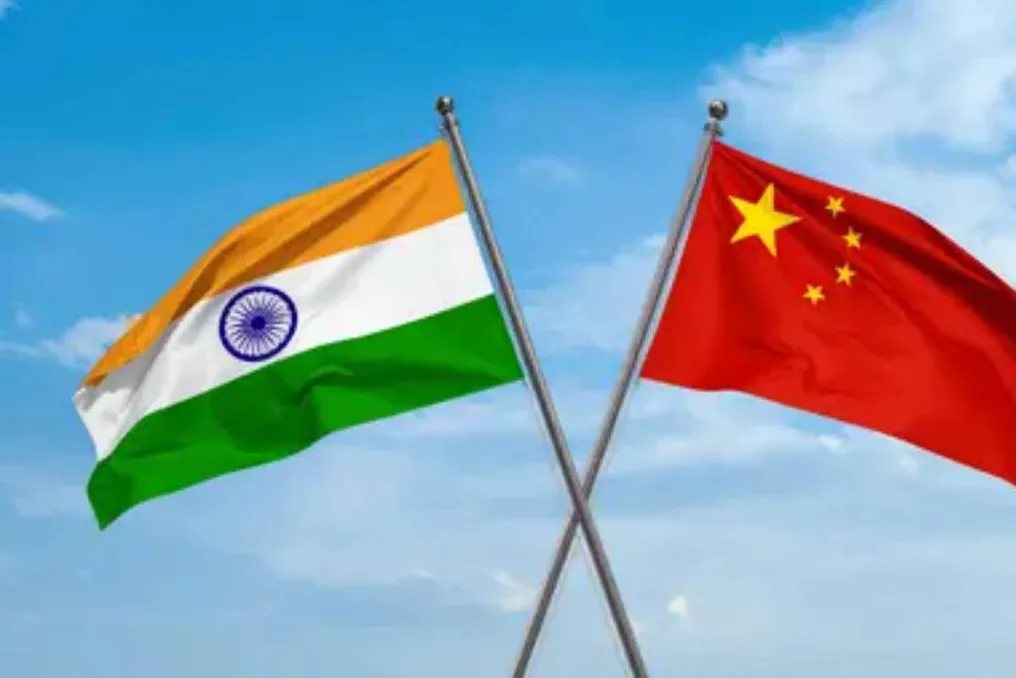
The White House released a report that included India in the top category of a suspected goods transit network linked to China. The report also noted the Pune-Gujarat-Chennai manufacturing cluster as a potential route.
As Washington intensifies efforts to prevent Chinese goods from circumventing American tariffs through third countries, the White House identified India among more than 40 countries and trade jurisdictions that, according to the US administration, are at risk of China-related transit. In a report titled 'Great Transit Fraud,' the White House Office of Trade and Manufacturing Policy stated that many major American trading partners are part of China's shadow transit network. Key contributing factors cited include Mexico, Canada on the US land borders, as well as the European Union (EU), India, Japan, and South Korea.
Specifically, the report highlighted the Pune-Gujarat-Chennai manufacturing cluster in India as a likely corridor for importing China-related pumps and compressors into the US. According to the report, activity in this corridor affects US industrial supply chains located in Cincinnati, Dayton, and Columbus.
Analysis of Indian trade data with the US showed that exports of pumps and compressors from India to the US amounted to approximately $750 million in the 2025-26 fiscal year (FY26), which is less than one percent of the total shipments to the country. Meanwhile, imports of these items from China to India reached nearly $2 billion in FY26.
Citing estimates from the Office of Trade and Economic Analysis, the report stated that in 2025, the US received goods worth about $67 billion that were estimated to have been transited from China through hubs such as Mexico, India, and Vietnam. This reportedly led to a loss of $28 billion in customs revenue. However, the report did not provide an estimate of the value of goods allegedly transited only through India.
The Indian government is currently reviewing the findings and methodology used in the White House report. Randhir Jaiswal, a representative of the Ministry of External Affairs, stated: 'We would like to thoroughly examine the findings and the methodology applied. We have robust laws and procedures governing customs, rules of origin, and export of products, and any instances of violation are dealt with according to the law.'
The report defines illegal transit as directing goods through a third country where they may undergo minor processing, relabeling, repackaging, re-invoicing, or documentation changes that create the appearance of a new place of origin without substantial transformation. According to the report, in response to tariffs imposed by Washington since 2018, China has reduced direct shipments to the US while stimulating the development of a global transit network.
The White House report divided the more than 40 identified economies into three tiers and placed India in Tier 1 of the 'China Shadow Transit Network,' alongside Canada, the European Union, Israel, Japan, Mexico, South Korea, and Taiwan. These Tier 1 economies are described as 'Diversified Scale Leaders,' which account for large absolute volumes of China-related goods while possessing diversified industrial bases and large export platforms aimed at the US. The report emphasized that the risk of transit is embedded within broad legal trade flows in these jurisdictions.
Trade experts in India remain skeptical of the White House report's conclusions. According to the founder of the Global Trade Research Initiative (GTRI) analytical center in New Delhi, the report excessively expands the technical meaning of transit. He noted that 'it thereby mixes fraud of origin with legitimate production. This risks presenting legitimate processing and production within the global supply chain as transit before any violation is proven.'
The report proposed implementing an AI-based 'Detective Border Control' system to identify anomalous routing schemes, assess production capacities, and direct customs control toward high-risk shipments. However, Srivastava warned that 'the proposed AI system 'Detective Border Control' could lead to increased inspections, shipment delays, retroactive duties, and fines.'
This report emerged at a sensitive time for trade between India and the US: just one week after the US Senate passed a bill that could subject India to punitive tariffs of up to 100 percent for purchasing Russian oil. Furthermore, the US Trade Representative's office is conducting an open investigation into India under Section 301 of the US Trade Act, accusing it of overcapacity. Ram Singh, a professor at the Indian Institute of Foreign Trade, believes that the US is constantly adding 'layer upon layer' of uncertainty to the world trade order. He added that 'all these reports and statements from the US seem to be attempts to gain leverage in negotiations for trade agreements with both India and other economies.'
Nevertheless, Indian exporters fear that this report could lead to non-tariff barriers while tariff barriers already exist. Currently, Indian products face an additional 10% tariff in the US under Section 301 of the US Trade Act of 1974, and Washington has indicated many avenues for further tariff increases.