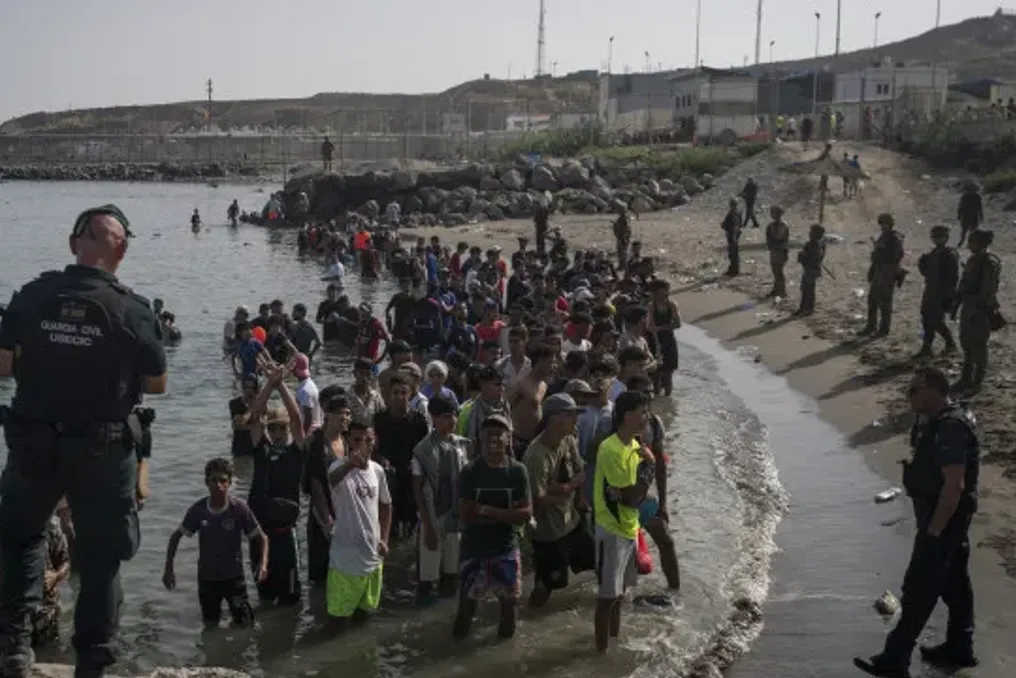
The UN Refugee Agency (UNHCR) is monitoring the situation in the autonomous city of Spain and has conveyed its observations to the authorities after visits by local representatives.
The necessity of ensuring identification and registration of recently arrived individuals, as well as applying appropriate screening and referral procedures to determine those in need of international protection, was emphasized.
All this is being done to subsequently simplify access to the asylum procedure, which complies with the regulatory framework of the European Pact on Migration and Asylum, according to a report sent to the Spanish news agency EFE.
UNHCR indicated that this situation creates 'significant operational and humanitarian problems,' especially due to the large number of migrants in temporary informal settlements and limited access to basic services in Ceuta.
Many people in need of international protection come from countries affected by war or where widespread human rights violations are observed, such as Sudan, Yemen, Somalia, or Mali, among others.
UNHCR called for special attention to the situation of unaccompanied children, women, and other individuals whose individual circumstances and need for protection must be identified in a timely manner to establish appropriate protection measures and referral mechanisms.
In late July, about 72 thousand people entered Ceuta within 24 hours, although, according to Spanish authorities, the majority (70 thousand) later returned to Morocco.
Furthermore, at least 82 people died while attempting to reach Ceuta by sea.