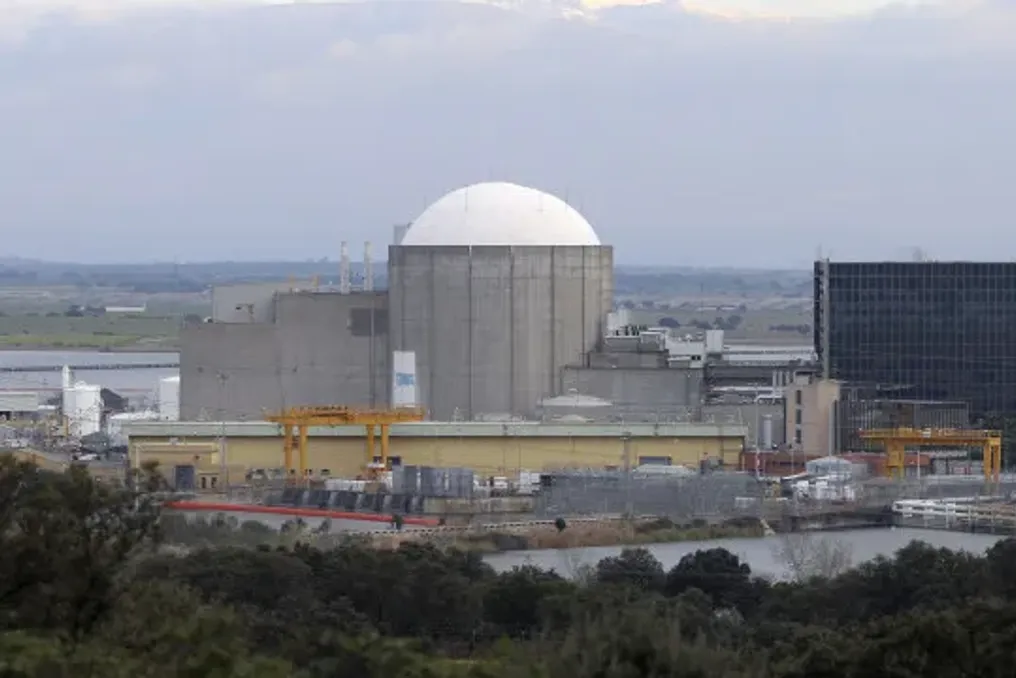
An environmental organization expressed the view that extending the operational life of Almarasa could set a dangerous precedent. Javier Andaluz, who is responsible for climate and energy issues in this organization, stated that such an extension is a 'betrayal and fraud against citizenship,' which will lead to higher costs in the medium and long term while slowing down the inevitable energy transition.
In its statement, Andaluz noted that the Madrid government is opening the 'gates to a nuclear Trojan horse' for the 'continuation of a radioactive business that is becoming increasingly dependent on public funds to operate.'
The environmental group also questioned the procedure used to approve the extension, arguing that the Nuclear Safety Council report is limited to analyzing the license issuance, without addressing the inspection and control of the plant or compliance with commitments made in 2020.
Therefore, eco-activists believe that this decision could provide grounds for other plants, such as Asco 1 and Cofrentes, to demand similar action, warning that such a situation could ultimately 'block the agreed closure of nuclear power plants.'
The Spanish Ministry for Ecological Transition and Demographic Challenges extended the operating license for Units I and II of the Almarasa Nuclear Power Plant until June 2030, according to a decree published today. This decision concludes a process that began in October 2025 when the three plant owners—Iberdrola, Endesa, and Naturgy—agreed to formally request the extension.
A gradual closure was planned for the two reactors operating since the early 1980s: the initial deadline for Unit I was set for November 1, 2027, and for Unit II for October 31, 2028, in accordance with the protocol established by the energy companies.
The organization Ecologistas em Ação emphasized that this decision will have consequences for the entire nuclear park and for radioactive waste management, an issue that, in the organization's view, remains unanswered. Anti-nuclear activist Paca Blanco stated that the situation 'dooms the future of the entire territory, which will coexist with nuclear waste from the plant for decades.'
Observatório Ibérico de Energia assured that Portuguese and Spanish environmental associations will appeal against the extension of the Almarasa plant's operation until June 2030 'as soon as possible.' According to the coordinator of this association, António Eloi, the lawsuit will be filed in Spain by the Association for the Protection of Nature and Resources of Extremadura (Adenex).
António Eloi told Lusa today: 'The [Spanish] government, with this decision, calls into question previous decisions [...] may call into question the closure program of other plants and creates a disruption throughout the system, because the system needs certainty, not distrust.'
Confirmation of the legal challenge came after the movement Alargar as Nucleares, Não Obrigado—comprising Adenex, Ecologistas em Ação, and Greenpeace—deemed the extension of the Almarasa plant's operation until 2030, located in the Tagus River basin about 100 kilometers from the Portuguese border, 'illegal,' promising to fight for the cancellation of the extension. Oscar Alonso Carvalho from the movement told Lusa: 'This is unfair and illegal, given that there was an agreement between the companies and the state to close Almarasa in 2027. If that is not the case, then it is illegality, a product of a subsequent agreement that only benefits the company and speculation.'